
English Christian Web Book · Copyright Review Required
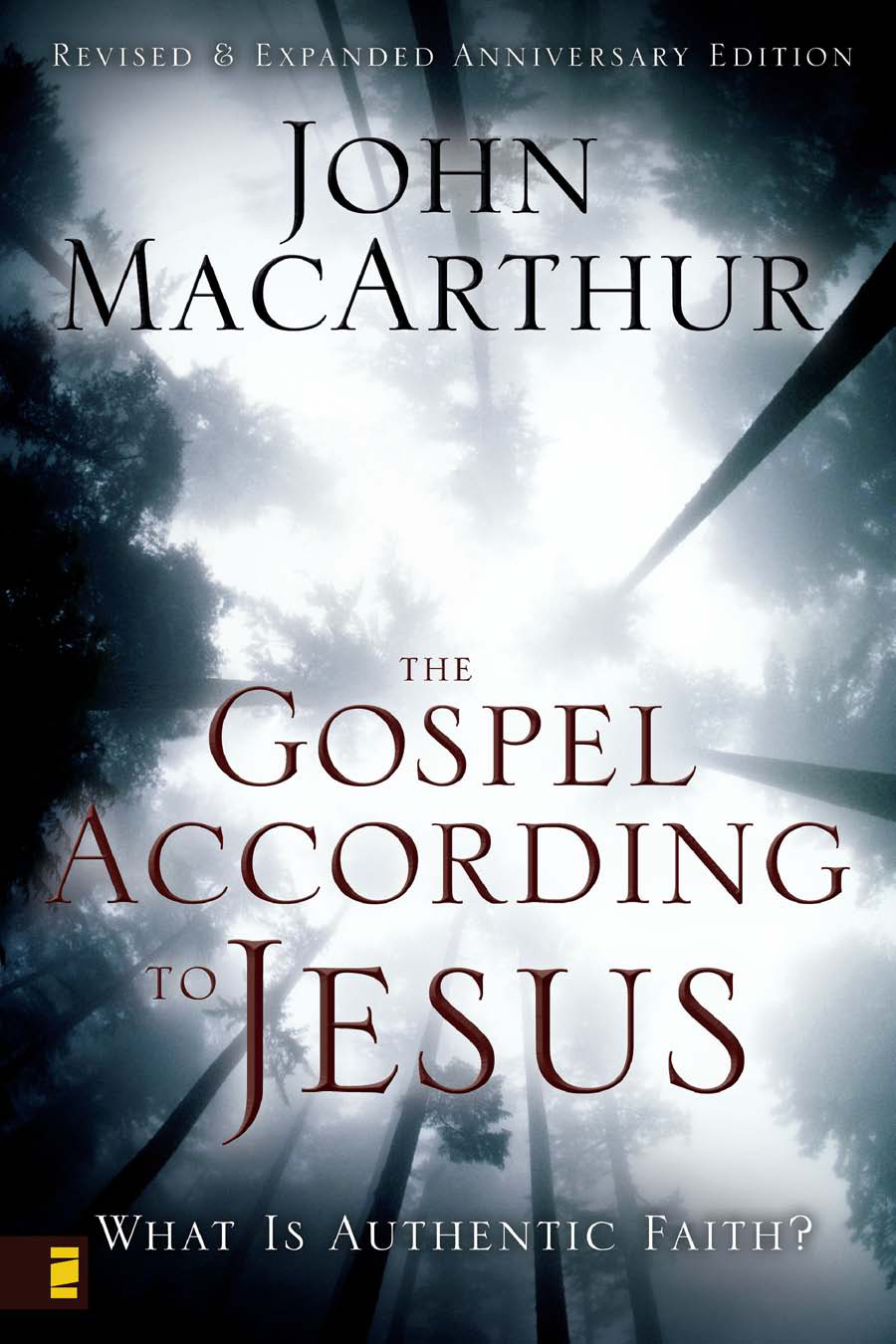
The Gospel According to Jesus
John F. MacArthur Jr.
About this book
John MacArthur on lordship, faith, and the biblical Gospel.
Author: John F. MacArthur Jr.
- 218 parts
- 306 PDF pages
- 173,535 words
- ≈ 1335 min read
- English
🔍 Search this book
Ctrl K
Table of Contents
1"to impose a need to surrender the life to God as an added condition of salvation is most unreasonable.
pp. 20–20 · ≈ 4 min26:9 – 10 and Galatians 5:19 – 21 actually describe true believers, but they are Chris tians who will forfeit
pp. 21–21 · ≈ 4 min36:9 – 10 and Galatians 5:19 – 21 actually describe true believers, but they are Chris tians who will forfeit
pp. 21–21 · ≈ 4 min46:9 – 10 and Galatians 5:19 – 21 actually describe true believers, but they are Chris tians who will forfeit
pp. 21–22 · ≈ 8 min55. Charles C. Ryrie, Balancing the Christian Life (Chicago: Moody, 1969), 170.
pp. 23–26 · ≈ 4 min6ers Grove, Ill.: Apollos/InterVarsity, 1999), 112.
pp. 27–27 · ≈ 4 min7miley, trans., Theological Dictionary of the New Testament, 10 vols. (Grand Rapids: Eerdmans, 1964),
pp. 28–28 · ≈ 4 min8see Edwin Yamauchi, "Slaves of God," Journal of the Evangelical Theological Society 9, no. 1 (Winter
pp. 28–28 · ≈ 4 min9see Edwin Yamauchi, "Slaves of God," Journal of the Evangelical Theological Society 9, no. 1 (Winter
pp. 28–28 · ≈ 4 min105. Ibid.
pp. 29–29 · ≈ 4 min116. Harris, Slave of Christ, 18.
pp. 29–33 · ≈ 19 min127. Ibid., 145 – 46.
pp. 34–34 · ≈ 4 min138. Ibid., 145.
pp. 35–35 · ≈ 3 min149. Yamauchi, "Slaves of God," 48 – 49.
pp. 36–38 · ≈ 9 min151. Zane C. Hodges, The Gospel Under Siege (Dallas: Redención Viva, 1981), 14.
pp. 39–39 · ≈ 3 min162. Charles C. Ryrie, Balancing the Christian Life (Chicago: Moody, 1969), 169 – 70.
pp. 39–39 · ≈ 3 min17has no works? Can that faith save him?" (James 2:14). One branch of contemporary theology seems to
pp. 40–40 · ≈ 4 min18understanding of the relationship between faith and works.
pp. 40–40 · ≈ 4 min19was extremely controversial when first released. In a scathing review, Dr. B. B. Warfield took issue with
pp. 41–41 · ≈ 5 min20was extremely controversial when first released. In a scathing review, Dr. B. B. Warfield took issue with
pp. 41–41 · ≈ 5 min21(Chicago: Moody, 1965), 43 – 44.
pp. 41–41 · ≈ 5 min22(Chicago: Moody, 1965), 43 – 44.
pp. 41–41 · ≈ 5 min23In respect to the character of divine government, both the age before the cross and the
pp. 42–42 · ≈ 4 min24on the importance of the law and its ministry in the age of grace (New York: Oxford, 1967), 3, 1254.
pp. 42–42 · ≈ 4 min2511. Chafer, Grace, 124.
pp. 42–42 · ≈ 4 min26Gospel." Cited in John R. W. Stott, Christian Counter-Culture (Downers Grove, Ill.: InterVarsity, 1978), 37.
pp. 43–43 · ≈ 4 min27Gospel." Cited in John R. W. Stott, Christian Counter-Culture (Downers Grove, Ill.: InterVarsity, 1978), 37.
pp. 43–43 · ≈ 4 min28charts are still in print and used by many dispensationalists, also pointed to the phrase "Thy kingdom
pp. 43–43 · ≈ 4 min29Sermon on the Mount and other teachings of Jesus to a future age. Most dispensationalists will say they
pp. 43–43 · ≈ 4 min30ary – March 1986), 37.
pp. 44–44 · ≈ 3 min3117. Ibid.
pp. 44–44 · ≈ 3 min3218. Ibid., 38.
pp. 44–44 · ≈ 3 min33It is true that Romans 9 – 11 deals with the question of Israel's rejection of the Messiah and the nation's
pp. 45–45 · ≈ 5 min34of submission to Christ from the call to saving faith, and it implies that Jesus' lordship is a false addition
pp. 45–45 · ≈ 5 min35Viva, 1983), 13 – 15.
pp. 45–45 · ≈ 5 min36logically, kurios comes from a Greek root that means "rule, dominion, or power." Contextually, taking
pp. 45–45 · ≈ 5 min37"Does the Bible Teach Lordship Salvation?" 41.
pp. 46–46 · ≈ 3 min38"Does the Bible Teach Lordship Salvation?" 41.
pp. 46–46 · ≈ 3 min39nomah, 1980), 7.
pp. 46–46 · ≈ 3 min40tion to disciples. "Make disciples . . . baptizing them" implies that every new believer is a disciple, for all
pp. 47–47 · ≈ 4 min41tion to disciples. "Make disciples . . . baptizing them" implies that every new believer is a disciple, for all
pp. 47–47 · ≈ 4 min42because of his extreme emphasis on "pure grace," he often made statements with a strange antinomian
pp. 47–47 · ≈ 4 min43mind about Jesus Christ so that He is believed and received as personal Saviour from sin." Repentance,
pp. 48–48 · ≈ 4 min44of faith") indicate that believing itself is the only obedience called for in salvation. By believing in the
pp. 49–51 · ≈ 4 min45commitment. G. Michael Cocoris, Lordship Salvation — Is It Biblical? (Dallas: Redención Viva, 1983), 13.
pp. 52–52 · ≈ 3 min461978), 139 – 52. Hodges makes the startling claim that the people described here are true, albeit secret,
pp. 53–59 · ≈ 27 min47Dallas Theological Seminary). Hogan has since rejected no-lordship doctrine, but this statement was
pp. 60–60 · ≈ 4 min484. Zane C. Hodges, The Gospel Under Siege (Dallas: Redención Viva, 1981), 17 – 18.
pp. 60–62 · ≈ 9 min49significance in the fact that "Jesus . . . said nothing to [the Samaritan woman] about the repair of her life
pp. 63–66 · ≈ 15 min50Chapter 50
pp. 67–67 · ≈ 4 min51comment: "It is precisely this impressive fact [that the Lord asks for no spiritual commitment] that dis-
pp. 68–68 · ≈ 4 min524. G. Campbell Morgan, The Gospel According to John (Old Tappan, N.J.: Revell, 1931), 75.
pp. 69–70 · ≈ 7 min53cago: Moody, 1983).
pp. 71–80 · ≈ 37 min54God — the Lord Jehovah — because only God can save a lost sinner." Thus he agrees, and rightfully so,
pp. 81–81 · ≈ 3 min552. Thomas L. Constable, "The Gospel Message," in Walvoord: A Tribute (Chicago: Moody, 1982),
pp. 82–82 · ≈ 4 min563. Ibid., 209.
pp. 82–87 · ≈ 23 min57God" are both terms Jesus used to emphasize His incarnate deity. The blind man evidently understood
pp. 88–95 · ≈ 30 min58conviction of sin (cf. John 16:9 – 11). I should have looked for evidence of such conviction before leading
pp. 96–100 · ≈ 19 min59Chapter 59
pp. 101–101 · ≈ 3 min602. Ibid.
pp. 101–101 · ≈ 3 min613. Lewis Sperry Chafer, Grace (Grand Rapids: Zondervan, 1922), 132.
pp. 101–101 · ≈ 3 min624. Clarence Larkin, Rightly Dividing the Word (Philadelphia: Larkin, 1918), 61.
pp. 101–108 · ≈ 27 min63meant to establish a special class of Christianity. These were not people living in static disobedience.
pp. 109–109 · ≈ 4 min64meant to establish a special class of Christianity. These were not people living in static disobedience.
pp. 109–109 · ≈ 4 min65Hodges' "failure to recognize that profession of faith can be less than saving faith." Bibliotheca Sacra 140
pp. 109–109 · ≈ 4 min664. R. B. Thieme, Apes and Peacocks or the Pursuit of Happiness (Houston: Thieme, 1973), 23.
pp. 109–109 · ≈ 4 min67without a Doubt (Wheaton, Ill.: Victor, 1992).
pp. 110–110 · ≈ 5 min68writes, "It is widely held in modern Christendom that the faith of a genuine Christian cannot fail. But
pp. 110–110 · ≈ 5 min69writes, "It is widely held in modern Christendom that the faith of a genuine Christian cannot fail. But
pp. 110–116 · ≈ 27 min70to Him. John 1:11 – 12 contrasts those who "received" Him with those who rejected Him as Messiah.
pp. 117–117 · ≈ 3 min71temporary methods of evangelism, said, "Nowhere in Scripture is the concept for 'decisions' found. The
pp. 117–117 · ≈ 3 min72follows His command in verse 19: "Be zealous, therefore, and repent."
pp. 118–127 · ≈ 24 min73"The God of heaven will set up a kingdom which will never be destroyed, and that kingdom will not
pp. 128–128 · ≈ 3 min74of God are separate entities. "The kingdom of heaven" is used in the Gospels only by Matthew, who em-
pp. 129–133 · ≈ 18 min75portant dual roles in the kingdom of God. First, such trials expose false believers, and second, they
pp. 134–136 · ≈ 11 min765. Zane C. Hodges, The Hungry Inherit (Portland, Ore.: Multnomah, 1980), 68 – 69, emphasis added.
pp. 137–137 · ≈ 4 min776. Warren W. Wiersbe, Meet Yourself in the Parables (Wheaton, Ill.: Victor, 1979), 27.
pp. 137–137 · ≈ 4 min78implied that they had no right to assume that an incestuous fornicator was a true believer — his sin
pp. 138–138 · ≈ 3 min79than in the secular political arena. Ironically, however, many Christians seem more willing than the
pp. 138–143 · ≈ 21 min801. Cf. Zane C. Hodges, The Hungry Inherit (Portland, Ore.: Multnomah, 1980), 77 – 91.
pp. 144–144 · ≈ 3 min812. C. I. Scofield, ed. The Scofield Reference Bible (New York: Oxford, 1909), 1017.
pp. 145–145 · ≈ 3 min823. Ibid.
pp. 145–145 · ≈ 3 min83this excellent observation: "While 'the gift of God is eternal life,' entering the kingdom of heaven is
pp. 146–146 · ≈ 4 min84Others discover it only after diligent searching, like the man who bought the pearl. But in either case,
pp. 147–147 · ≈ 4 min85Others discover it only after diligent searching, like the man who bought the pearl. But in either case,
pp. 147–147 · ≈ 4 min867. Cf. verses 31 – 35. This was the point of the parables of the mustard seed and leaven.
pp. 148–149 · ≈ 7 min871972), 94.
pp. 150–157 · ≈ 29 min88the marks of genuineness. Repentance wrought a dramatic change in his behavior, and he turned from
pp. 158–165 · ≈ 25 min89the translators. It does not appear in the Greek texts.
pp. 166–170 · ≈ 18 min902. C. H. Spurgeon, Expository Encyclopedia (Grand Rapids: Baker, 1977), 4:337.
pp. 171–175 · ≈ 11 min911. H. A. Ironside, Except Ye Repent (Grand Rapids: Zondervan, 1937), 7.
pp. 176–176 · ≈ 3 min92as language can declare, that repentance is essential to salvation and that none could be saved apart from
pp. 177–177 · ≈ 4 min93as language can declare, that repentance is essential to salvation and that none could be saved apart from
pp. 177–177 · ≈ 4 min94as language can declare, that repentance is essential to salvation and that none could be saved apart from
pp. 177–177 · ≈ 4 min95as language can declare, that repentance is essential to salvation and that none could be saved apart from
pp. 177–177 · ≈ 4 min96as language can declare, that repentance is essential to salvation and that none could be saved apart from
pp. 177–177 · ≈ 4 min97gelists to record Jesus' words about the content of the message He was commissioning the disciples to
pp. 178–178 · ≈ 4 min98gelists to record Jesus' words about the content of the message He was commissioning the disciples to
pp. 178–178 · ≈ 4 min99gelists to record Jesus' words about the content of the message He was commissioning the disciples to
pp. 178–178 · ≈ 4 min100gelists to record Jesus' words about the content of the message He was commissioning the disciples to
pp. 178–178 · ≈ 4 min101gelists to record Jesus' words about the content of the message He was commissioning the disciples to
pp. 178–178 · ≈ 4 min102other hand, wherever there is true faith, there is also real repentance. . . . The two cannot be separated;
pp. 178–178 · ≈ 4 min103Revell, 1981), 3:280.
pp. 179–179 · ≈ 5 min104abhor their errors and misdeeds, and have determined to enter upon a better course of life, so that it
pp. 179–179 · ≈ 5 min1051972), 92 – 93.
pp. 180–180 · ≈ 4 min1061972), 92 – 93.
pp. 180–180 · ≈ 4 min1071972), 92 – 93.
pp. 180–180 · ≈ 4 min10820. D. Martyn Lloyd-Jones, Studies in the Sermon on the Mount (Grand Rapids: Eerdmans, 1959),
pp. 181–182 · ≈ 7 min10921. See appendix 1.
pp. 183–185 · ≈ 8 min1101. Charles C. Ryrie, Balancing the Christian Life (Chicago: Moody, 1969), 35.
pp. 186–186 · ≈ 3 min111negative answer: "Can that faith save him? Of course not!" Cf. A. T. Robertson, Word Pictures in the New
pp. 187–187 · ≈ 4 min112that in order for faith to be dead, it must have been alive at one time (p. 20). He theorizes that the salva-
pp. 187–187 · ≈ 4 min113that in order for faith to be dead, it must have been alive at one time (p. 20). He theorizes that the salva-
pp. 187–187 · ≈ 4 min114ary – March 1986), 37 – 45. Blauvelt begins his article with a recognition that intellectual assent is not
pp. 188–188 · ≈ 5 min115of life . . . cannot be the gospel."
pp. 188–188 · ≈ 5 min116works," this brief statement is as close as Hodges comes in the book to giving a definition of faith: "Faith,
pp. 188–188 · ≈ 5 min117Christian cannot fail. But this is not an assertion that can be verified from the New Testament" (ibid.,
pp. 188–188 · ≈ 5 min1181906 volume), 32.
pp. 189–189 · ≈ 4 min119borrow heavily here from Augustus Strong, Systematic Theology (Philadelphia: Judson, 1907), 837 – 38.
pp. 190–190 · ≈ 4 min120Revell, 1981), 3:124.
pp. 191–191 · ≈ 4 min121while Paul acknowledged his own disobedience, he wrote that the desire to do good was his consuming
pp. 191–191 · ≈ 4 min122words to Titus (Hodges, Gospel Under Siege, 96). He writes, "The people Paul has in mind in Titus 1:16
pp. 192–192 · ≈ 4 min1231858 volume), 4:265.
pp. 192–192 · ≈ 4 min124word translated "faith" in Ephesians 2:8: "By grace you have been saved through faith."
pp. 192–192 · ≈ 4 min125Chapter 125
pp. 192–192 · ≈ 4 min126tament Commentary: Matthew 1 – 7 (Chicago: Moody, 1985), 131 – 233. For a popular treatment of the
pp. 193–193 · ≈ 4 min127they disobey, they are chastened.
pp. 194–194 · ≈ 4 min128the case of a sinning believer, the Spirit will operate by producing conviction, hatred for his sin, and
pp. 194–195 · ≈ 7 min129Works, 55 vols. (Philadelphia: Fortress, 1967), 54:308 – 9.
pp. 196–197 · ≈ 7 min1302. Cited in John Murray, Collected Writings, 4 vols. (Edinburgh: Banner of Truth, 1977), 2:202.
pp. 198–200 · ≈ 10 min1313. Luther, in ibid.
pp. 201–202 · ≈ 4 min132"Where can one find a statement of the gospel in the sermon? . . . A plain statement of the gospel [cannot
pp. 203–203 · ≈ 3 min1332. Cf. R. C. H. Lenski, The Interpretation of Matthew's Gospel (Columbus, Ohio: Wartburg, 1943),
pp. 203–204 · ≈ 7 min1343. John R. W. Stott, Christian Counter-Culture (Downers Grove, Ill.: InterVarsity, 1978), 193.
pp. 205–205 · ≈ 4 min1354. The wage that is due is death (Rom. 6:23).
pp. 205–205 · ≈ 4 min1365. D. Martyn Lloyd-Jones, Studies in the Sermon on the Mount (Grand Rapids: Eerdmans, 1959),
pp. 205–210 · ≈ 21 min137emphasis added.
pp. 211–211 · ≈ 2 min1382. In 1 Corinthi ans 1:2 and 6:11, for example, all believers are said to be sanctified.
pp. 212–212 · ≈ 4 min1393. D. Martyn Lloyd-Jones, Romans: The New Man (Grand Rapids: Zondervan, 1974), 190.
pp. 212–213 · ≈ 8 min140"Often Paul's statements are treated in a very one-dimensional way. Even though every epistle he wrote
pp. 214–217 · ≈ 16 min1415. Arthur W. Pink, An Exposition of the Sermon on the Mount (Grand Rapids: Baker, 1953), 424.
pp. 218–219 · ≈ 7 min142Hodges writes, "How fortunate that one's entrance into the kingdom of God [does] not depend on his
pp. 220–220 · ≈ 3 min143The term disciple is sometimes used in Scripture in a general sense, to describe those who, like Judas,
pp. 220–220 · ≈ 3 min1443. John R. W. Stott, Basic Christianity (London: Inter-Varsity, 1958), 108.
pp. 221–225 · ≈ 19 min1454. Notice that in this same verse our Lord says the one who does look back is unfit for the kingdom
pp. 226–226 · ≈ 3 min146Chapter 146
pp. 227–227 · ≈ 3 min1472. Ibid., 55.
pp. 227–228 · ≈ 7 min1483. Marc Mueller, "Jesus Is Lord," Grace Today (August 1981), 6.
pp. 229–229 · ≈ 4 min149"The Great Option: A Study of the Lordship Controversy," Baptist Reformation Review 5 (Spring 1976):
pp. 230–231 · ≈ 7 min150of Paul's understanding of the term 'Lord.' " Darrell L. Bock, "Jesus as Lord in Acts and in the Gospel
pp. 232–232 · ≈ 4 min151of Paul's understanding of the term 'Lord.' " Darrell L. Bock, "Jesus as Lord in Acts and in the Gospel
pp. 232–232 · ≈ 4 min1527. See chap. 2, n. 21.
pp. 232–232 · ≈ 4 min153for salvation places the emphasis on works rather than grace. God does not need anything from man.
pp. 233–233 · ≈ 4 min1549. John Flavel, The Works of John Flavel (London: Banner of Truth, reprint), 2:111.
pp. 233–233 · ≈ 4 min15510. A. W. Tozer, I Call It Heresy! (Harrisburg, Pa.: Chris tian Publications, 1974), 10 – 11.
pp. 234–237 · ≈ 1 min156walk on water. He was so confident in his own spiritual power that he announced
pp. 238–239 · ≈ 6 min1571. Hugh Schoenfield, The Passover Plot (New York: Bantam, 1965).
pp. 240–246 · ≈ 13 min1581. J. Gresham Machen, The Christian View of Man (Edinburgh: Banner of Truth, 1937), 186 – 87.
pp. 247–247 · ≈ 4 min159ing the kingdom. But Revelation 21:7 – 8 makes the meaning of these verses indisputable: "He who
pp. 248–251 · ≈ 15 min160(Chicago: Moody, 1986); Love Not the World: 1 John 2:3 – 17 (Chicago: Moody, 1986); Marks of a True
pp. 252–252 · ≈ 4 min161261 – 86, for an excellent study on the meaning of the term "overcomer." Dr. Rosscup shows conclusively
pp. 252–252 · ≈ 4 min1625. John F. MacArthur, The MacArthur New Testament Commentary: Hebrews (Chicago: Moody,
pp. 252–252 · ≈ 4 min1636. John F. MacArthur, Faith Works: The Gospel According to the Apostles (Dallas: Word, 1993).
pp. 253–253 · ≈ 1 min164"The message of faith only and the message of faith plus commitment of life cannot both be the gospel;
pp. 254–254 · ≈ 3 min1652. Zane C. Hodges, The Gospel Under Siege (Dallas: Redención Viva, 1981), 4.
pp. 254–254 · ≈ 3 min1663. Cyril C. Richardson, ed., Early Christian Fathers (New York: Macmillan, 1970), 177.
pp. 255–255 · ≈ 3 min1674. Ibid., 92.
pp. 255–255 · ≈ 3 min1685. Ibid., 194 – 95.
pp. 255–255 · ≈ 3 min1696. Henry Bettenson, ed., Documents of the Christian Church (New York: Oxford, 1963), 54.
pp. 255–255 · ≈ 3 min170the whole life of the faithful to be an act of repentance.
pp. 256–256 · ≈ 3 min171confession and absolution) which is administered by the priesthood.
pp. 256–256 · ≈ 3 min172tance is void if it does not externally produce different kinds of
pp. 256–256 · ≈ 3 min173rior penitence); namely right up to entrance into the kingdom of
pp. 256–256 · ≈ 3 min1747. Ibid., 186.
pp. 256–256 · ≈ 3 min1751977), 5:19 – 22.
pp. 257–257 · ≈ 4 min1761977), 5:19 – 22.
pp. 257–257 · ≈ 4 min17710. Dillenberger, Martin Luther, xxix.
pp. 257–257 · ≈ 4 min17811. Ibid., 18.
pp. 257–257 · ≈ 4 min1791965), 182.
pp. 258–258 · ≈ 3 min1801965), 182.
pp. 258–258 · ≈ 3 min18114. Phillip Schaff, ed., Creeds of Christendom, 3 vols. (Grand Rapids: Baker, 1977), 3:24 – 25.
pp. 258–258 · ≈ 3 min18215. Ibid., 3:410 – 13.
pp. 258–258 · ≈ 3 min183delphia: Fortress, 1978), 362.
pp. 259–259 · ≈ 3 min184delphia: Fortress, 1978), 362.
pp. 259–259 · ≈ 3 min185delphia: Fortress, 1978), 362.
pp. 259–259 · ≈ 3 min186delphia: Fortress, 1978), 362.
pp. 259–259 · ≈ 3 min1872:98 – 99.
pp. 260–260 · ≈ 3 min18821. John C. Olin, ed., A Reformation Debate (Grand Rapids: Baker, 1966), 68.
pp. 260–260 · ≈ 3 min189tian Education, n.d.), 26 – 27.
pp. 261–261 · ≈ 3 min190tian Education, n.d.), 26 – 27.
pp. 261–261 · ≈ 3 min191unrighteous man his thoughts; and let him return to the Lord, and
pp. 262–262 · ≈ 3 min192overtaken and surprised by temptations, so as to fall into the com-
pp. 262–262 · ≈ 3 min193Scripture (Edinburgh: Banner of Truth, 1980), 226 – 31.
pp. 263–263 · ≈ 3 min194Depravity (Chicago: Moody, 1969), 289.
pp. 263–263 · ≈ 3 min195Depravity (Chicago: Moody, 1969), 289.
pp. 263–263 · ≈ 3 min196Depravity (Chicago: Moody, 1969), 289.
pp. 263–263 · ≈ 3 min1971979), 129.
pp. 264–264 · ≈ 4 min198in The Complete Works of the Late Rev. Thomas Boston, Ettrick, 12 vols (Wheaton, Ill.: Roberts, 1980
pp. 264–264 · ≈ 4 min199in The Complete Works of the Late Rev. Thomas Boston, Ettrick, 12 vols (Wheaton, Ill.: Roberts, 1980
pp. 264–264 · ≈ 4 min20031. George Whitefield, Journals (Edinburgh: Banner of Truth, 1960), 323 – 24.
pp. 265–265 · ≈ 3 min201259, 263.
pp. 266–266 · ≈ 3 min20233. John Gill, A Body of Divinity (Grand Rapids: Sovereign Grace, 1971), 552.
pp. 266–266 · ≈ 3 min20334. Ibid., 555.
pp. 267–267 · ≈ 4 min20435. Charles H. Spurgeon, The Soul Winner (Pasadena, Tex.: Pilgrim, 1978), 32 – 33.
pp. 267–267 · ≈ 4 min205of Truth, 1962), 224 – 25.
pp. 268–268 · ≈ 4 min20637. John Charles Ryle, Holiness (Grand Rapids: Baker, 1979), 57.
pp. 269–269 · ≈ 4 min20738. Benjamin B. Warfield, Biblical and Theological Studies (Grand Rapids: Baker, 1968), 402 – 3.
pp. 269–269 · ≈ 4 min20839. R. A. Torrey, How to Work for Christ (Old Tappan, N.J.: Revell, n.d.), 32.
pp. 269–269 · ≈ 4 min20940. W. H. Griffith Thomas, The Principles of Theology (Grand Rapids: Baker, 1979), 186 – 87.
pp. 269–269 · ≈ 4 min21041. Ibid., 200 – 205.
pp. 269–269 · ≈ 4 min21142. Ibid., 205.
pp. 269–269 · ≈ 4 min212emphasis added.
pp. 270–270 · ≈ 3 min213(Grand Rapids: Baker, 1962), 98.
pp. 270–270 · ≈ 3 min21445. Ibid., 99.
pp. 270–270 · ≈ 3 min21546. Arthur W. Pink, "Signs of the Times," Studies in the Scriptures, 16: 373 – 75.
pp. 271–271 · ≈ 3 min21647. Pink, Gleanings, 291.
pp. 271–271 · ≈ 3 min21748. A. W. Tozer, I Call It Heresy! (Harrisburg, Pa.: Chris tian Publications, 1974), 18 – 19.
pp. 272–278 · ≈ 23 min2181. D. Martyn Lloyd-Jones, Knowing the Times (Edinburgh: Banner of Truth, 1989), 2.
pp. 279–306 · ≈ 68 min
pp. 20–20 · ≈ 4 min26:9 – 10 and Galatians 5:19 – 21 actually describe true believers, but they are Chris tians who will forfeit
pp. 21–21 · ≈ 4 min36:9 – 10 and Galatians 5:19 – 21 actually describe true believers, but they are Chris tians who will forfeit
pp. 21–21 · ≈ 4 min46:9 – 10 and Galatians 5:19 – 21 actually describe true believers, but they are Chris tians who will forfeit
pp. 21–22 · ≈ 8 min55. Charles C. Ryrie, Balancing the Christian Life (Chicago: Moody, 1969), 170.
pp. 23–26 · ≈ 4 min6ers Grove, Ill.: Apollos/InterVarsity, 1999), 112.
pp. 27–27 · ≈ 4 min7miley, trans., Theological Dictionary of the New Testament, 10 vols. (Grand Rapids: Eerdmans, 1964),
pp. 28–28 · ≈ 4 min8see Edwin Yamauchi, "Slaves of God," Journal of the Evangelical Theological Society 9, no. 1 (Winter
pp. 28–28 · ≈ 4 min9see Edwin Yamauchi, "Slaves of God," Journal of the Evangelical Theological Society 9, no. 1 (Winter
pp. 28–28 · ≈ 4 min105. Ibid.
pp. 29–29 · ≈ 4 min116. Harris, Slave of Christ, 18.
pp. 29–33 · ≈ 19 min127. Ibid., 145 – 46.
pp. 34–34 · ≈ 4 min138. Ibid., 145.
pp. 35–35 · ≈ 3 min149. Yamauchi, "Slaves of God," 48 – 49.
pp. 36–38 · ≈ 9 min151. Zane C. Hodges, The Gospel Under Siege (Dallas: Redención Viva, 1981), 14.
pp. 39–39 · ≈ 3 min162. Charles C. Ryrie, Balancing the Christian Life (Chicago: Moody, 1969), 169 – 70.
pp. 39–39 · ≈ 3 min17has no works? Can that faith save him?" (James 2:14). One branch of contemporary theology seems to
pp. 40–40 · ≈ 4 min18understanding of the relationship between faith and works.
pp. 40–40 · ≈ 4 min19was extremely controversial when first released. In a scathing review, Dr. B. B. Warfield took issue with
pp. 41–41 · ≈ 5 min20was extremely controversial when first released. In a scathing review, Dr. B. B. Warfield took issue with
pp. 41–41 · ≈ 5 min21(Chicago: Moody, 1965), 43 – 44.
pp. 41–41 · ≈ 5 min22(Chicago: Moody, 1965), 43 – 44.
pp. 41–41 · ≈ 5 min23In respect to the character of divine government, both the age before the cross and the
pp. 42–42 · ≈ 4 min24on the importance of the law and its ministry in the age of grace (New York: Oxford, 1967), 3, 1254.
pp. 42–42 · ≈ 4 min2511. Chafer, Grace, 124.
pp. 42–42 · ≈ 4 min26Gospel." Cited in John R. W. Stott, Christian Counter-Culture (Downers Grove, Ill.: InterVarsity, 1978), 37.
pp. 43–43 · ≈ 4 min27Gospel." Cited in John R. W. Stott, Christian Counter-Culture (Downers Grove, Ill.: InterVarsity, 1978), 37.
pp. 43–43 · ≈ 4 min28charts are still in print and used by many dispensationalists, also pointed to the phrase "Thy kingdom
pp. 43–43 · ≈ 4 min29Sermon on the Mount and other teachings of Jesus to a future age. Most dispensationalists will say they
pp. 43–43 · ≈ 4 min30ary – March 1986), 37.
pp. 44–44 · ≈ 3 min3117. Ibid.
pp. 44–44 · ≈ 3 min3218. Ibid., 38.
pp. 44–44 · ≈ 3 min33It is true that Romans 9 – 11 deals with the question of Israel's rejection of the Messiah and the nation's
pp. 45–45 · ≈ 5 min34of submission to Christ from the call to saving faith, and it implies that Jesus' lordship is a false addition
pp. 45–45 · ≈ 5 min35Viva, 1983), 13 – 15.
pp. 45–45 · ≈ 5 min36logically, kurios comes from a Greek root that means "rule, dominion, or power." Contextually, taking
pp. 45–45 · ≈ 5 min37"Does the Bible Teach Lordship Salvation?" 41.
pp. 46–46 · ≈ 3 min38"Does the Bible Teach Lordship Salvation?" 41.
pp. 46–46 · ≈ 3 min39nomah, 1980), 7.
pp. 46–46 · ≈ 3 min40tion to disciples. "Make disciples . . . baptizing them" implies that every new believer is a disciple, for all
pp. 47–47 · ≈ 4 min41tion to disciples. "Make disciples . . . baptizing them" implies that every new believer is a disciple, for all
pp. 47–47 · ≈ 4 min42because of his extreme emphasis on "pure grace," he often made statements with a strange antinomian
pp. 47–47 · ≈ 4 min43mind about Jesus Christ so that He is believed and received as personal Saviour from sin." Repentance,
pp. 48–48 · ≈ 4 min44of faith") indicate that believing itself is the only obedience called for in salvation. By believing in the
pp. 49–51 · ≈ 4 min45commitment. G. Michael Cocoris, Lordship Salvation — Is It Biblical? (Dallas: Redención Viva, 1983), 13.
pp. 52–52 · ≈ 3 min461978), 139 – 52. Hodges makes the startling claim that the people described here are true, albeit secret,
pp. 53–59 · ≈ 27 min47Dallas Theological Seminary). Hogan has since rejected no-lordship doctrine, but this statement was
pp. 60–60 · ≈ 4 min484. Zane C. Hodges, The Gospel Under Siege (Dallas: Redención Viva, 1981), 17 – 18.
pp. 60–62 · ≈ 9 min49significance in the fact that "Jesus . . . said nothing to [the Samaritan woman] about the repair of her life
pp. 63–66 · ≈ 15 min50Chapter 50
pp. 67–67 · ≈ 4 min51comment: "It is precisely this impressive fact [that the Lord asks for no spiritual commitment] that dis-
pp. 68–68 · ≈ 4 min524. G. Campbell Morgan, The Gospel According to John (Old Tappan, N.J.: Revell, 1931), 75.
pp. 69–70 · ≈ 7 min53cago: Moody, 1983).
pp. 71–80 · ≈ 37 min54God — the Lord Jehovah — because only God can save a lost sinner." Thus he agrees, and rightfully so,
pp. 81–81 · ≈ 3 min552. Thomas L. Constable, "The Gospel Message," in Walvoord: A Tribute (Chicago: Moody, 1982),
pp. 82–82 · ≈ 4 min563. Ibid., 209.
pp. 82–87 · ≈ 23 min57God" are both terms Jesus used to emphasize His incarnate deity. The blind man evidently understood
pp. 88–95 · ≈ 30 min58conviction of sin (cf. John 16:9 – 11). I should have looked for evidence of such conviction before leading
pp. 96–100 · ≈ 19 min59Chapter 59
pp. 101–101 · ≈ 3 min602. Ibid.
pp. 101–101 · ≈ 3 min613. Lewis Sperry Chafer, Grace (Grand Rapids: Zondervan, 1922), 132.
pp. 101–101 · ≈ 3 min624. Clarence Larkin, Rightly Dividing the Word (Philadelphia: Larkin, 1918), 61.
pp. 101–108 · ≈ 27 min63meant to establish a special class of Christianity. These were not people living in static disobedience.
pp. 109–109 · ≈ 4 min64meant to establish a special class of Christianity. These were not people living in static disobedience.
pp. 109–109 · ≈ 4 min65Hodges' "failure to recognize that profession of faith can be less than saving faith." Bibliotheca Sacra 140
pp. 109–109 · ≈ 4 min664. R. B. Thieme, Apes and Peacocks or the Pursuit of Happiness (Houston: Thieme, 1973), 23.
pp. 109–109 · ≈ 4 min67without a Doubt (Wheaton, Ill.: Victor, 1992).
pp. 110–110 · ≈ 5 min68writes, "It is widely held in modern Christendom that the faith of a genuine Christian cannot fail. But
pp. 110–110 · ≈ 5 min69writes, "It is widely held in modern Christendom that the faith of a genuine Christian cannot fail. But
pp. 110–116 · ≈ 27 min70to Him. John 1:11 – 12 contrasts those who "received" Him with those who rejected Him as Messiah.
pp. 117–117 · ≈ 3 min71temporary methods of evangelism, said, "Nowhere in Scripture is the concept for 'decisions' found. The
pp. 117–117 · ≈ 3 min72follows His command in verse 19: "Be zealous, therefore, and repent."
pp. 118–127 · ≈ 24 min73"The God of heaven will set up a kingdom which will never be destroyed, and that kingdom will not
pp. 128–128 · ≈ 3 min74of God are separate entities. "The kingdom of heaven" is used in the Gospels only by Matthew, who em-
pp. 129–133 · ≈ 18 min75portant dual roles in the kingdom of God. First, such trials expose false believers, and second, they
pp. 134–136 · ≈ 11 min765. Zane C. Hodges, The Hungry Inherit (Portland, Ore.: Multnomah, 1980), 68 – 69, emphasis added.
pp. 137–137 · ≈ 4 min776. Warren W. Wiersbe, Meet Yourself in the Parables (Wheaton, Ill.: Victor, 1979), 27.
pp. 137–137 · ≈ 4 min78implied that they had no right to assume that an incestuous fornicator was a true believer — his sin
pp. 138–138 · ≈ 3 min79than in the secular political arena. Ironically, however, many Christians seem more willing than the
pp. 138–143 · ≈ 21 min801. Cf. Zane C. Hodges, The Hungry Inherit (Portland, Ore.: Multnomah, 1980), 77 – 91.
pp. 144–144 · ≈ 3 min812. C. I. Scofield, ed. The Scofield Reference Bible (New York: Oxford, 1909), 1017.
pp. 145–145 · ≈ 3 min823. Ibid.
pp. 145–145 · ≈ 3 min83this excellent observation: "While 'the gift of God is eternal life,' entering the kingdom of heaven is
pp. 146–146 · ≈ 4 min84Others discover it only after diligent searching, like the man who bought the pearl. But in either case,
pp. 147–147 · ≈ 4 min85Others discover it only after diligent searching, like the man who bought the pearl. But in either case,
pp. 147–147 · ≈ 4 min867. Cf. verses 31 – 35. This was the point of the parables of the mustard seed and leaven.
pp. 148–149 · ≈ 7 min871972), 94.
pp. 150–157 · ≈ 29 min88the marks of genuineness. Repentance wrought a dramatic change in his behavior, and he turned from
pp. 158–165 · ≈ 25 min89the translators. It does not appear in the Greek texts.
pp. 166–170 · ≈ 18 min902. C. H. Spurgeon, Expository Encyclopedia (Grand Rapids: Baker, 1977), 4:337.
pp. 171–175 · ≈ 11 min911. H. A. Ironside, Except Ye Repent (Grand Rapids: Zondervan, 1937), 7.
pp. 176–176 · ≈ 3 min92as language can declare, that repentance is essential to salvation and that none could be saved apart from
pp. 177–177 · ≈ 4 min93as language can declare, that repentance is essential to salvation and that none could be saved apart from
pp. 177–177 · ≈ 4 min94as language can declare, that repentance is essential to salvation and that none could be saved apart from
pp. 177–177 · ≈ 4 min95as language can declare, that repentance is essential to salvation and that none could be saved apart from
pp. 177–177 · ≈ 4 min96as language can declare, that repentance is essential to salvation and that none could be saved apart from
pp. 177–177 · ≈ 4 min97gelists to record Jesus' words about the content of the message He was commissioning the disciples to
pp. 178–178 · ≈ 4 min98gelists to record Jesus' words about the content of the message He was commissioning the disciples to
pp. 178–178 · ≈ 4 min99gelists to record Jesus' words about the content of the message He was commissioning the disciples to
pp. 178–178 · ≈ 4 min100gelists to record Jesus' words about the content of the message He was commissioning the disciples to
pp. 178–178 · ≈ 4 min101gelists to record Jesus' words about the content of the message He was commissioning the disciples to
pp. 178–178 · ≈ 4 min102other hand, wherever there is true faith, there is also real repentance. . . . The two cannot be separated;
pp. 178–178 · ≈ 4 min103Revell, 1981), 3:280.
pp. 179–179 · ≈ 5 min104abhor their errors and misdeeds, and have determined to enter upon a better course of life, so that it
pp. 179–179 · ≈ 5 min1051972), 92 – 93.
pp. 180–180 · ≈ 4 min1061972), 92 – 93.
pp. 180–180 · ≈ 4 min1071972), 92 – 93.
pp. 180–180 · ≈ 4 min10820. D. Martyn Lloyd-Jones, Studies in the Sermon on the Mount (Grand Rapids: Eerdmans, 1959),
pp. 181–182 · ≈ 7 min10921. See appendix 1.
pp. 183–185 · ≈ 8 min1101. Charles C. Ryrie, Balancing the Christian Life (Chicago: Moody, 1969), 35.
pp. 186–186 · ≈ 3 min111negative answer: "Can that faith save him? Of course not!" Cf. A. T. Robertson, Word Pictures in the New
pp. 187–187 · ≈ 4 min112that in order for faith to be dead, it must have been alive at one time (p. 20). He theorizes that the salva-
pp. 187–187 · ≈ 4 min113that in order for faith to be dead, it must have been alive at one time (p. 20). He theorizes that the salva-
pp. 187–187 · ≈ 4 min114ary – March 1986), 37 – 45. Blauvelt begins his article with a recognition that intellectual assent is not
pp. 188–188 · ≈ 5 min115of life . . . cannot be the gospel."
pp. 188–188 · ≈ 5 min116works," this brief statement is as close as Hodges comes in the book to giving a definition of faith: "Faith,
pp. 188–188 · ≈ 5 min117Christian cannot fail. But this is not an assertion that can be verified from the New Testament" (ibid.,
pp. 188–188 · ≈ 5 min1181906 volume), 32.
pp. 189–189 · ≈ 4 min119borrow heavily here from Augustus Strong, Systematic Theology (Philadelphia: Judson, 1907), 837 – 38.
pp. 190–190 · ≈ 4 min120Revell, 1981), 3:124.
pp. 191–191 · ≈ 4 min121while Paul acknowledged his own disobedience, he wrote that the desire to do good was his consuming
pp. 191–191 · ≈ 4 min122words to Titus (Hodges, Gospel Under Siege, 96). He writes, "The people Paul has in mind in Titus 1:16
pp. 192–192 · ≈ 4 min1231858 volume), 4:265.
pp. 192–192 · ≈ 4 min124word translated "faith" in Ephesians 2:8: "By grace you have been saved through faith."
pp. 192–192 · ≈ 4 min125Chapter 125
pp. 192–192 · ≈ 4 min126tament Commentary: Matthew 1 – 7 (Chicago: Moody, 1985), 131 – 233. For a popular treatment of the
pp. 193–193 · ≈ 4 min127they disobey, they are chastened.
pp. 194–194 · ≈ 4 min128the case of a sinning believer, the Spirit will operate by producing conviction, hatred for his sin, and
pp. 194–195 · ≈ 7 min129Works, 55 vols. (Philadelphia: Fortress, 1967), 54:308 – 9.
pp. 196–197 · ≈ 7 min1302. Cited in John Murray, Collected Writings, 4 vols. (Edinburgh: Banner of Truth, 1977), 2:202.
pp. 198–200 · ≈ 10 min1313. Luther, in ibid.
pp. 201–202 · ≈ 4 min132"Where can one find a statement of the gospel in the sermon? . . . A plain statement of the gospel [cannot
pp. 203–203 · ≈ 3 min1332. Cf. R. C. H. Lenski, The Interpretation of Matthew's Gospel (Columbus, Ohio: Wartburg, 1943),
pp. 203–204 · ≈ 7 min1343. John R. W. Stott, Christian Counter-Culture (Downers Grove, Ill.: InterVarsity, 1978), 193.
pp. 205–205 · ≈ 4 min1354. The wage that is due is death (Rom. 6:23).
pp. 205–205 · ≈ 4 min1365. D. Martyn Lloyd-Jones, Studies in the Sermon on the Mount (Grand Rapids: Eerdmans, 1959),
pp. 205–210 · ≈ 21 min137emphasis added.
pp. 211–211 · ≈ 2 min1382. In 1 Corinthi ans 1:2 and 6:11, for example, all believers are said to be sanctified.
pp. 212–212 · ≈ 4 min1393. D. Martyn Lloyd-Jones, Romans: The New Man (Grand Rapids: Zondervan, 1974), 190.
pp. 212–213 · ≈ 8 min140"Often Paul's statements are treated in a very one-dimensional way. Even though every epistle he wrote
pp. 214–217 · ≈ 16 min1415. Arthur W. Pink, An Exposition of the Sermon on the Mount (Grand Rapids: Baker, 1953), 424.
pp. 218–219 · ≈ 7 min142Hodges writes, "How fortunate that one's entrance into the kingdom of God [does] not depend on his
pp. 220–220 · ≈ 3 min143The term disciple is sometimes used in Scripture in a general sense, to describe those who, like Judas,
pp. 220–220 · ≈ 3 min1443. John R. W. Stott, Basic Christianity (London: Inter-Varsity, 1958), 108.
pp. 221–225 · ≈ 19 min1454. Notice that in this same verse our Lord says the one who does look back is unfit for the kingdom
pp. 226–226 · ≈ 3 min146Chapter 146
pp. 227–227 · ≈ 3 min1472. Ibid., 55.
pp. 227–228 · ≈ 7 min1483. Marc Mueller, "Jesus Is Lord," Grace Today (August 1981), 6.
pp. 229–229 · ≈ 4 min149"The Great Option: A Study of the Lordship Controversy," Baptist Reformation Review 5 (Spring 1976):
pp. 230–231 · ≈ 7 min150of Paul's understanding of the term 'Lord.' " Darrell L. Bock, "Jesus as Lord in Acts and in the Gospel
pp. 232–232 · ≈ 4 min151of Paul's understanding of the term 'Lord.' " Darrell L. Bock, "Jesus as Lord in Acts and in the Gospel
pp. 232–232 · ≈ 4 min1527. See chap. 2, n. 21.
pp. 232–232 · ≈ 4 min153for salvation places the emphasis on works rather than grace. God does not need anything from man.
pp. 233–233 · ≈ 4 min1549. John Flavel, The Works of John Flavel (London: Banner of Truth, reprint), 2:111.
pp. 233–233 · ≈ 4 min15510. A. W. Tozer, I Call It Heresy! (Harrisburg, Pa.: Chris tian Publications, 1974), 10 – 11.
pp. 234–237 · ≈ 1 min156walk on water. He was so confident in his own spiritual power that he announced
pp. 238–239 · ≈ 6 min1571. Hugh Schoenfield, The Passover Plot (New York: Bantam, 1965).
pp. 240–246 · ≈ 13 min1581. J. Gresham Machen, The Christian View of Man (Edinburgh: Banner of Truth, 1937), 186 – 87.
pp. 247–247 · ≈ 4 min159ing the kingdom. But Revelation 21:7 – 8 makes the meaning of these verses indisputable: "He who
pp. 248–251 · ≈ 15 min160(Chicago: Moody, 1986); Love Not the World: 1 John 2:3 – 17 (Chicago: Moody, 1986); Marks of a True
pp. 252–252 · ≈ 4 min161261 – 86, for an excellent study on the meaning of the term "overcomer." Dr. Rosscup shows conclusively
pp. 252–252 · ≈ 4 min1625. John F. MacArthur, The MacArthur New Testament Commentary: Hebrews (Chicago: Moody,
pp. 252–252 · ≈ 4 min1636. John F. MacArthur, Faith Works: The Gospel According to the Apostles (Dallas: Word, 1993).
pp. 253–253 · ≈ 1 min164"The message of faith only and the message of faith plus commitment of life cannot both be the gospel;
pp. 254–254 · ≈ 3 min1652. Zane C. Hodges, The Gospel Under Siege (Dallas: Redención Viva, 1981), 4.
pp. 254–254 · ≈ 3 min1663. Cyril C. Richardson, ed., Early Christian Fathers (New York: Macmillan, 1970), 177.
pp. 255–255 · ≈ 3 min1674. Ibid., 92.
pp. 255–255 · ≈ 3 min1685. Ibid., 194 – 95.
pp. 255–255 · ≈ 3 min1696. Henry Bettenson, ed., Documents of the Christian Church (New York: Oxford, 1963), 54.
pp. 255–255 · ≈ 3 min170the whole life of the faithful to be an act of repentance.
pp. 256–256 · ≈ 3 min171confession and absolution) which is administered by the priesthood.
pp. 256–256 · ≈ 3 min172tance is void if it does not externally produce different kinds of
pp. 256–256 · ≈ 3 min173rior penitence); namely right up to entrance into the kingdom of
pp. 256–256 · ≈ 3 min1747. Ibid., 186.
pp. 256–256 · ≈ 3 min1751977), 5:19 – 22.
pp. 257–257 · ≈ 4 min1761977), 5:19 – 22.
pp. 257–257 · ≈ 4 min17710. Dillenberger, Martin Luther, xxix.
pp. 257–257 · ≈ 4 min17811. Ibid., 18.
pp. 257–257 · ≈ 4 min1791965), 182.
pp. 258–258 · ≈ 3 min1801965), 182.
pp. 258–258 · ≈ 3 min18114. Phillip Schaff, ed., Creeds of Christendom, 3 vols. (Grand Rapids: Baker, 1977), 3:24 – 25.
pp. 258–258 · ≈ 3 min18215. Ibid., 3:410 – 13.
pp. 258–258 · ≈ 3 min183delphia: Fortress, 1978), 362.
pp. 259–259 · ≈ 3 min184delphia: Fortress, 1978), 362.
pp. 259–259 · ≈ 3 min185delphia: Fortress, 1978), 362.
pp. 259–259 · ≈ 3 min186delphia: Fortress, 1978), 362.
pp. 259–259 · ≈ 3 min1872:98 – 99.
pp. 260–260 · ≈ 3 min18821. John C. Olin, ed., A Reformation Debate (Grand Rapids: Baker, 1966), 68.
pp. 260–260 · ≈ 3 min189tian Education, n.d.), 26 – 27.
pp. 261–261 · ≈ 3 min190tian Education, n.d.), 26 – 27.
pp. 261–261 · ≈ 3 min191unrighteous man his thoughts; and let him return to the Lord, and
pp. 262–262 · ≈ 3 min192overtaken and surprised by temptations, so as to fall into the com-
pp. 262–262 · ≈ 3 min193Scripture (Edinburgh: Banner of Truth, 1980), 226 – 31.
pp. 263–263 · ≈ 3 min194Depravity (Chicago: Moody, 1969), 289.
pp. 263–263 · ≈ 3 min195Depravity (Chicago: Moody, 1969), 289.
pp. 263–263 · ≈ 3 min196Depravity (Chicago: Moody, 1969), 289.
pp. 263–263 · ≈ 3 min1971979), 129.
pp. 264–264 · ≈ 4 min198in The Complete Works of the Late Rev. Thomas Boston, Ettrick, 12 vols (Wheaton, Ill.: Roberts, 1980
pp. 264–264 · ≈ 4 min199in The Complete Works of the Late Rev. Thomas Boston, Ettrick, 12 vols (Wheaton, Ill.: Roberts, 1980
pp. 264–264 · ≈ 4 min20031. George Whitefield, Journals (Edinburgh: Banner of Truth, 1960), 323 – 24.
pp. 265–265 · ≈ 3 min201259, 263.
pp. 266–266 · ≈ 3 min20233. John Gill, A Body of Divinity (Grand Rapids: Sovereign Grace, 1971), 552.
pp. 266–266 · ≈ 3 min20334. Ibid., 555.
pp. 267–267 · ≈ 4 min20435. Charles H. Spurgeon, The Soul Winner (Pasadena, Tex.: Pilgrim, 1978), 32 – 33.
pp. 267–267 · ≈ 4 min205of Truth, 1962), 224 – 25.
pp. 268–268 · ≈ 4 min20637. John Charles Ryle, Holiness (Grand Rapids: Baker, 1979), 57.
pp. 269–269 · ≈ 4 min20738. Benjamin B. Warfield, Biblical and Theological Studies (Grand Rapids: Baker, 1968), 402 – 3.
pp. 269–269 · ≈ 4 min20839. R. A. Torrey, How to Work for Christ (Old Tappan, N.J.: Revell, n.d.), 32.
pp. 269–269 · ≈ 4 min20940. W. H. Griffith Thomas, The Principles of Theology (Grand Rapids: Baker, 1979), 186 – 87.
pp. 269–269 · ≈ 4 min21041. Ibid., 200 – 205.
pp. 269–269 · ≈ 4 min21142. Ibid., 205.
pp. 269–269 · ≈ 4 min212emphasis added.
pp. 270–270 · ≈ 3 min213(Grand Rapids: Baker, 1962), 98.
pp. 270–270 · ≈ 3 min21445. Ibid., 99.
pp. 270–270 · ≈ 3 min21546. Arthur W. Pink, "Signs of the Times," Studies in the Scriptures, 16: 373 – 75.
pp. 271–271 · ≈ 3 min21647. Pink, Gleanings, 291.
pp. 271–271 · ≈ 3 min21748. A. W. Tozer, I Call It Heresy! (Harrisburg, Pa.: Chris tian Publications, 1974), 18 – 19.
pp. 272–278 · ≈ 23 min2181. D. Martyn Lloyd-Jones, Knowing the Times (Edinburgh: Banner of Truth, 1989), 2.
pp. 279–306 · ≈ 68 min
🔖 My bookmarks
Saved in this browser only. Tap 🔖 Bookmark while reading to add a chapter.
If you spot a typographic error from the PDF conversion, please tell us and quote the chapter title or page range.