
the Holy Spirit as well as we?
48 And he commanded them to be baptized in the name of the Lord. Then prayed they him to tarry certain days.
10:38 The Trinity at work in redemption. "In every major phase of the redemption, each Person of the Godhead is directly involved. Their involvement in each successive phase may be set out as follows:
1. Incarnation. The Father incarnated the Son in the womb of Mary by the Holy Spirit (see Luke 1:35).
2. Baptism in the Jordan River. The Spirit descended on the Son, and the Father spoke His approval from heaven (see Matthew 3:14–17). 3. Public ministry. The Father anointed the Son with the Spirit (see Acts 10:38).
4. The crucifixion. Jesus offered Himself to the Father through the Spirit (see Hebrews 9:14). 5 . The resurrection. The Father resurrected the Son by the Spirit (see Acts
2:32; Romans 1:4). 6 . Pentecost. From the Father the Son received the Spirit, whom He then poured out on His disciples (see Acts 2:33).
Each Person of the Godhead—and I mean this reverently—was jealous to be included in the process of redeeming humanity." Derek Prince, Atonement
10:47 Baptism. If we are saved by being water baptized (as certain Scriptures seem to imply), then we are saved by works and not grace. The Holy Spirit fell on the Gentles before they were baptized. This means they were saved (by God's grace) before they went near water. Paul said that Christ sent him not to baptize, but to preach (1 Corinthians 1:17). That's because it is the gospel that saves us, not our works in response to it. As this verse shows, baptism is an act of obedience after salvation.
CHAPTER 11
And the apostles and brethren that were in Judea heard that the Gentiles had also received the word of God.
2 And when Peter was come up to Jerusalem, they that were of the circumcision contended with him,
3 Saying, You went in to men uncircumcised, and did eat with them.
4 But Peter rehearsed the matter from the beginning, and expounded it by order to them, saying,
5 I was in the city of Joppa praying: and in a trance I saw a vision, A certain vessel descend, as it had been a great sheet, let down from heaven by four corners; and it came even to me:
6 Upon the which when I had fastened mine eyes, I considered, and saw four-footed beasts of the earth, and wild beasts, and creeping things, and fowls of the air.
7 And I heard a voice saying to me, Arise, Peter; slay and eat.
8 But I said, Not so, Lord: for nothing
common or unclean has at any time entered into my mouth.
9 But the voice answered me again from heaven, What God has cleansed, that call not common.
10 And this was done three times: and all were drawn up again into heaven.
11 And, behold, immediately there were three men already come to the house where I was, sent from Caesarea to me.
12 And the spirit bade me go with them, nothing doubting. Moreover these six brethren accompanied me, and we entered into the man's house:
13 And he showed us how he had seen an angel in his house, which stood and said to him, Send men to Joppa, and call for Simon, whose surname is Peter;
14 Who shall tell you words, whereby you and all your house shall be saved.
15 And as I began to speak, the Holy Spirit fell on them, as on us at the beginning.
16 Then remembered I the word of the
Lord, how that he said, John indeed baptized with water; but you shall be baptized with the Holy Spirit.
17 Forasmuch then as God gave them the like gift as he did to us, who believed on the Lord Jesus Christ; what was I, that I could withstand God?
18 When they heard these things, they held their peace, and glorified God, saying, Then has God also to the Gentiles granted repentance to life.
19 Now they which were scattered abroad upon the persecution that arose about Stephen traveled as far as Phenice, and Cyprus, and Antioch, preaching the word to none but to the Jews only.
20 And some of them were men of Cyprus and Cyrene, which, when they were come to Antioch, spoke to the Grecians, preaching the Lord Jesus.
21 And the hand of the Lord was with them: and a great number believed, and turned to the Lord.
22 Then tidings of these things came to the ears of the church which was in Jerusalem: and they sent forth Barnabas, that he should go as far as Antioch.
23 Who, when he came, and had seen the grace of God, was glad, and exhorted them all, that with purpose of heart they would cleave to the Lord.
24 For he was a good man, and full of the Holy Spirit and of faith: and much people was added to the Lord.
25 Then departed Barnabas to Tarsus, for to seek Saul:
26 And when he had found him, he brought him to Antioch. And it came to pass, that a whole year they assembled themselves with the church, and taught much people. And the disciples were called Christians first in Antioch.
27 And in these days came prophets from Jerusalem to Antioch.
28 And there stood up one of them named Agabus, and signified by the spirit that there
should be great dearth throughout all the world: which came to pass in the days of Claudius Caesar.
29 Then the disciples, every man according to his ability, determined to send relief to the brethren which dwelt in Judea:
30 Which also they did, and sent it to the elders by the hands of Barnabas and Saul.
CHAPTER 12
Now about that time Herod the king stretched forth his hands to vex certain of the church.
2 And he killed James the brother of John with the sword.
3 And because he saw it pleased the Jews, he proceeded further to take Peter also. (Then were the days of unleavened bread.)
4 And when he had apprehended him, he put him in prison, and delivered him to four quaternions of soldiers to keep him; intending after Easter to bring him forth to the people.
5 Peter therefore was kept in prison: but prayer was made without ceasing of the church to God for him.
6 And when Herod would have brought him forth, the same night Peter was sleeping between two soldiers, bound with two chains: and the keepers before the door kept the prison.
7 And, behold, the angel of the Lord came upon him, and a light shined in the prison: and he smote Peter on the side, and raised him up, saying, Arise up quickly. And his chains fell off from his hands.
8 And the angel said to him, Gird yourself, and bind on your sandals. And so he did. And he said to him, Cast your garment about you, and follow me.
9 And he went out, and followed him; and did not know that it was true which was done by the angel; but thought he saw a vision.
10 When they were past the first and the second ward, they came to the iron gate that leads to the city; which opened to them of his
own accord: and they went out, and passed on through one street; and forthwith the angel departed from him.
11 And when Peter was come to himself, he said, Now I know of a surety, that the Lord has sent his angel, and has delivered me out of the hand of Herod, and from all the expectation of the people of the Jews.
THE FUNCTION OF THE
LAW
12:7 "The very first end of the Law [is], namely, convicting men of sin; awakening those who are still asleep on the brink of hell ... The ordinary method of God is to convict sinners by the Law, and that only. The gospel is not the means which God hath ordained, or which our Lord Himself used, for this end." John Wesley
"Few, very few, are ever awakened or convinced by the encouragements and
promises of the gospel, but almost all by the denunciations of the law." Timothy Dwight
12 And when he had considered the thing, he came to the house of Mary the mother of John, whose surname was Mark; where many were gathered together praying.
13 And as Peter knocked at the door of the gate, a damsel came to hearken, named Rhoda.
14 And when she knew Peter's voice, she opened not the gate for gladness, but ran in, and told how Peter stood before the gate.
15 And they said to her, You are mad. But she constantly affirmed that it was even so. Then said they, It is his angel.
16 But Peter continued knocking: and when they had opened the door, and saw him, they were astonished.
17 But he, beckoning to them with the hand to hold their peace, declared to them how the Lord had brought him out of the prison. And he said, Go show these things to James, and to the brethren. And he departed, and went into
another place.
18 Now as soon as it was day, there was no small stir among the soldiers, what was become of Peter.
19 And when Herod had sought for him, and found him not, he examined the keepers, and commanded that they should be put to death. And he went down from Judea to Caesarea, and there abode.
20 And Herod was highly displeased with them of Tyre and Sidon: but they came with one accord to him, and, having made Blastus the king's chamberlain their friend, desired peace; because their country was nourished by the king's country.
21 And upon a set day Herod, arrayed in royal apparel, sat upon his throne, and made an oration to them.
22 And the people gave a shout, saying, It is the voice of a god, and not of a man.
23 And immediately the angel of the Lord smote him, because he gave not God the glory: and he was eaten of worms, and gave
up the ghost.
24 But the word of God grew and multiplied.
25 And Barnabas and Saul returned from Jerusalem, when they had fulfilled their ministry, and took with them John, whose surname was Mark.
*** For questions to ask evolutionists, see
Proverbs 3:19 comment.
*** 12:6 The chains of sin and death. Peter lay soundly asleep in Herod's prison. This is faith in action. Faith snoozes, even in a storm. Stephen had been stoned, James had just been killed with a sword, ... and Peter sleeps like a parishioner in the back row of a dead church. He was bound with chains between two soldiers. More guards stood before the door of the prison. Suddenly an angel of the Lord appeared and stood by him, "and a light shined in the prison." There is a strong inference that the light didn't awaken Peter
from his sleep, because the Scriptures then tell us that the angel struck him on the side. As he arose, his chains fell off, he girded himself, tied on his shoes, put on his garment, and followed the angel. After that, the iron gate leading to the city opened of its own accord, and Peter was free.
The sinner is in the prison of his sins. He is taken captive by the devil. He is bound by the chains of sin, under the sentence of death. He is asleep in his sins. He lives in a dream world. But it isn't the gospel light that will awaken him. How can "Good News" alarm a sinner? Rather, the Law must strike him. He needs to be struck with the lightning of Sinai and awakened by its thunderings. That will rouse him to his plight of being on the threshold of death. Then he will arise and the gospel will remove the chains of sin and death. It will be "the power of God unto salvation." Then he will gird himself with truth, tie on his gospel shoes, put on his garment of righteousness, follow the Lord,
and the iron gate of the Celestial City will open of its own accord.
12:12 Prayer—the secret weapon: See Acts 21:5.
CHAPTER 13
Now there were in the church that was at Antioch certain prophets and teachers; as Barnabas, and Simeon that was called Niger, and Lucius of Cyrene, and Manaen, which had been brought up with Herod the tetrarch, and Saul.
2 As they ministered to the Lord, and fasted, the Holy Spirit said, Separate me Barnabas and Saul for the work whereunto I have called them.
3 And when they had fasted and prayed, and laid their hands on them, they sent them away.
4 So they, being sent forth by the Holy Spirit, departed to Seleucia; and from thence they sailed to Cyprus.
5 And when they were at Salamis, they preached the word of God in the synagogues of the Jews: and they had also John as their minister.
6 And when they had gone through the isle to Paphos, they found a certain sorcerer, a false prophet, a Jew, whose name was Barjesus:
7 Which was with the deputy of the country, Sergius Paulus, a prudent man; who called for Barnabas and Saul, and desired to hear the word of God.
8 But Elymas the sorcerer (for so is his name by interpretation) withstood them, seeking to turn away the deputy from the faith.
9 Then Saul, (who also is called Paul,) filled with the Holy Spirit, set his eyes on him,
10 And said, O full of all subtlety and all mischief, you child of the devil, you enemy of all righteousness, will you not cease to pervert the right ways of the Lord?
11 And now, behold, the hand of the Lord
is upon you, and you shall be blind, not seeing the sun for a season. And immediately there fell on him a mist and a darkness; and he went about seeking some to lead him by the hand.
12 Then the deputy, when he saw what was done, believed, being astonished at the doctrine of the Lord.
13 Now when Paul and his company loosed from Paphos, they came to Perga in Pamphylia: and John departing from them returned to Jerusalem.
14 But when they departed from Perga, they came to Antioch in Pisidia, and went into the synagogue on the sabbath day, and sat down.
15 And after the reading of the law and the prophets the rulers of the synagogue sent to them, saying, You men and brethren, if you have any word of exhortation for the people, say on.
16 Then Paul stood up, and beckoning with his hand said, Men of Israel, and you that fear God, give audience.
17 The God of this people of Israel chose
our fathers, and exalted the people when they dwelt as strangers in the land of Egypt, and with an high arm brought he them out of it.
18 And about the time of forty years suffered he their manners in the wilderness.
19 And when he had destroyed seven nations in the land of Canaan, he divided their land to them by lot.
20 And after that he gave to them judges about the space of four hundred and fifty years, until Samuel the prophet.
21 And afterward they desired a king: and God gave to them Saul the son of Cis, a man of the tribe of Benjamin, by the space of forty years.
22 And when he had removed him, he raised up to them David to be their king; to whom also he gave testimony, and said, I have found David the son of Jesse, a man after mine own heart, which shall fulfil all my will.
23 Of this man's seed has God according to his promise raised to Israel a Savior, Jesus:
24 When John had first preached before his coming the baptism of repentance to all the people of Israel.
25 And as John fulfilled his course, he said, Whom do you think that I am? I am not he. But, behold, there comes one after me, whose shoes of his feet I am not worthy to loose.
26 Men and brethren, children of the stock of Abraham, and whosoever among you fears God, to you is the word of this salvation sent.
27 For they that dwell at Jerusalem, and their rulers, because they knew him not, nor yet the voices of the prophets which are read every sabbath day, they have fulfilled them in condemning him.
28 And though they found no cause of death in him, yet desired they Pilate that he should be slain.
29 And when they had fulfilled all that was written of him, they took him down from the tree, and laid him in a sepulchre.
30 But God raised him from the dead:
31 And he was seen many days of them which came up with him from Galilee to Jerusalem, who are his witnesses to the people.
32 And we declare to you glad tidings, how that the promise which was made to the fathers,
QUESTIONS & OBJECTIONS
13:47 "If I submit to God, I'll just become a puppet!"
"A brilliant young man questioned Dr. Henrietta Mears about surrendering his life to God. He was convinced that becoming a Christian would mean the destruction of his personality, that he'd be altered in some strange way, and that he'd lose control of his own mind. He feared becoming a mere puppet in God's hands.
"So Miss Mears asked him to watch as she turned on a lamp. One moment it was dark,
then she turned on the switch. She explained, 'The lamp surrendered itself to the electric current and light has filled the room. The lamp didn't destroy its personality when it surrendered to the current. On the contrary— the very thing happened for which the lamp was created: it gave light.'" Vonette Bright, Renew a Steadfast Spirit Within Me
33 God has fulfilled the same to us their children, in that he has raised up Jesus again; as it is also written in the second psalm, You are my Son, this day have I begotten you.
34 And as concerning that he raised him up from the dead, now no more to return to corruption, he said on this wise, I will give you the sure mercies of David.
35 Wherefore he said also in another psalm, You shall not suffer your Holy One to see corruption.
36 For David, after he had served his own generation by the will of God, fell on sleep, and was laid to his fathers, and saw corruption:
37 But he, whom God raised again, saw no corruption.
38 Be it known to you therefore, men and brethren, that through this man is preached to you the forgiveness of sins:
39 And by him all that believe are justified from all things, from which you could not be justified by the law of Moses.
40 Beware therefore, lest that come upon you, which is spoken of in the prophets;
41 Behold, you despisers, and wonder, and perish: for I work a work in your days, a work which you shall in no wise believe, though a man declare it to you.
42 And when the Jews were gone out of the synagogue, the Gentiles besought that these words might be preached to them the next sabbath.
43 Now when the congregation was broken up, many of the Jews and religious proselytes followed Paul and Barnabas: who, speaking to them, persuaded them to continue in the grace of God.
44 And the next sabbath day came almost the whole city together to hear the word of God.
45 But when the Jews saw the multitudes, they were filled with envy, and spoke against those things which were spoken by Paul, contradicting and blaspheming.
46 Then Paul and Barnabas waxed bold, and said, It was necessary that the word of God should first have been spoken to you: but seeing you put it from you, and judge yourselves unworthy of everlasting life, lo, we turn to the Gentiles.
47 For so has the Lord commanded us, saying, I have set you to be a light of the Gentiles, that you should be for salvation to the ends of the earth.
48 And when the Gentiles heard this, they were glad, and glorified the word of the Lord: and as many as were ordained to eternal life believed.
49 And the word of the Lord was published throughout all the region.
50 But the Jews stirred up the devout and honorable women, and the chief men of the city, and raised persecution against Paul and Barnabas, and expelled them out of their coasts.
51 But they shook off the dust of their feet against them, and came to Iconium.
52 And the disciples were filled with joy, and with the Holy Spirit.
13:22 The Psalms reveal that David was sometimes vindictive and even hateful in prayer. However, he proved to be "a man after [God's] own heart" in his dealings with King Saul. He was full of mercy and grace in the face of murderous hostility. This may be because he had the good sense to pour his heart out to God, dealing with his anger in the privacy of prayer.
13:38,39 Notice to whom Paul was speaking. This was to Jews who knew the Law (v.15). He therefore preached the gospel of grace—Christ crucified and risen from the dead.
13:39 Justification. "[Justification] is the judicial act of God, by which He pardons all the sins of those who believe in Christ, and accounts, accepts, and treats them as righteous in the eye of the Law, i.e., as conformed to all its demands. In addition to the pardon of sin, justification declares that all the claims of the Law are satisfied in respect of the justified. It is the act of a judge and not of a sovereign. The Law is not relaxed or set aside, but is declared to be fulfilled in the strictest sense; and so the person justified is declared to be entitled to all the advantages and rewards arising from perfect obedience to the Law." Easton Bible Dictionary
CHAPTER 14
And it came to pass in Iconium, that they went both together into the synagogue of the Jews, and so spoke, that a great multitude both of the Jews and also of the Greeks believed.
2 But the unbelieving Jews stirred up the Gentiles, and made their minds evil affected against the brethren.
3 Long time therefore abode they speaking boldly in the Lord, which gave testimony to the word of his grace, and granted signs and wonders to be done by their hands.
4 But the multitude of the city was divided: and part held with the Jews, and part with the apostles.
5 And when there was an assault made both of the Gentiles, and also of the Jews with their rulers, to use them despitefully, and to stone them,
6 They were ware of it, and fled to Lystra and Derbe, cities of Lycaonia, and to the region that lies round about:
7 And there they preached the gospel. 8 And there sat a certain man at Lystra, impotent in his feet, being a cripple from his mother's womb, who never had walked:
9 The same heard Paul speak: who steadfastly beholding him, and perceiving that
he had faith to be healed,
10 Said with a loud voice, Stand upright on your feet. And he leaped and walked.
11 And when the people saw what Paul had done, they lifted up their voices, saying in the speech of Lycaonia, The gods are come down to us in the likeness of men.
12 And they called Barnabas, Jupiter; and Paul, Mercurius, because he was the chief speaker.
13 Then the priest of Jupiter, which was before their city, brought oxen and garlands to the gates, and would have done sacrifice with the people.
14 Which when the apostles, Barnabas and Paul, heard of, they rent their clothes, and ran in among the people, crying out,
15 And saying, Sirs, why do you these things? We also are men of like passions with you, and preach to you that you should turn from these vanities to the living God, which made heaven, and earth, and the sea, and all things that are therein:
16 Who in times past suffered all nations to walk in their own ways.
17 Nevertheless he left not himself without witness, in that he did good, and gave us rain from heaven, and fruitful seasons, filling our hearts with food and gladness.
18 And with these sayings scarce restrained they the people, that they had not done sacrifice to them.
"Some have used the terrors of the Lord to terrify, but Paul used them to persuade."
CHARLES SPURGEON 19 And there came there certain Jews from Antioch and Iconium, who persuaded the people, and, having stoned Paul, drew him out of the city, supposing he had been dead.
20 Howbeit, as the disciples stood round about him, he rose up, and came into the city: and the next day he departed with Barnabas to Derbe.
21 And when they had preached the gospel
to that city, and had taught many, they returned again to Lystra, and to Iconium, and Antioch,
22 Confirming the souls of the disciples, and exhorting them to continue in the faith, and that we must through much tribulation enter into the kingdom of God.
23 And when they had ordained them elders in every church, and had prayed with fasting, they commended them to the Lord, on whom they believed.
24 And after they had passed throughout Pisidia, they came to Pamphylia.
25 And when they had preached the word in Perga, they went down into Attalia:
26 And thence sailed to Antioch, from whence they had been recommended to the grace of God for the work which they fulfilled.
27 And when they were come, and had gathered the church together, they rehearsed all that God had done with them, and how he had opened the door of faith to the Gentiles.
28 And there they abode long time with the
disciples.
14:15 "Missing Link" Still Missing "Did dinos soar? Imaginations certainly took flight over Archaeoraptor Liaoningensis, a birdlike fossil with a meateater's tail that was spirited out of northeastern China, 'discovered' at a Tucson, Arizona, gem and mineral show last year, and displayed at the National Geographic Society in Washington, D.C. Some 110,000 visitors saw the exhibit, which closed January 17; millions more read about the find in November's National Geographic. Now, paleontologists are eating crow. Instead of 'a true missing link' connecting dinosaurs to birds, the specimen appears to be a composite, its unusual appendage likely tacked on by a Chinese farmer, not evolution.
" Archaeoraptor is hardly the first 'missing link' to snap under scrutiny. In 1912, fossil remains of an ancient hominid were found in England's Piltdown quarries and quickly dubbed man's apelike ancestor. It took
decades to reveal the hoax." U.S. News & World Report, February 14, 2000
"Darwin admitted that millions of 'missing links,' transitional life forms, would have to be discovered in the fossil record to prove the accuracy of his theory that all species had gradually evolved by chance mutation into new species. Unfortunately for his theory, despite hundreds of millions spent on searching for fossils worldwide for more than a century, the scientists have failed to locate a single missing link out of the millions that must exist if their theory of evolution is to be vindicated." Grant R. Jeffery, The Signature of God
"There are gaps in the fossil graveyard, places where there should be intermediate forms, but where there is nothing whatsoever instead. No paleontologist ... denies that this is so. It is simply a fact. Darwin's theory and the fossil record are in conflict." David Berlinsky
"Scientists concede that their most
cherished theories are based on embarrassingly few fossil fragments and that huge gaps exist in the fossil record." Time magazine, Nov.7, 1977
"The evolutionists seem to know everything about the missing link except the fact that it is missing." G.K. Chesterton
14:15 Evolutionary fraud. "Charles Dawson, a British lawyer and amateur geologist, announced in 1912 his discovery of pieces of a human skull and an apelike jaw in a gravel pit near the town of Piltdown, England ... Dawson's announcement stopped the scorn cold. Experts instantly declared Piltdown Man (estimated to be 300,000 to one million years old) the evolutionary find of the century. Darwin's missing link had been identified.
"Or so it seemed for the next 40 or so years. Then, in the early fifties ... scientists began to suspect misattribution. In 1953, that suspicion gave way to a full-blown scandal: Piltdown Man was a hoax. Radiocarbon tests
proved that its skull belonged to a 600year old woman, and its jaw to a 500-year old orangutan from the East Indies." Our Times: The Illustrated History of the 20th Century
The Piltdown Man fraud wasn't an isolated incident. The famed Nebraska Man was derived from a single tooth, which was later found to be from an extinct pig. Java Man, found in the early 20th century, was nothing more than a piece of skull, a fragment of a thigh bone, and three molar teeth. The rest came from the deeply fertile imaginations of plaster of Paris workers. Java Man is now regarded as fully human. Heidelberg Man came from a jawbone, a large chin section, and a few teeth. Most scientists reject the jawbone because it's similar to that of modern man. Still, many evolutionists believe that he's 250,000 years old. No doubt they pinpointed his birthday with carbon dating. However, Time magazine (June 11, 1990) published a science article subtitled, "Geologists show that carbon dating can be
way off." And don't look to Neanderthal Man for any evidence of evolution. He died of exposure. His skull was exposed as being fully human, not ape. Not only was his stooped posture found to be caused by disease, but he spoke and was artistic and religious. "Shells from living snails were carbon dated as being 27,000 years old." Science magazine, vol. 224, 1984 (emphasis added)
14:17 Scientific facts in the Bible. Job stated, "[God] made a decree for the rain, and a way for the lightning of the thunder" (Job 28:26). Centuries later, scientists began to discern the "decrees [rules] for the rain." Rainfall is part of a process called the "water cycle." The sun evaporates water from the ocean. The water vapor then rises and becomes clouds. This water in the clouds falls back to earth as rain, and collects in streams and rivers, then makes its way back to the ocean. That process repeats itself again and again. About 300 years ago, Galileo
discovered this cycle. But amazingly the Scriptures described it centuries before. The prophet Amos (9:6) wrote that God "calls for the water of the sea, and pours them out upon the face of the earth." Scientists are just beginning to fully understand God's "decrees for the rain."
14:19 Open-air preaching. "The [street] preachers needed to have faces set like flints, and so indeed they had. John Furz says, 'As soon as I began to preach, a man came forward and presented a gun at my face; swearing that he would blow my brains out if I spoke another word. However, I continued speaking and he continued swearing, sometimes putting the muzzle of the gun to my mouth, sometimes against my ear. While we were singing the last hymn, he got behind me, fired the gun, and burned off part of my hair.'
"After this, my brethren, we ought never to speak of petty interruptions or annoyances. The proximity of a blunderbuss in the hands of a son of Belial is not very conducive to
collected thought and clear utterance." Charles Spurgeon
CHAPTER 15
And certain men which came down from Judea taught the brethren, and said, Except you be circumcised after the manner of Moses, you cannot be saved.
2 When therefore Paul and Barnabas had no small dissension and disputation with them, they determined that Paul and Barnabas, and certain other of them, should go up to Jerusalem to the apostles and elders about this question.
3 And being brought on their way by the church, they passed through Phenice and Samaria, declaring the conversion of the Gentiles: and they caused great joy to all the brethren.
4 And when they were come to Jerusalem, they were received of the church, and of the apostles and elders, and they declared all
things that God had done with them.
5 But there rose up certain of the sect of the Pharisees which believed, saying, That it was needful to circumcise them, and to command them to keep the law of Moses.
6 And the apostles and elders came together for to consider of this matter.
7 And when there had been much disputing, Peter rose up, and said to them, Men and brethren, you know how that a good while ago God made choice among us, that the Gentiles by my mouth should hear the word of the gospel, and believe.
8 And God, which knows the hearts, bare them witness, giving them the Holy Spirit, even as he did to us;
9 And put no difference between us and them, purifying their hearts by faith.
10 Now therefore why do you tempt God, to put a yoke upon the neck of the disciples, which neither our fathers nor we were able to bear?
11 But we believe that through the grace of
the Lord Jesus Christ we shall be saved, even as they.
12 Then all the multitude kept silence, and gave audience to Barnabas and Paul, declaring what miracles and wonders God had wrought among the Gentiles by them.
13 And after they had held their peace, James answered, saying, Men and brethren, hearken to me:
14 Simeon has declared how God at the first did visit the Gentiles, to take out of them a people for his name.
15 And to this agree the words of the prophets; as it is written,
16 After this I will return, and will build again the tabernacle of David, which is fallen down; and I will build again the ruins thereof, and I will set it up:
17 That the residue of men might seek after the Lord, and all the Gentiles, upon whom my name is called, said the Lord, who does all these things.
18 Known to God are all his works from
the beginning of the world.
19 Wherefore my sentence is, that we trouble not them, which from among the Gentiles are turned to God:
20 But that we write to them, that they abstain from pollutions of idols, and from fornication, and from things strangled, and from blood.
21 For Moses of old time has in every city them that preach him, being read in the synagogues every sabbath day.
22 Then pleased it the apostles and elders, with the whole church, to send chosen men of their own company to Antioch with Paul and Barnabas; namely, Judas surnamed Barsabas, and Silas, chief men among the brethren:
23 And they wrote letters by them after this manner; The apostles and elders and brethren send greeting to the brethren which are of the Gentiles in Antioch and Syria and Cilicia:
24 Forasmuch as we have heard, that certain which went out from us have troubled you with words, subverting your souls,
saying, You must be circumcised, and keep the law: to whom we gave no such commandment:
25 It seemed good to us, being assembled with one accord, to send chosen men to you with our beloved Barnabas and Paul,
26 Men that have hazarded their lives for the name of our Lord Jesus Christ.
27 We have sent therefore Judas and Silas, who shall also tell you the same things by mouth.
28 For it seemed good to the Holy Spirit, and to us, to lay upon you no greater burden than these necessary things;
29 That you abstain from meats offered to idols, and from blood, and from things strangled, and from fornication: from which if you keep yourselves, you shall do well. Fare you well.
30 So when they were dismissed, they came to Antioch: and when they had gathered the multitude together, they delivered the epistle:
31 Which when they had read, they rejoiced for the consolation.
32 And Judas and Silas, being prophets also themselves, exhorted the brethren with many words, and confirmed them.
33 And after they had tarried there a space, they were let go in peace from the brethren to the apostles.
34 Notwithstanding it pleased Silas to abide there still.
35 Paul also and Barnabas continued in Antioch, teaching and preaching the word of the Lord, with many others also.
36 And some days after Paul said to Barnabas, Let us go again and visit our brethren in every city where we have preached the word of the Lord, and see how they do.
37 And Barnabas determined to take with them John, whose surname was Mark.
38 But Paul thought it not good to take him with them, who departed from them from Pamphylia, and went not with them to the
work.
39 And the contention was so sharp between them, that they departed asunder one from the other: and so Barnabas took Mark, and sailed to Cyprus;
40 And Paul chose Silas, and departed, being recommended by the brethren to the grace of God.
41 And he went through Syria and Cilicia, confirming the churches.
15:18 God doesn't think as we do. He is omniscient—He knows all things. That means He never has an idea. If a concept suddenly came to Him, then He would be ignorant of the thought before it formed in His mind. However, God doesn't have thoughts "come to His mind." Because He is omniscient, His mind has all thoughts resident.
CHAPTER 16
Then came he to Derbe and Lystra: and, behold, a certain disciple was there, named
Timotheus, the son of a certain woman, which was a Jewess, and believed; but his father was a Greek:
2 Which was well reported of by the brethren that were at Lystra and Iconium.
3 Him would Paul have to go forth with him; and took and circumcised him because of the Jews which were in those quarters: for they knew all that his father was a Greek.
4 And as they went through the cities, they delivered them the decrees for to keep, that were ordained of the apostles and elders which were at Jerusalem.
5 And so were the churches established in the faith, and increased in number daily.
6 Now when they had gone throughout Phrygia and the region of Galatia, and were forbidden of the Holy Spirit to preach the word in Asia,
7 After they were come to Mysia, they assayed to go into Bithynia: but the Spirit suffered them not.
8 And they passing by Mysia came down to
Troas.
9 And a vision appeared to Paul in the night; There stood a man of Macedonia, and prayed him, saying, Come over into Macedonia, and help us.
10 And after he had seen the vision, immediately we endeavored to go into Macedonia, assuredly gathering that the Lord had called us for to preach the gospel to them.
11 Therefore loosing from Troas, we came with a straight course to Samothracia, and the next day to Neapolis;
12 And from thence to Philippi, which is the chief city of that part of Macedonia, and a colony: and we were in that city abiding certain days.
13 And on the sabbath we went out of the city by a river side, where prayer was wont to be made; and we sat down, and spoke to the women which resorted there.
14 And a certain woman named Lydia, a seller of purple, of the city of Thyatira, which worshipped God, heard us: whose heart the
Lord opened, that she attended to the things which were spoken of Paul.
15 And when she was baptized, and her household, she besought us, saying, If you have judged me to be faithful to the Lord, come into my house, and abide there. And she constrained us.
16 And it came to pass, as we went to prayer, a certain damsel possessed with a spirit of divination met us, which brought her masters much gain by soothsaying:
17 The same followed Paul and us, and cried, saying, These men are the servants of the most high God, which show to us the way of salvation.
18 And this did she many days. But Paul, being grieved, turned and said to the spirit, I command you in the name of Jesus Christ to come out of her. And he came out the same hour.
19 And when her masters saw that the hope of their gains was gone, they caught Paul and Silas, and drew them into the marketplace to
the rulers,
20 And brought them to the magistrates, saying, These men, being Jews, do exceedingly trouble our city,
21 And teach customs, which are not lawful for us to receive, neither to observe, being Romans.
22 And the multitude rose up together against them: and the magistrates tore off their clothes, and commanded to beat them.
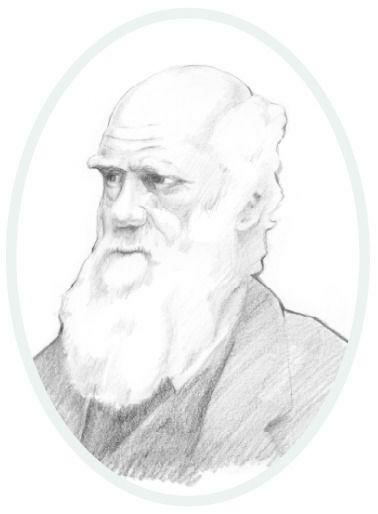
"As by this theory innumerable transitional forms must have existed, why do we not find them embedded in countless numbers in the
crust of the earth? The number of intermediate links between all living and extinct species must have been inconceivably great!"

23 And when they had laid many stripes upon them, they cast them into prison, charging the jailor to keep them safely:
24 Who, having received such a charge, thrust them into the inner prison, and made their feet fast in the stocks.
25 And at midnight Paul and Silas prayed, and sang praises to God: and the prisoners heard them.
26 And suddenly there was a great earthquake, so that the foundations of the prison were shaken: and immediately all the doors were opened, and every one's bands were loosed.
27 And the keeper of the prison awaking out of his sleep, and seeing the prison doors open, he drew out his sword, and would have
killed himself, supposing that the prisoners had been fled.
QUESTIONS & OBJECTIONS
17:2 "Christians can't use 'circular reasoning' by trying to prove the Bible by quoting from the Bible!"
The "circular reasoning" argument is absurd. That's like saying you can't prove that the president lives in the White House by looking into the White House. It is looking into the White House that will provide the necessary proof. The fulfilled prophecies, the amazing consistency, and the many scientific statements of the Bible prove it to be the Word of God. They provide evidence that it is supernatural in origin.
See also Psalm 119:105 comment. 28 But Paul cried with a loud voice, saying, Do yourself no harm: for we are all here.
29 Then he called for a light, and sprang in, and came trembling, and fell down before Paul and Silas,
30 And brought them out, and said, Sirs, what must I do to be saved?
3 1 And they said, Believe on the Lord Jesus Christ, and you shall be saved, and your house.
32 And they spoke to him the word of the Lord, and to all that were in his house.
33 And he took them the same hour of the night, and washed their stripes; and was baptized, he and all his, straightway.
34 And when he had brought them into his house, he set meat before them, and rejoiced, believing in God with all his house.
35 And when it was day, the magistrates sent the serjeants, saying, Let those men go.
36 And the keeper of the prison told this saying to Paul, The magistrates have sent to let you go: now therefore depart, and go in peace.
37 But Paul said to them, They have beaten
us openly uncondemned, being Romans, and have cast us into prison; and now do they thrust us out privately? nay verily; but let them come themselves and fetch us out.
38 And the serjeants told these words to the magistrates: and they feared, when they heard that they were Romans.
39 And they came and besought them, and brought them out, and desired them to depart out of the city.
40 And they went out of the prison, and entered into the house of Lydia and when they had seen the brethren, they comforted them, and departed.
16:6 "I think a good rule of thumb to follow would be to presume the Lord wants you to share the gospel with everyone unless He leads you not to." Danny Lehmann
16:16 Those who think they are contacting their dead loved ones through the occult are actually contacting "familiar spirits" (demons), a forbidden practice (Leviticus 19:31; 20:6; Deuteronomy 18:10–12).
16:16–18 The woman (or the demon) was speaking the truth. These men were servants of the Most High God, and they were showing the way of salvation. Why then was Paul grieved? Satan is very subtle. Rather than openly oppose the truth, he will often attempt to conceal it by maintaining that the occult and God are compatible. If you are open-air preaching, don't be surprised to have someone who is obviously demonically controlled loudly agree with you, so that it looks to the crowd that you are both preaching the same message. This is very frustrating.
For two years I was heckled almost daily by a woman named Petra. She dressed in black, carried a wooden staff, and said she was a prophet to the nation. As in the days of Noah, only eight would be saved. She maintained that she was one of them, and that she determined who the other seven would be. She also claimed that my spirit visited her spirit in the night (it did not!). My problem was that she would "Amen" much of what I
preached, adding her thoughts at the points I made. She would do this at the top of her very loud voice. It must have appeared to newcomers to the crowd that we were a team, preaching the same thing. This was why I was delighted when (every now and then) she would get angry with something I said and let out a string of cuss words, revealing to the crowd that we were not on the same side.
The question arises as to whether Paul did the right thing by casting out the demon. I'm not sure he did. If the woman wasn't repentant, she may have received seven more demons (Matthew 12:43–45). After his action, great persecution came against the disciples, but God in His goodness worked it out for their good, and for the good of the Philippian jailer and his family (see vv. 24– 34). 16:25 Ira Sankey, before he became D.L. Moody's famous song leader (and a powerful preacher himself), was assigned to night duty in the American Civil War. While he was on
duty, he lifted his eyes toward heaven and began to sing, praising the Lord while he was alone. At least, he thought he was alone.
Years later, after the war had ended, Sankey was on a ship traveling across the Atlantic Ocean. Since he was now a famous singer, a crowd of people approached him and asked him to sing. He lifted his eyes toward heaven and sang a beautiful hymn.
After his song, a man from the crowd asked him if, on a certain night during the Civil War, he had performed night duty for a certain infantry unit. "Yes, I did," was his reply.
The man continued, "I was on the opposite side of the war, and I was hiding in a bush near your camp. With my rifle aimed at your head, I was about to shoot you when you looked toward heaven and began to sing. I thought, 'Well, I like music, and this guy has a nice voice. I'll sit here, let him sing the song, ... and then shoot him. He's not going anywhere.' But then I realized what you were singing. It was the same hymn my mother used
to sing at my bedside when I was a child. And it's the same hymn you sang tonight! I tried, but that night during the Civil War, I was powerless to shoot you."
Ira Sankey pointed that man to Christ. He and thousands of others were saved under Sankey's ministry. All this stemmed from the fact that Sankey praised the Lord at all times.
CHAPTER 17
Now when they had passed through Amphipolis and Apollonia, they came to Thessalonica, where was a synagogue of the Jews:
2 And Paul, as his manner was, went in to them, and three sabbath days reasoned with them out of the scriptures,
3 Opening and alleging, that Christ must needs have suffered, and risen again from the dead; and that this Jesus, whom I preach to you, is Christ.
4 And some of them believed, and
consorted with Paul and Silas; and of the devout Greeks a great multitude, and of the chief women not a few.
5 But the Jews which believed not, moved with envy, took to them certain lewd fellows of the baser sort, and gathered a company, and set all the city on an uproar, and assaulted the house of Jason, and sought to bring them out to the people.
6 And when they found them not, they drew Jason and certain brethren to the rulers of the city, crying, These that have turned the world upside down are come here also;
7 Whom Jason has received: and these all do contrary to the decrees of Caesar, saying that there is another king, one Jesus.
"My main business is the saving of souls. This one thing I do."
CHARLES SPURGEON 8 And they troubled the people and the rulers of the city, when they heard these things.
9 And when they had taken security of Jason, and of the others, they let them go.
10 And the brethren immediately sent away Paul and Silas by night to Berea: who coming there went into the synagogue of the Jews.
11 These were more noble than those in Thessalonica, in that they received the word with all readiness of mind, and searched the scriptures daily, whether those things were so.
12 Therefore many of them believed; also of honorable women which were Greeks, and of men, not a few.
13 But when the Jews of Thessalonica had knowledge that the word of God was preached of Paul at Berea, they came there also, and stirred up the people.
14 And then immediately the brethren sent away Paul to go as it were to the sea: but Silas and Timotheus abode there still.
15 And they that conducted Paul brought him to Athens: and receiving a commandment to Silas and Timotheus for to come to him
with all speed, they departed.
1 6 Now while Paul waited for them at Athens, his spirit was stirred in him, when he saw the city wholly given to idolatry.
1 7 Therefore disputed he in the synagogue with the Jews, and with the devout persons, and in the market daily with them that met with him.
POINTS FOR OPEN-AIR
PREACHING
17:22 Give Yourself a Lift If you are going to preach in the open-air, elevate yourself. For eighteen months, I preached without any elevation and hardly attracted any listeners. As soon as I did it "soapbox" style, people stopped to listen. Their attitude was "What has this guy got to say?" They had an excuse to stop.
Also, elevation will give you protection. I was once almost eaten by an angry 6'6"
gentleman who kept fuming, "God is love!" We were eye to eye ... while I was elevated. On another occasion, a very heavy gentleman who had a mean countenance placed it about 6" from mine and whispered, "Jesus said to love your enemies." I nodded in agreement. Then he asked in a deep voice, "Who is your enemy?" I shrugged. His voice deepened and spilled forth in a chilling tone, "Lucifer!" I was standing beside my stepladder at the time so he pushed me backwards with his stomach. He kept doing so until I was moved back about 20 feet. I prayed, "Wisdom, Lord," then said, "You are either going to hit me or hug me." He hugged me and walked off. That wouldn't have happened if I had been elevated.
Elevation will also give you added authority. Often hecklers will walk right up to you and ask questions quietly. This is an attempt to stifle the preaching, and it will work if you are not higher than your heckler. If they come too close to me, I talk over their
heads and tell them to go back to the heckler's gallery. They actually obey me because they get the impression I am bigger than they are.
When Ezra preached the Law, he was elevated (Nehemiah 8:4,5). John Wesley used elevation to preach. Jesus preached the greatest sermon ever on a mount (Matthew 5– 7), and Paul went up Mars' Hill to preach (Acts 17:22). So if you can't find a hilltop to preach from, use a soapbox or a stepladder. See Acts 3:4 comment.
18 Then certain philosophers of the Epicureans, and of the Stoicks, encountered him. And some said, What will this babbler say? other some, He seems to be a setter forth of strange gods: because he preached to them Jesus, and the resurrection.
USING THE LAW IN
EVANGELISM
17:29 Paul was preaching the essence of
the First and Second Commandments to show his hearers that they were idolaters. See Acts 28:23 comment. 19 And they took him, and brought him to Areopagus, saying, May we know what this new doctrine, whereof you speak, is?
20 For you bring certain strange things to our ears: we would know therefore what these things mean.
21 (For all the Athenians and strangers which were there spent their time in nothing else, but either to tell, or to hear some new thing.)
22 Then Paul stood in the midst of Mars' hill, and said, You men of Athens, I perceive that in all things you are too superstitious.
23 For as I passed by, and beheld your devotions, I found an altar with this inscription, TO THE UNKNOWN GOD. Whom therefore you ignorantly worship, him declare I to you.
24 God that made the world and all things therein, seeing that he is Lord of heaven and
earth, dwells not in temples made with hands;
25 Neither is worshipped with men's hands, as though he needed any thing, seeing he gives to all life, and breath, and all things;
26 And has made of one blood all nations of men for to dwell on all the face of the earth, and has determined the times before appointed, and the bounds of their habitation;
27 That they should seek the Lord, if haply they might feel after him, and find him, though he be not far from every one of us:
28 For in him we live, and move, and have our being; as certain also of your own poets have said, For we are also his offspring.
29 Forasmuch then as we are the offspring of God, we ought not to think that the Godhead is like to gold, or silver, or stone, graven by art and man's device.
30 And the times of this ignorance God winked at; but now commands all men every where to repent:
31 Because he has appointed a day, in the which he will judge the world in
righteousness by that man whom he has ordained; whereof he has given assurance to all men, in that he has raised him from the dead.
32 And when they heard of the resurrection of the dead, some mocked: and others said, We will hear you again of this matter.
33 So Paul departed from among them. 18:4 Paul did not go to the synagogue to keep the Sabbath holy. He went there to reason with the Jews about Christ. His manner was to become like a Jew to the Jews. His heart's desire was to reach his own nation with the gospel. See 1 Corinthians 9:20–22. 34 Howbeit certain men clave to him, and believed: among the which was Dionysius the Areopagite, and a woman named Damaris, and others with them.
17:24 Evolution should not be taught. Dr. Colin Patterson, senior paleontologist, British Museum of Natural History, gave a keynote address at the American Museum of
Natural History, New York City, in 1981. In it, he explained his sudden "antievolutionary" view: "One morning I woke up and ... it struck me that I had been working on this stuff for twenty years and there was not one thing I knew about it. That's quite a shock to learn that one can be misled so long ... I've tried putting a simple question to various people: 'Can you tell me anything you know about evolution, any one thing, any one thing that is true?' I tried that question on the geology staff at the Field Museum of Natural History and the only answer I got was silence. I tried it on the members of the Evolutionary Morphology Seminar in the University of Chicago, a very prestigious body of evolutionists, and all I got there was silence for a long time and eventually one person said, 'I do know one thing—it ought not to be taught in high school.'"
17:26 Mormons believe that God cursed Cain with black skin and a flat nose. However, the "mark" was set upon Cain
before the Flood. In that Flood all flesh perished except for Noah, his wife, his three sons, and their wives. If the curse upon Cain was dark skin, the only way the race could have survived was for Noah to be a direct descendent of Cain. However, Noah's genealogy didn't come from Cain, but from Seth (Genesis 5:3,6–32).
17:30 Repentance—its necessity for salvation. See Acts 20:21.
"If my six-year-old daughter was out on the road playing in front of my house and I saw a huge truck barreling around the corner, what would I do in that moment? Out of my love for my daughter I would not gently invite her to step away from the street. I would command her to change her direction, and get off the road! Why? Because of my love for her. I know that the truck would not be able to stop in time and it would run her over and kill her. The same is true of the Father's love for us. Out of His love, he commands us to repent, because at any moment the truck of sin and
death could run us over for playing on the road of rebellion!" Rob Price
17:31 Judgment Day: For verses that warn of its reality, see Romans 2:16. We preach Christ and Him crucified for the sins of the world, seeking to warn every man of the great and coming Day of the Lord, in which God will judge the world in righteousness. The standard of judgment will be a perfect Law (Psalm 19:7), and those who fail to meet its perfect requirements will come under its terrible wrath. See also Acts 18:9 comment.
CHAPTER 18
After these things Paul departed from Athens, and came to Corinth; 2 And found a certain Jew named Aquila, born in Pontus, lately come from Italy, with his wife Priscilla; (because that Claudius had commanded all Jews to depart from Rome:) and came to them.
3 And because he was of the same craft, he abode with them, and wrought: for by their occupation they were tentmakers.
4 And he reasoned in the synagogue every sabbath, and persuaded the Jews and the Greeks.
5 And when Silas and Timotheus were come from Macedonia, Paul was pressed in the spirit, and testified to the Jews that Jesus was Christ.
6 And when they opposed themselves, and blasphemed, he shook his raiment, and said to them, Your blood be upon your own heads; I am clean: from henceforth I will go to the Gentiles.
7 And he departed thence, and entered into a certain man's house, named Justus, one that worshipped God, whose house joined hard to the synagogue.
QUESTIONS & OBJECTIONS
17:26 "Where do all the races come from?"
Some have wondered, if we are all descendents of Adam and Eve, why are there so many races? The Bible informed us 2,000 years ago that God has made all nations from "one blood." We are all of the same race— the "human race," descendents of Adam and Eve, something science is slowly coming to realize.
Reuters news service reported the following article by Maggie Fox:
Science may have caught up with the Bible, which says that Adam and Eve are the ancestors of all humans alive today.
Peter Underhill of Stanford University in California remarked on findings published in the November 2000 issue of the journal Nature Genetics ... Geneticists have long agreed there is no genetic basis to race—only to ethnic and geographic groups. "People look at a very conspicuous trait like skin color and they say, 'Well, this person's so different' ...
but that's only skin deep," Underhill said. "When you look at the level of the Y chromosome you find that, gee, there is very little difference between them. And skin color differences are strictly a consequence of climate."
8 And Crispus, the chief ruler of the synagogue, believed on the Lord with all his house; and many of the Corinthians hearing believed, and were baptized.
9 Then spoke the Lord to Paul in the night by a vision, Be not afraid, but speak, and hold not your peace:
10 For I am with you, and no man shall set on you to hurt you: for I have much people in this city.
11 And he continued there a year and six months, teaching the word of God among them.
12 And when Gallio was the deputy of Achaia, the Jews made insurrection with one accord against Paul, and brought him to the judgment seat,
13 Saying, This fellow persuades men to worship God contrary to the law.
14 And when Paul was now about to open his mouth, Gallio said to the Jews, If it were a matter of wrong or wicked lewdness, O you Jews, reason would that I should bear with you:
15 But if it be a question of words and names, and of your law, you look to it; for I will be no judge of such matters.
16 And he drove them from the judgment seat.
17:22 How to Witness to Muslims In Acts 17:22–31 the apostle Paul built on areas of "common ground" as he prepared his listeners for the good news of the gospel. Even though he was addressing Gentiles whose beliefs were erroneous, he didn't rebuke them for having a doctrine of devils —"The things which the Gentiles sacrifice, they sacrifice to devils, and not to God" (1 Corinthians 10:20). Neither did he present the great truth that Jesus of Nazareth was
Almighty God manifest in human form. This may have initially offended his hearers and closed the door to the particular knowledge he wanted to convey. Instead, he built on what they already knew. He first established that there is a Creator who made all things. He then exposed their sin of transgression of the First and Second of the Ten Commandments. Then he preached future punishment for sin.
There are three main areas of common ground upon which Christians may stand with Muslims. First, that there is one God—the Creator of all things. The second area is the fact that Jesus of Nazareth was a prophet of God. The Bible makes this clear: "And He shall send Jesus Christ,...For Moses truly said to the fathers, A prophet shall the Lord your God raise up to you of your brethren, like to me; him shall you hear in all things whatsoever he shall say to you" (Acts 3:20– 22). The Qur'an (Koran) says: "Behold! The angel said 'O Mary! Allah giveth you Glad
Tidings of a word from Him. His name will be (Christ Jesus) the son of Mary, held in honor in this world and the hereafter and of (the company of) those nearest to Allah'" (Surah 3:45). In Surah 19:19, the angel said to Mary, "I am only a messenger of thy Lord to announce to you a gift of a holy son." Surah 3:55 says, "Allah said: 'O Jesus! I will take you and raise you to Myself."
It is because of these and other references to Jesus in the Qur'an that a Muslim will not object when you establish that Jesus was a prophet from God.
This brings us to the third area of common ground. Muslims also respect Moses as a prophet of God. Therefore, there should be little contention when Christians speak of God (as Creator), Jesus the prophet, and the Law of the prophet Moses.
Most Muslims do have some knowledge of their sinfulness, but few see sin in its true light. It is therefore essential to take them through the spiritual nature of the Ten
Commandments. While it is true that the Law of Moses begins with, "I am the Lord your God, you shall have no other gods before Me," it may be unwise to tell a Muslim, at that point, that Allah is a false god. Such talk may close the door before you are able to speak to his conscience. It is wise rather to present the Law in a similar order in which Jesus gave it in Luke 18:20. He addressed the man's sins of the flesh. He spoke directly to sins that have to do with his fellow man. Therefore, ask your hearer if he has ever told a lie. When (if) he admits that he has, ask him what that makes him. Don't call him a liar. Instead, gently press him to tell you what someone is called who has lied. Try to get him to say that he is a "liar."
Then ask him if he has ever stolen something, even if it's small. If he has, ask what that makes him (a thief). Then quote from the Prophet Jesus: "Whosoever looks on a woman to lust after her has committed adultery with her already in his heart"
(Matthew 5:27). Ask if he has ever looked at a woman with lust. If he is reasonable, he will admit that he has sinned in that area. Then gently tell him that, by his own admission, he is a "lying, thieving adultererat-heart." Say, "If God judges you by the Law of Moses on Judgment Day, will you be innocent or guilty?"
At this point, he will more than likely say that he will be innocent, because he confesses his sins to God. However, the Qur'an says: "Every soul that has sinned, if it possessed all that is on earth, would fain give it in ransom" (Surah 10:54). In other words, if he possessed the whole world and offered it to God as a sacrifice for his sins, it wouldn't be enough to provide atonement for his sins.
Imagine that a criminal is facing a $50,000 fine. He is penniless, so he sincerely tells the judge that he is sorry for a crime and vows never to do it again. The judge won't let him go on the basis of his sorrow, or his vow never to commit the crime again. Of course,
he should be sorry for what he has done, and of course, he shouldn't break the law again. The judge will, however, let him go if someone else pays the fine for him.
Now tell him that Moses gave instructions to Israel to shed the blood of a spotless lamb to provide a temporary atonement for their sin; and that Jesus was the Lamb that God provided to make atonement for the sins of the world. Through faith in Jesus, he can have atonement with God. All his sin can be washed away—once and for all. God can grant him the gift of everlasting life through faith in Jesus Christ on the basis of His death and resurrection.
The uniqueness of Jesus of Nazareth was that He claimed He had power on earth to forgive sins (Matthew 9:2–6). No other prophet of any of the great religions made this claim. Only Jesus can provide peace with God. This is why He said, "I am the way, the truth, and the life: no man comes to the Father, but by me" (John 14:6). God commands
sinners to repent and trust in Jesus as Lord and Savior, or they will perish.
To try to justify himself, your listener may say something like, "The Bible has changed. It has been altered. There are many different versions, but the Koran has never changed." Explain to him that there are many different versions, printed in different languages and in modern English, to help people understand the Bible, but the content of the Scriptures remains the same. The Dead Sea Scrolls prove that God has preserved the Scriptures. Tell him that the 100% accurate prophecies of Matthew 24, Luke 21, and 2 Timothy 3 prove that this is the Book of the Creator.
Your task is to present the truth of the gospel. It is God who makes it come alive (1 Corinthians 3:6,7). It is God who brings conviction of sin (John 16:7,8). It is God who reveals who Jesus is (Matthew 16:16,17). All God requires is your faithful presentation of the truth (Matthew 25:21).
17 Then all the Greeks took Sosthenes, the
chief ruler of the synagogue, and beat him before the judgment seat. And Gallio cared for none of those things.
18 And Paul after this tarried there yet a good while, and then took his leave of the brethren, and sailed thence into Syria, and with him Priscilla and Aquila; having shorn his head in Cenchrea: for he had a vow.
19 And he came to Ephesus, and left them there: but he himself entered into the synagogue, and reasoned with the Jews.
20 When they desired him to tarry longer time with them, he consented not;
21 But bade them farewell, saying, I must by all means keep this feast that comes in Jerusalem: but I will return again to you, if God will. And he sailed from Ephesus.
22 And when he had landed at Caesarea, and gone up, and saluted the church, he went down to Antioch.
23 And after he had spent some time there, he departed, and went over all the country of Galatia and Phrygia in order, strengthening all
the disciples.
24 And a certain Jew named Apollos, born at Alexandria, an eloquent man, and mighty in the scriptures, came to Ephesus.
25 This man was instructed in the way of the Lord; and being fervent in the spirit, he spoke and taught diligently the things of the Lord, knowing only the baptism of John.
26 And he began to speak boldly in the synagogue: whom when Aquila and Priscilla had heard, they took him to them, and expounded to him the way of God more perfectly.
27 And when he was disposed to pass into Achaia, the brethren wrote, exhorting the disciples to receive him: who, when he was come, helped them much which had believed through grace:
28 For he mightily convinced the Jews, and that publicly, showing by the scriptures that Jesus was Christ.
18:4 Paul did not go to the synagogue to keep the Sabbath holy. He went there to
reason with the Jews about Christ. His manner was to become like a Jew to the Jews. His heart's desire was to reach his own nation with the gospel. See 1 Corinthians 9:20–22. 18:9 "God [has] appointed a day in which He will judge the world, and we sigh and cry until it shall end the reign of wickedness, and give rest to the oppressed. Brethren, we must preach the coming of the Lord, and preach it somewhat more than we have done, because it is the driving power of the gospel. Too many have kept back these truths, and thus the bone has been taken out of the arm of the gospel. Its point has been broken; its edge has been blunted. The doctrine of judgment to come is the power by which men are to be aroused. There is another life; the Lord will come a second time; judgment will arrive; the wrath of God will be revealed. Where this is not preached, I am bold to say the gospel is not preached.
"It is absolutely necessary to the preaching
of the gospel of Christ that men be warned as to what will happen if they continue in their sins. Ho, ho sir surgeon, you are too delicate to tell the man that he is ill! You hope to heal the sick without their knowing it. You therefore flatter them; and what happens? They laugh at you; they dance upon their own graves. At last they die! Your delicacy is cruelty; your flatteries are poisons; you are a murderer. Shall we keep men in a fool's paradise? Shall we lull them into soft slumbers from which they will awake in hell? Are we to become helpers of their damnation by our smooth speeches? In the name of God we will not." Charles Spurgeon
18:10 Never be discouraged by thinking that you are the only one God can use to reach the lost. Elijah, fearing that all the other prophets had been killed, said, "I, even I only, am left; and they seek my life, to take it away" (1 Kings 19:10). Yet God had reserved 7,000 faithful followers who hadn't bowed their knee to worship Baal (v.18). Because God
has His laborers, we need never panic when it comes to our loved ones being reached with the gospel. If we faithfully reach out and touch the lives of other peoples' loved ones, God (in His perfect timing) can use others to touch the lives of the ones we love so dearly. Claim your family in prayer, then thank God for His faithfulness in answering those prayers.
18:19 "The proper goal in apologetics is not to force someone to admit that we have proved our position, but simply to remove objections so that a nonbeliever cannot hide behind intellectual objections." John S. Hammett
18:26 "It is better to be divided by truth than united in error; it is better to speak truth that hurts and then heals than to speak a lie; it is better to be hated for telling the truth than to be loved for telling a lie; it is better to stand alone with truth than to be wrong with the multitude ... The religion of today is 'getalong-ism.' It is time for men and women of God to stand, [even] if they have to stand
alone." Adrian Rogers
CHAPTER 19
And it came to pass, that, while Apollos was at Corinth, Paul having passed through the upper coasts came to Ephesus: and finding certain disciples,
2 He said to them, Have you received the Holy Spirit since you believed? And they said to him, We have not so much as heard whether there be any Holy Spirit.
3 And he said to them, to what then were you baptized? And they said, to John's baptism.
4 Then said Paul, John verily baptized with the baptism of repentance, saying to the people, that they should believe on him which should come after him, that is, on Christ Jesus.
5 When they heard this, they were baptized in the name of the Lord Jesus.
6 And when Paul had laid his hands upon
them, the Holy Spirit came on them; and they spoke with tongues, and prophesied.
7 And all the men were about twelve. 8 And he went into the synagogue, and spoke boldly for the space of three months, disputing and persuading the things concerning the kingdom of God.
9 But when divers were hardened, and believed not, but spoke evil of that way before the multitude, he departed from them, and separated the disciples, disputing daily in the school of one Tyrannus.
10 And this continued by the space of two years; so that all they which dwelt in Asia heard the word of the Lord Jesus, both Jews and Greeks.
11 And God wrought special miracles by the hands of Paul:
12 So that from his body were brought to the sick handkerchiefs or aprons, and the diseases departed from them, and the evil spirits went out of them.
13 Then certain of the vagabond Jews,
exorcists, took upon them to call over them which had evil spirits the name of the Lord Jesus, saying, We adjure you by Jesus whom Paul preaches.
14 And there were seven sons of one Sceva, a Jew, and chief of the priests, which did so.
15 And the evil spirit answered and said, Jesus I know, and Paul I know; but who are you?
16 And the man in whom the evil spirit was leaped on them, and overcame them, and prevailed against them, so that they fled out of that house naked and wounded.
17 And this was known to all the Jews and Greeks also dwelling at Ephesus; and fear fell on them all, and the name of the Lord Jesus was magnified.
18 And many that believed came, and confessed, and showed their deeds.
19 Many of them also which used curious arts brought their books together, and burned them before all men: and they counted the
price of them, and found it fifty thousand pieces of silver.
20 So mightily grew the word of God and prevailed.
21 After these things were ended, Paul purposed in the spirit, when he had passed through Macedonia and Achaia, to go to Jerusalem, saying, After I have been there, I must also see Rome.
22 So he sent into Macedonia two of them that ministered to him, Timotheus and Erastus; but he himself stayed in Asia for a season.
23 And the same time there arose no small stir about that way.
24 For a certain man named Demetrius, a silversmith, which made silver shrines for Diana, brought no small gain to the craftsmen;
25 Whom he called together with the workmen of like occupation, and said, Sirs, you know that by this craft we have our wealth.
26 Moreover you see and hear, that not alone at Ephesus, but almost throughout all
Asia, this Paul has persuaded and turned away much people, saying that they be no gods, which are made with hands:
27 So that not only this our craft is in danger to be set at nought; but also that the temple of the great goddess Diana should be despised, and her magnificence should be destroyed, whom all Asia and the world worships.
28 And when they heard these sayings, they were full of wrath, and cried out, saying, Great is Diana of the Ephesians.
29 And the whole city was filled with confusion: and having caught Gaius and Aristarchus, men of Macedonia, Paul's companions in travel, they rushed with one accord into the theatre.
30 And when Paul would have entered in to the people, the disciples suffered him not.
31 And certain of the chief of Asia, which were his friends, sent to him, desiring him that he would not adventure himself into the theatre.
32 Some therefore cried one thing, and some another: for the assembly was confused; and the more part knew not wherefore they were come together.
33 And they drew Alexander out of the multitude, the Jews putting him forward. And Alexander beckoned with the hand, and would have made his defence to the people.
34 But when they knew that he was a Jew, all with one voice about the space of two hours cried out, Great is Diana of the Ephesians.
35 And when the town clerk had appeased the people, he said, You men of Ephesus, what man is there that knows not how that the city of the Ephesians is a worshipper of the great goddess Diana, and of the image which fell down from Jupiter?
36 Seeing then that these things cannot be spoken against, you ought to be quiet, and to do nothing rashly.
37 For you have brought here these men, which are neither robbers of churches, nor yet
blasphemers of your goddess.
38 Wherefore if Demetrius, and the craftsmen which are with him, have a matter against any man, the law is open, and there are deputies: let them implead one another.
39 But if you inquire any thing concerning other matters, it shall be determined in a lawful assembly.
40 For we are in danger to be called in question for this day's uproar, there being no cause whereby we may give an account of this concourse.
41 And when he had thus spoken, he dismissed the assembly.
*** For the key to reaching the lost, see
Luke 11:52 comment.
***
CHAPTER 20
And after the uproar was ceased, Paul called to him the disciples, and embraced
them, and departed for to go into Macedonia.
2 And when he had gone over those parts, and had given them much exhortation, he came into Greece,
3 And there abode three months. And when the Jews laid wait for him, as he was about to sail into Syria, he purposed to return through Macedonia.
4 And there accompanied him into Asia Sopater of Berea; and of the Thessalonians, Aristarchus and Secundus; and Gaius of Derbe, and Timotheus; and of Asia, Tychicus and Trophimus.
5 These going before tarried for us at Troas.
6 And we sailed away from Philippi after the days of unleavened bread, and came to them to Troas in five days; where we abode seven days.
7 And upon the first day of the week, when the disciples came together to break bread, Paul preached to them, ready to depart on the morrow; and continued his speech until
midnight.
8 And there were many lights in the upper chamber, where they were gathered together.
9 And there sat in a window a certain young man named Eutychus, being fallen into a deep sleep: and as Paul was long preaching, he sunk down with sleep, and fell down from the third loft, and was taken up dead.
10 And Paul went down, and fell on him, and embracing him said, Trouble not yourselves; for his life is in him.
11 When he therefore was come up again, and had broken bread, and eaten, and talked a long while, even till break of day, so he departed.
12 And they brought the young man alive, and were not a little comforted.
13 And we went before to ship, and sailed to Assos, there intending to take in Paul: for so had he appointed, minding himself to go afoot.
14 And when he met with us at Assos, we took him in, and came to Mitylene.
15 And we sailed thence, and came the next day over against Chios; and the next day we arrived at Samos, and tarried at Trogyllium; and the next day we came to Miletus. 16 For Paul had determined to sail by Ephesus, because he would not spend the time in Asia: for he hasted, if it were possible for him, to be at Jerusalem the day of Pentecost.
17 And from Miletus he sent to Ephesus, and called the elders of the church.
18 And when they were come to him, he said to them, You know, from the first day that I came into Asia, after what manner I have been with you at all seasons,
19 Serving the Lord with all humility of mind, and with many tears, and temptations, which befell me by the lying in wait of the Jews:
20 And how I kept back nothing that was profitable to you, but have showed you, and have taught you publicly, and from house to house,
21 Testifying both to the Jews, and also to the Greeks, repentance toward God, and faith toward our Lord Jesus Christ.
22 And now, behold, I go bound in the spirit to Jerusalem, not knowing the things that shall befall me there:
23 Save that the Holy Spirit witnesses in every city, saying that bonds and afflictions abide me.
24 But none of these things move me, neither count I my life dear to myself, so that I might finish my course with joy, and the ministry, which I have received of the Lord Jesus, to testify the gospel of the grace of God.
25 And now, behold, I know that you all, among whom I have gone preaching the kingdom of God, shall see my face no more.
26 Wherefore I take you to record this day, that I am pure from the blood of all men.
27 For I have not shunned to declare to you all the counsel of God.
28 Take heed therefore to yourselves, and to all the flock, over the which the Holy Spirit has made you overseers, to feed the church of God, which he has purchased with his own blood.
29 For I know this, that after my departing shall grievous wolves enter in among you, not sparing the flock.
30 Also of your own selves shall men arise, speaking perverse things, to draw away disciples after them.
31 Therefore watch, and remember, that by the space of three years I ceased not to warn every one night and day with tears.
32 And now, brethren, I commend you to God, and to the word of his grace, which is able to build you up, and to give you an inheritance among all them which are sanctified.
33 I have coveted no man's silver, or gold, or apparel.
34 Yes, you yourselves know, that these hands have ministered to my necessities, and
to them that were with me.
35 I have showed you all things, how that so laboring you ought to support the weak, and to remember the words of the Lord Jesus, how he said, It is more blessed to give than to receive.
36 And when he had thus spoken, he kneeled down, and prayed with them all.
37 And they all wept sore, and fell on Paul's neck, and kissed him,
38 Sorrowing most of all for the words which he spoke, that they should see his face no more. And they accompanied him to the ship.
POINTS FOR OPEN-AIR
PREACHING
20:21 Aim for Repentance Rather Than a Decision
As you witness, divorce yourself from the thought that you are merely seeking "decisions
for Christ." What we should be seeking is repentance within the heart. This is the purpose of the Law, to bring the knowledge of sin. How can a man repent if he doesn't know what sin is? If there is no repentance, there is no salvation. Jesus said, "Unless you repent, you shall all likewise perish" (Luke 13:3). God is not willing that any should perish, but that all should come to repentance (2 Peter 3:9). Many don't understand that the salvation of a soul is not a resolution to change a way of life, but "repentance toward God, and faith toward our Lord Jesus Christ." The modern concept of success in evangelism is to relate how many people were "saved" (that is, how many prayed the "sinner's prayer"). This produces a "no decisions, no success" mentality. This shouldn't be, because Christians who seek decisions in evangelism become discouraged after a time of witnessing if "no one came to the Lord." The Bible tells us that as we sow the good seed of
the Gospel; one sows and another reaps. If you faithfully sow the seed, someone will reap. If you reap, it is because someone has sown in the past, but it is God who causes the seed to grow. If His hand is not on the person you are leading in a prayer of committal, if there is not God-given repentance, then you will end up with a stillbirth on your hands, and that is nothing to rejoice about. We should measure our success by how faithfully we sowed the seed. In that way, we will avoid becoming discouraged.
"If you have not repented, you will not see the inside of the kingdom of God." Billy Graham
20:9 Eutychus had some good excuses for dozing off:
• Paul's sermon was long. • The many lights no doubt made the room hot.
• He was a young man staying up until midnight.
• He was "overcome" by sleep.
It is the midnight hour. We sit on the window of eternity. We can fall into eternity in a heartbeat. If the stale air of this world's influence makes us sink into a sleep of apathy, we must seek refreshing from the presence of the Lord. When our Christian life seems to be a dry and lifeless sermon without end, and the joy of feeding on God's Word is no longer in our hearts, we must get on our knees and return to our first love.
20:21 Repentance—its necessity for salvation. See 2 Peter 3:9.
20:24 A missionary society wrote to David Livingstone and suggested that if he could ensure them of safe roads, they would send him some help. He responded with the following note: "If you have men who will only come if they have a good road, I don't want them. I want men who will come if there is no road at all."
20:26 "My anxious desire is that every time I preach, I may clear myself of blood of all men; that if I step from this platform to my
coffin, I may have told out all I knew of the way of salvation." Charles Spurgeon
20:27 How to witness. Here is a suggested structure of a gospel message:
Begin in the natural realm if you are not in a normal church setting. Perhaps you could springboard off some well-publicized tragedy, then ask if your hearers ever wonder how they are going to die. Say that we will all die because we have broken an eternal law— the Law of God, often referred to as the Ten Commandments. Then open up each Commandment, emphasizing its spiritual nature (lust is seen by God as adultery, hatred is murder—that God sees man's thoughts, and nothing is hidden from His eyes).
Stress the fact of Judgment Day—that God is holy and will bring every work into judgment, including every secret thing whether it is good or evil. Don't be afraid to use the word "hell." Tell them that it is God's place of punishment for sin. Emphasize that He doesn't want them to go there, that He has
made provision for their forgiveness. Then preach Christ and Him crucified, risen from the dead. Thoroughly lace the message with God's Word—verbally quote relevant Scriptures. Then preach the necessity of repentance (that it's commanded), and the importance of faith in and obedience to God's Word. See Acts 20:21 comment.
CHAPTER 21
And it came to pass, that after we were gotten from them, and had launched, we came with a straight course to Coos, and the day following to Rhodes, and from thence to Patara:
2 And finding a ship sailing over to Phenicia, we went aboard, and set forth.
3 Now when we had discovered Cyprus, we left it on the left hand, and sailed into Syria, and landed at Tyre: for there the ship was to unload her burden.
4 And finding disciples, we tarried there
seven days: who said to Paul through the Spirit, that he should not go up to Jerusalem.
5 And when we had accomplished those days, we departed and went our way; and they all brought us on our way, with wives and children, till we were out of the city: and we kneeled down on the shore, and prayed.
6 And when we had taken our leave one of another, we took ship; and they returned home again.
7 And when we had finished our course from Tyre, we came to Ptolemais, and saluted the brethren, and abode with them one day.
POINTS FOR OPEN-AIR
PREACHING
21:30 Raw Nerves When you're preaching open-air, don't let angry reactions from the crowd concern you. A dentist knows where to work on a patient when he touches a raw nerve. When you touch
a raw nerve in the heart of the sinner, it means that you are in business. Anger is a thousand times better than apathy. Anger is a sign of conviction. If I have an argument with my wife and suddenly realize that I am in the wrong, I can come to her in a repentant attitude and apologize, or I can save face by lashing out in anger.
Read Acts 19 and see how Paul was a dentist with an eye for decay. He probed raw nerves wherever he went. At one point, he had to be carried shoulder height by soldiers because of the "violence of the people" (Acts 21:36). Now there's a successful preacher! He didn't seek the praise of men. John Wesley told his evangelist trainees that when they preached, people should either get angry or get converted. No doubt, he wasn't speaking about the "Jesus loves you" gospel, but about sin, Law, righteousness, judgment, and hell. See Matthew 28:19,20 comment.
8 And the next day we that were of Paul's company departed, and came to Caesarea:
and we entered into the house of Philip the evangelist, which was one of the seven; and abode with him.
9 And the same man had four daughters, virgins, which did prophesy.
10 And as we tarried there many days, there came down from Judea a certain prophet, named Agabus.
11 And when he was come to us, he took Paul's girdle, and bound his own hands and feet, and said, Thus says the Holy Spirit, So shall the Jews at Jerusalem bind the man that owns this girdle, and shall deliver him into the hands of the Gentiles.
12 And when we heard these things, both we, and they of that place, besought him not to go up to Jerusalem.
13 Then Paul answered, Why do you weep and break my heart? for I am ready not to be bound only, but also to die at Jerusalem for the name of the Lord Jesus.
14 And when he would not be persuaded, we ceased, saying, The will of the Lord be
done.
15 And after those days we took up our carriages, and went up to Jerusalem.
16 There went with us also certain of the disciples of Caesarea, and brought with them one Mnason of Cyprus, an old disciple, with whom we should lodge.
17 And when we were come to Jerusalem, the brethren received us gladly.
18 And the day following Paul went in with us to James; and all the elders were present.
19 And when he had saluted them, he declared particularly what things God had wrought among the Gentiles by his ministry.
20 And when they heard it, they glorified the Lord, and said to him, You see, brother, how many thousands of Jews there are which believe; and they are all zealous of the law:
21 And they are informed of you, that you teach all the Jews which are among the Gentiles to forsake Moses, saying that they ought not to circumcise their children, neither to walk after the customs.
22 What is it therefore? the multitude must needs come together: for they will hear that you are come.
23 Do therefore this that we say to you: We have four men which have a vow on them;
24 Them take, and purify yourself with them, and be at charges with them, that they may shave their heads: and all may know that those things, whereof they were informed concerning you, are nothing; but that you yourself also walk orderly, and keep the law.
25 As touching the Gentiles which believe, we have written and concluded that they observe no such thing, save only that they keep themselves from things offered to idols, and from blood, and from strangled, and from fornication.
26 Then Paul took the men, and the next day purifying himself with them entered into the temple, to signify the accomplishment of the days of purification, until that an offering should be offered for every one of them.
27 And when the seven days were almost
ended, the Jews which were of Asia, when they saw him in the temple, stirred up all the people, and laid hands on him,
28 Crying out, Men of Israel, help: This is the man, that teaches all men every where against the people, and the law, and this place: and further brought Greeks also into the temple, and has polluted this holy place.
29 (For they had seen before with him in the city Trophimus an Ephesian, whom they supposed that Paul had brought into the temple.)
30 And all the city was moved, and the people ran together: and they took Paul, and drew him out of the temple: and forthwith the doors were shut.
31 And as they went about to kill him, tidings came to the chief captain of the band, that all Jerusalem was in an uproar.
32 Who immediately took soldiers and centurions, and ran down to them: and when they saw the chief captain and the soldiers, they left beating of Paul.
33 Then the chief captain came near, and took him, and commanded him to be bound with two chains; and demanded who he was, and what he had done.
34 And some cried one thing, some another, among the multitude: and when he could not know the certainty for the tumult, he commanded him to be carried into the castle.
35 And when he came upon the stairs, so it was, that he was borne of the soldiers for the violence of the people.
36 For the multitude of the people followed after, crying, Away with him.
37 And as Paul was to be led into the castle, he said to the chief captain, May I speak to you? Who said, Can you speak Greek?
38 Are you not that Egyptian, which before these days made an uproar, and lead out into the wilderness four thousand men that were murderers?
39 But Paul said, I am a man which am a Jew of Tarsus, a city in Cilicia, a citizen of
no mean city: and, I beseech you, suffer me to speak to the people.
40 And when he had given him license, Paul stood on the stairs, and beckoned with the hand to the people. And when there was made a great silence, he spoke to them in the Hebrew tongue, saying,
21:5 Prayer—the secret weapon: See Mark 11:23.
CHAPTER 22
Men, brethren, and fathers, hear my defence which I make now to you.
2 (And when they heard that he spoke in the Hebrew tongue to them, they kept the more silence: and he said,)
3 I am verily a man which am a Jew, born in Tarsus, a city in Cilicia, yet brought up in this city at the feet of Gamaliel, and taught according to the perfect manner of the law of the fathers, and was zealous toward God, as you all are this day.
4 And I persecuted this way to the death, binding and delivering into prisons both men and women.
5 As also the high priest does bear me witness, and all the estate of the elders: from whom also I received letters to the brethren, and went to Damascus, to bring them which were there bound to Jerusalem, for to be punished.
6 And it came to pass, that, as I made my journey, and was come near to Damascus about noon, suddenly there shone from heaven a great light round about me.
7 And I fell to the ground, and heard a voice saying to me, Saul, Saul, why do you persecute me?
8 And I answered, Who are you, Lord? And he said to me, I am Jesus of Nazareth, whom you persecute.
9 And they that were with me saw indeed the light, and were afraid; but they heard not the voice of him that spoke to me.
10 And I said, What shall I do, Lord? And
the Lord said to me, Arise, and go into Damascus; and there it shall be told you of all things which are appointed for you to do.
11 And when I could not see for the glory of that light, being led by the hand of them that were with me, I came into Damascus.
12 And one Ananias, a devout man according to the law, having a good report of all the Jews which dwelt there,
13 Came to me, and stood, and said to me, Brother Saul, receive your sight. And the same hour I looked up upon him.
14 And he said, The God of our fathers has chosen you, that you should know his will, and see that Just One, and should hear the voice of his mouth.
15 For you shall be his witness to all men of what you have seen and heard.
16 And now why do you tarry? arise, and be baptized, and wash away your sins, calling on the name of the Lord.
17 And it came to pass, that, when I was come again to Jerusalem, even while I prayed
in the temple, I was in a trance;
18 And saw him saying to me, Make haste, and get quickly out of Jerusalem: for they will not receive your testimony concerning me.
19 And I said, Lord, they know that I imprisoned and beat in every synagogue them that believed on you:
20 And when the blood of your martyr Stephen was shed, I also was standing by, and consenting to his death, and kept the raiment of them that slew him.
21 And he said to me, Depart: for I will send you far hence to the Gentiles.
22 And they gave him audience to this word, and then lifted up their voices, and said, Away with such a fellow from the earth: for it is not fit that he should live.
23 And as they cried out, and cast off their clothes, and threw dust into the air,
24 The chief captain commanded him to be brought into the castle, and bade that he should be examined by scourging; that he might know wherefore they cried so against
him.
25 And as they bound him with thongs, Paul said to the centurion that stood by, Is it lawful for you to scourge a man that is a Roman, and uncondemned?
26 When the centurion heard that, he went and told the chief captain, saying, Take heed what you do: for this man is a Roman.
27 Then the chief captain came, and said to him, Tell me, are you a Roman? He said, Yes.
28 And the chief captain answered, With a great sum obtained I this freedom. And Paul said, But I was free born.
29 Then straightway they departed from him which should have examined him: and the chief captain also was afraid, after he knew that he was a Roman, and because he had bound him.
30 On the morrow, because he would have known the certainty wherefore he was accused of the Jews, he loosed him from his bands, and commanded the chief priests and all their council to appear, and brought Paul
down, and set him before them.
22:9 Contradiction in the Bible? Some may think that this is a mistake in the Scriptures, because in Acts 9:7 Paul said that those who were with him heard the voice. However, John 12:29 gives us insight into what God's voice sounds like. People heard His voice, but thought that it thundered (see also 2 Samuel 22:14; Job 37:4,5; 40:9). They obviously heard it, but the words were not coherent to them.
CHAPTER 23
And Paul, earnestly beholding the council, said, Men and brethren, I have lived in all good conscience before God until this day.
2 And the high priest Ananias commanded them that stood by him to smite him on the mouth.
3 Then said Paul to him, God shall smite you, you whited wall: for you sit to judge me after the law, and command me to be smitten
contrary to the law?
4 And they that stood by said, Do you revile God's high priest?
5 Then said Paul, I knew not, brethren, that he was the high priest: for it is written, You shall not speak evil of the ruler of your people.
6 But when Paul perceived that the one part were Sadducees, and the other Pharisees, he cried out in the council, Men and brethren, I am a Pharisee, the son of a Pharisee: of the hope and resurrection of the dead I am called in question.
7 And when he had so said, there arose a dissension between the Pharisees and the Sadducees: and the multitude was divided.
8 For the Sadducees say that there is no resurrection, neither angel, nor spirit: but the Pharisees confess both.
9 And there arose a great cry: and the scribes that were of the Pharisees' part arose, and strove, saying, We find no evil in this man: but if a spirit or an angel has spoken to
him, let us not fight against God.
10 And when there arose a great dissension, the chief captain, fearing lest Paul should have been pulled in pieces of them, commanded the soldiers to go down, and to take him by force from among them, and to bring him into the castle.
11 And the night following the Lord stood by him, and said, Be of good cheer, Paul: for as you have testified of me in Jerusalem, so must you bear witness also at Rome.
"The great benefit of open-air preaching is that we get so many new comers to hear the gospel who otherwise would never hear it."
CHARLES SPURGEON 12 And when it was day, certain of the Jews banded together, and bound themselves under a curse, saying that they would neither eat nor drink till they had killed Paul.
13 And they were more than forty which had made this conspiracy.
14 And they came to the chief priests and elders, and said, We have bound ourselves under a great curse, that we will eat nothing until we have slain Paul.
15 Now therefore you with the council signify to the chief captain that he bring him down to you tomorrow, as though you would inquire something more perfectly concerning him: and we, or ever he come near, are ready to kill him.
16 And when Paul's sister's son heard of their lying in wait, he went and entered into the castle, and told Paul.
17 Then Paul called one of the centurions to him, and said, Bring this young man to the chief captain: for he has a certain thing to tell him.
18 So he took him, and brought him to the chief captain, and said, Paul the prisoner called me to him, and prayed me to bring this young man to you, who has something to say to you.
19 Then the chief captain took him by the
hand, and went with him aside privately, and asked him, What is that you have to tell me?
20 And he said, The Jews have agreed to desire you that you would bring down Paul tomorrow into the council, as though they would inquire somewhat of him more perfectly.
21 But do not yield to them: for there lie in wait for him of them more than forty men, which have bound themselves with an oath, that they will neither eat nor drink till they have killed him: and now are they ready, looking for a promise from you.
22 So the chief captain then let the young man depart, and charged him, See you tell no man that you have showed these things to me.
23 And he called to him two centurions, saying, Make ready two hundred soldiers to go to Caesarea, and horsemen threescore and ten, and spearmen two hundred, at the third hour of the night;
24 And provide them beasts, that they may set Paul on, and bring him safe to Felix the
governor.
25 And he wrote a letter after this manner: 26 Claudius Lysias to the most excellent governor Felix sends greeting.
27 This man was taken of the Jews, and should have been killed of them: then came I with an army, and rescued him, having understood that he was a Roman.
28 And when I would have known the cause wherefore they accused him, I brought him forth into their council:
29 Whom I perceived to be accused of questions of their law, but to have nothing laid to his charge worthy of death or of bonds.
30 And when it was told me how that the Jews laid wait for the man, I sent straightway to you, and gave commandment to his accusers also to say before you what they had against him. Farewell.
31 Then the soldiers, as it was commanded them, took Paul, and brought him by night to Antipatris.
32 On the morrow they left the horsemen to
go with him, and returned to the castle:
33 Who, when they came to Caesarea, and delivered the epistle to the governor, presented Paul also before him.
34 And when the governor had read the letter, he asked of what province he was. And when he understood that he was of Cilicia;
35 I will hear you, said he, when your accusers are also come. And he commanded him to be kept in Herod's judgment hall.
CHAPTER 24
And after five days Ananias the high priest descended with the elders, and with a certain orator named Tertullus, who informed the governor against Paul.
2 And when he was called forth, Tertullus began to accuse him, saying, Seeing that by you we enjoy great quietness, and that very worthy deeds are done to this nation by your providence,
3 We accept it always, and in all places,
most noble Felix, with all thankfulness.
4 Notwithstanding, that I be not further tedious to you, I pray you that you would hear us of your clemency a few words.
5 For we have found this man a pestilent fellow, and a mover of sedition among all the Jews throughout the world, and a ringleader of the sect of the Nazarenes:
6 Who also has gone about to profane the temple: whom we took, and would have judged according to our law.
7 But the chief captain Lysias came upon us, and with great violence took him away out of our hands,
8 Commanding his accusers to come to you: by examining of whom yourself may take knowledge of all these things, whereof we accuse him.
9 And the Jews also assented, saying that these things were so.
10 Then Paul, after that the governor had beckoned to him to speak, answered, Forasmuch as I know that you have been of
many years a judge to this nation, I do the more cheerfully answer for myself:
QUESTIONS & OBJECTIONS
24:25 "Is 'hell-fire' preaching effective?"
Preaching the reality of hell, without using the Law to bring the knowledge of sin, can do a great deal of damage to the cause of the gospel. A sinner cannot conceive of the thought that God would send anyone to hell, as long as he is deceived into thinking that God's standard of righteousness is the same as his. Paul "reasoned" with Felix regarding righteousness, temperance, and judgment to come (Acts 24:25). This is the righteousness that is of the Law and judgment by the Law. Felix "trembled" because he suddenly understood that his intemperance made him a guilty sinner in the sight of a holy God. The reality of hell suddenly became reasonable to
him when the Law was used to bring the knowledge of sin.
Imagine if the police burst into your home, arrested you, and shouted, "You are going away for a long time!" Such conduct would probably leave you bewildered and angry. What they have done seems unreasonable.
However, imagine if the law burst into your home and instead told you specifically why you were in trouble: "We have discovered 10,000 marijuana plants growing in your back yard. You are going away for a long time!" At least then you would understand why you are in trouble. Knowledge of the law you have transgressed furnished you with that understanding. It makes judgment reasonable. Hell-fire preaching without use of the Law to show the sinner why God is angry with him will more than likely leave him bewildered and angry— for what he considers unreasonable punishment.
11 Because that you may understand, that
there are yet but twelve days since I went up to Jerusalem for to worship.
12 And they neither found me in the temple disputing with any man, neither raising up the people, neither in the synagogues, nor in the city:
13 Neither can they prove the things whereof they now accuse me.
14 But this I confess to you, that after the way which they call heresy, so worship I the God of my fathers, believing all things which are written in the law and in the prophets:
15 And have hope toward God, which they themselves also allow, that there shall be a resurrection of the dead, both of the just and unjust.
16 And herein do I exercise myself, to have always a conscience void of offence toward God, and toward men.
17 Now after many years I came to bring alms to my nation, and offerings.
18 Whereupon certain Jews from Asia found me purified in the temple, neither with
multitude, nor with tumult.
19 Who ought to have been here before you, and object, if they had anything against me.
20 Or else let these same here say, if they have found any evil doing in me, while I stood before the council,
21 Except it be for this one voice, that I cried standing among them, Touching the resurrection of the dead I am called in question by you this day.
22 And when Felix heard these things, having more perfect knowledge of that way, he deferred them, and said, When Lysias the chief captain shall come down, I will know the uttermost of your matter.
23 And he commanded a centurion to keep Paul, and to let him have liberty, and that he should forbid none of his acquaintance to minister or come to him. 24 And after certain days, when Felix came with his wife Drusilla, which was a Jewess,
he sent for Paul, and heard him concerning the faith in Christ.
25 And as he reasoned of righteousness, temperance, and judgment to come Felix trembled, and answered, Go your way for this time; when I have a convenient season, I will call for you.
26 He hoped also that money should have been given him of Paul, that he might loose him: wherefore he sent for him the oftener, and communed with him.
27 But after two years Porcius Festus came into Felix' room: and Felix, willing to show the Jews a pleasure, left Paul bound.
24:25 "What we think about God influences our friendship with him ... The Bible is our only safe source of knowledge about God—and it requires thinking. God's persistent invitation in every age remains: '"Come now, let us reason together," says the Lord' (Isaiah 1:18)." Joni Eareckson Tada
CHAPTER 25
Now when Festus was come into the province, after three days he ascended from Caesarea to Jerusalem.
2 Then the high priest and the chief of the Jews informed him against Paul, and besought him,
3 And desired favor against him, that he would send for him to Jerusalem, laying wait in the way to kill him.
4 But Festus answered, that Paul should be kept at Caesarea, and that he himself would depart shortly there.
5 Let them therefore, said he, which among you are able, go down with me, and accuse this man, if there be any wickedness in him.
6 And when he had tarried among them more than ten days, he went down to Caesarea; and the next day sitting on the judgment seat commanded Paul to be brought.
7 And when he was come, the Jews which came down from Jerusalem stood round
about, and laid many and grievous complaints against Paul, which they could not prove.
8 While he answered for himself, Neither against the law of the Jews, neither against the temple, nor yet against Caesar, have I offended any thing at all.
9 But Festus, willing to do the Jews a pleasure, answered Paul, and said, Will you go up to Jerusalem, and there be judged of these things before me?
10 Then said Paul, I stand at Caesar's judgment seat, where I ought to be judged: to the Jews have I done no wrong, as you very well know.
11 For if I be an offender, or have committed any thing worthy of death, I refuse not to die: but if there be none of these things whereof these accuse me, no man may deliver me to them. I appeal to Caesar.
12 Then Festus, when he had conferred with the council, answered, have you appealed to Caesar? to Caesar shall you go.
13 And after certain days king Agrippa and
Bernice came to Caesarea to salute Festus.
14 And when they had been there many days, Festus declared Paul's cause to the king, saying, There is a certain man left in bonds by Felix:
15 About whom, when I was at Jerusalem, the chief priests and the elders of the Jews informed me, desiring to have judgment against him.
16 To whom I answered, It is not the manner of the Romans to deliver any man to die, before that he which is accused have the accusers face to face, and have license to answer for himself concerning the crime laid against him.

The platelets in blood reveal the folly of
evolution. See Matthew 9:20 comment. 17 Therefore, when they were come here, without any delay on the morrow I sat on the judgment seat, and commanded the man to be brought forth.
18 Against whom when the accusers stood up, they brought none accusation of such things as I supposed:
19 But had certain questions against him of their own superstition, and of one Jesus, which was dead, whom Paul affirmed to be alive.
20 And because I doubted of such manner of questions, I asked him whether he would go to Jerusalem, and there be judged of these matters.
21 But when Paul had appealed to be reserved to the hearing of Augustus, I commanded him to be kept till I might send him to Caesar.
22 Then Agrippa said to Festus, I would also hear the man myself. Tomorrow, said he, you shall hear him.
23 And on the morrow, when Agrippa was come, and Bernice, with great pomp, and was entered into the place of hearing, with the chief captains, and principal men of the city, at Festus' commandment Paul was brought forth. 24 And Festus said, King Agrippa, and all
men which are here present with us, you see this man, about whom all the multitude of the Jews have dealt with me, both at Jerusalem, and also here, crying that he ought not to live any longer.
25 But when I found that he had committed nothing worthy of death, and that he himself has appealed to Augustus, I have determined to send him.
26 Of whom I have no certain thing to write to my lord. Wherefore I have brought him forth before you, and specially before you, O king Agrippa, that, after examination had, I might have somewhat to write.
27 For it seems to me unreasonable to send a prisoner, and not withal to signify the crimes laid against him.
I Have a Problem
"Father, I have a problem. It's weighing heavy on me. It's all I can think about, night
and day. Before I bring it to you in prayer, I suppose I should pray for those who are less fortunate than me—those in this world who have hardly enough food for this day, and for those who don't have a roof over their heads at night. I also pray for families who have lost loved ones in sudden death, for parents whose children have leukemia, for the many people who are dying of brain tumors, for the hundreds of thousands who are laid waste with other terrible cancers, for people whose bodies have been suddenly shattered in car wrecks, for those who are lying in hospitals with agonizing burns over their bodies, whose faces have been burned beyond recognition. I pray for people with emphysema, whose eyes fill with terror as they struggle for every breath merely to live, for those who are tormented beyond words by irrational fears, for the elderly who are wracked with the pains of aging, whose only 'escape' is death.
"I pray for people who are watching their loved ones fade before their eyes through the
grief of Alzheimer's disease, for the many thousands who are suffering the agony of AIDS, for those who are in such despair that they are contemplating suicide, for people who are tormented by the demons of alcoholism and drug addiction. I pray for children who have been abandoned by their parents, for those who are sexually abused, for wives held in quiet despair, beaten and abused by cruel drunken husbands, for people whose minds have been destroyed by mental disorders, for those who have lost everything in floods, tornadoes, hurricanes, and earthquakes. I pray for the blind, who never see the faces of the ones they love or the beauty of a sunrise, for those whose bodies are deformed by painful arthritis, for the many whose lives will be taken from them today by murderers, for those wasting away on their deathbeds in hospitals.
"Most of all, I cry out for the millions who don't know the forgiveness that is in Jesus Christ ... for those who in a moment of time
will be swept into hell by the cold hand of death, and find to their utter horror the unspeakable vengeance of eternal fire. They will be eternally damned to everlasting punishment. O God, I pray for them.
"Strange. I can't seem to remember what my problem was. In Jesus' name I pray. Amen."
CHAPTER 26
Then Agrippa said to Paul, You are permitted to speak for yourself. Then Paul stretched forth the hand, and answered for himself:
2 I think myself happy, king Agrippa, because I shall answer for myself this day before you touching all the things whereof I am accused of the Jews:
3 Especially because I know you to be expert in all customs and questions which are among the Jews: wherefore I beseech you to hear me patiently.
4 My manner of life from my youth, which was at the first among mine own nation at Jerusalem, know all the Jews;
QUESTIONS & OBJECTIONS
26:28 "What should I say to someone who acknowledges his sins, but says, 'I just hope God is forgiving'?"
These people could be referred to as "awakened, but not alarmed." Explain that G o d is forgiving—but only to those who repent of their sins. Ask him, "If you died right now, where would you go?" If he says, "Hell," ask if that concerns him. If it does concern him, ask, "What are you going to do?" Then tell him that God commands him to repent and trust the Savior. If it doesn't concern him, speak of the value of his life, the threat of eternal damnation, and the biblical description of hell. Caution him that he doesn't have the promise of tomorrow, and
plead with him to come to his senses.
5 Which knew me from the beginning, if they would testify, that after the most strait sect of our religion I lived a Pharisee.
6 And now I stand and am judged for the hope of the promise made of God to our fathers:
7 To which promise our twelve tribes, instantly serving God day and night, hope to come. For which hope's sake, king Agrippa, I am accused of the Jews.
8 Why should it be thought a thing incredible with you, that God should raise the dead?
9 I verily thought with myself, that I ought to do many things contrary to the name of Jesus of Nazareth.
10 Which thing I also did in Jerusalem: and many of the saints did I shut up in prison, having received authority from the chief priests; and when they were put to death, I gave my voice against them.
11 And I punished them oft in every
synagogue, and compelled them to blaspheme; and being exceedingly mad against them, I persecuted them even to strange cities.
12 Whereupon as I went to Damascus with authority and commission from the chief priests,
13 At midday, O king, I saw in the way a light from heaven, above the brightness of the sun, shining round about me and them which journeyed with me.
14 And when we were all fallen to the earth, I heard a voice speaking to me, and saying in the Hebrew tongue, Saul, Saul, why do you persecute me? it is hard for you to kick against the pricks.
15 And I said, Who are you, Lord? And he said, I am Jesus whom you persecute.
16 But rise, and stand upon your feet: for I have appeared to you for this purpose, to make you a minister and a witness both of these things which you have seen, and of those things in the which I will appear to you;
1 7 Delivering you from the people, and
from the Gentiles, to whom now I send you,
18 To open their eyes, and to turn them from darkness to light, and from the power of Satan to God, that they may receive forgiveness of sins, and inheritance among them which are sanctified by faith that is in me.
19 Whereupon, O king Agrippa, I was not disobedient to the heavenly vision:
20 But showed first to them of Damascus, and at Jerusalem, and throughout all the coasts of Judea, and then to the Gentiles, that they should repent and turn to God, and do works meet for repentance.
21 For these causes the Jews caught me in the temple, and went about to kill me.
22 Having therefore obtained help of God, I continue to this day, witnessing both to small and great, saying none other things than those which the prophets and Moses did say should come:
"That sin must die, or you will perish by
it. Depend on it, that sin which you would save from the slaughter will slaughter you."
CHARLES SPURGEON 23 That Christ should suffer, and that he should be the first that should rise from the dead, and should show light to the people, and to the Gentiles.
24 And as he thus spoke for himself, Festus said with a loud voice, Paul, you are beside yourself; much learning does make you mad.
25 But he said, I am not mad, most noble Festus; but speak forth the words of truth and soberness.
26 For the king knows of these things, before whom also I speak freely: for I am persuaded that none of these things are hidden from him; for this thing was not done in a corner.
27 King Agrippa, do you believe the prophets? I know that you believe.
28 Then Agrippa said to Paul, You almost persuade me to be a Christian.
29 And Paul said, I would to God, that not only you, but also all that hear me this day, were both almost, and altogether such as I am, except these bonds.
30 And when he had thus spoken, the king rose up, and the governor, and Bernice, and they that sat with them:
31 And when they were gone aside, they talked between themselves, saying, This man does nothing worthy of death or of bonds.
32 Then said Agrippa to Festus, This man might have been set at liberty, if he had not appealed to Caesar.
26:20 The problem with modern evangelism. Many Christian obtain "decisions" by using the following method: "Do you know that you are going to heaven when you die?" Most will say, "I hope so." The Christian then says, "You can know so. The Bible says 'All have sinned.' Jesus died on the cross for our sins, and if you give your heart to Him today, you can know for sure that you are going to heaven. Would you like to
have that assurance that you will go to heaven when you die?" He will almost always say, "Yes." The person is then led in what is commonly called a "sinner's prayer."
There are a few difficulties with the popular approach: 1) There is no mention of Judgment Day—the very reason men are commanded to repent; 2) There is no mention of hell; and 3) The Law isn't used to bring the knowledge of sin. The apostle Paul said that the Law was the only means by which he came to know what sin was (Romans 7:7). The modern approach may get a decision or gain a church member, but if there is no biblical repentance, there will be a false conversion. See John 4:7–26 comment.
CHAPTER 27
And when it was determined that we should sail into Italy, they delivered Paul and certain other prisoners to one named Julius, a centurion of Augustus' band.
2 And entering into a ship of Adramyttium, we launched, meaning to sail by the coasts of Asia; one Aristarchus, a Macedonian of Thessalonica, being with us.
3 And the next day we touched at Sidon. And Julius courteously entreated Paul, and gave him liberty to go to his friends to refresh himself.
4 And when we had launched from thence, we sailed under Cyprus, because the winds were contrary.
5 And when we had sailed over the sea of Cilicia and Pamphylia, we came to Myra, a city of Lycia.
6 And there the centurion found a ship of Alexandria sailing into Italy; and he put us therein.
7 And when we had sailed slowly many days, and scarce were come over against Cnidus, the wind not suffering us, we sailed under Crete, over against Salmone;
8 And, hardly passing it, came to a place which is called The fair havens; near
whereunto was the city of Lasea.
9 Now when much time was spent, and when sailing was now dangerous, because the fast was now already past, Paul admonished them,
10 And said to them, Sirs, I perceive that this voyage will be with hurt and much damage, not only of the lading and ship, but also of our lives.
"The early disciples were fishers of men —while modern disciples are often little more than aquarium keepers."
UNKNOWN 11 Nevertheless the centurion believed the master and the owner of the ship, more than those things which were spoken by Paul.
12 And because the haven was not commodious to winter in, the more part advised to depart thence also, if by any means they might attain to Phenice, and there to winter; which is an haven of Crete, and lies toward the south west and north west.
13 And when the south wind blew softly, supposing that they had obtained their purpose, loosing thence, they sailed close by Crete.
14 But not long after there arose against it a tempestuous wind, called Euroclydon.
15 And when the ship was caught, and could not bear up into the wind, we let her drive.
16 And running under a certain island which is called Clauda, we had much work to come by the boat:
17 Which when they had taken up, they used helps, undergirding the ship; and, fearing lest they should fall into the quicksands, strake sail, and so were driven.
18 And we being exceedingly tossed with a tempest, the next day they lightened the ship;
19 And the third day we cast out with our own hands the tackling of the ship.
20 And when neither sun nor stars in many days appeared, and no small tempest lay on us, all hope that we should be saved was then
taken away.
21 But after long abstinence Paul stood forth in the midst of them, and said, Sirs, you should have hearkened to me, and not have loosed from Crete, and to have gained this harm and loss.
22 And now I exhort you to be of good cheer: for there shall be no loss of any man's life among you, but of the ship.
23 For there stood by me this night the angel of God, whose I am, and whom I serve,
"The greatest enemy to human souls is the self-righteous spirit which makes men look to themselves for salvation."
CHARLES SPURGEON 24 Saying, Fear not, Paul; you must be brought before Caesar: and, lo, God has given you all them that sail with you.
25 Wherefore, sirs, be of good cheer: for I believe God, that it shall be even as it was told me.
26 Howbeit we must be cast upon a certain
island.
27 But when the fourteenth night was come, as we were driven up and down in Adria, about midnight the shipmen deemed that they drew near to some country;
28 And sounded, and found it twenty fathoms: and when they had gone a little further, they sounded again, and found it fifteen fathoms.
29 Then fearing lest we should have fallen upon rocks, they cast four anchors out of the stern, and wished for the day.
30 And as the shipmen were about to flee out of the ship, when they had let down the boat into the sea, under colour as though they would have cast anchors out of the foreship,
31 Paul said to the centurion and to the soldiers, Except these abide in the ship, you cannot be saved.
32 Then the soldiers cut off the ropes of the boat, and let her fall off.
33 And while the day was coming on, Paul besought them all to take meat, saying, This
day is the fourteenth day that you have tarried and continued fasting, having taken nothing.
34 Wherefore I pray you to take some meat: for this is for your health: for there shall not an hair fall from the head of any of you.
35 And when he had thus spoken, he took bread, and gave thanks to God in presence of them all: and when he had broken it, he began to eat.
36 Then were they all of good cheer, and they also took some meat.
37 And we were in all in the ship two hundred threescore and sixteen souls.
38 And when they had eaten enough, they lightened the ship, and cast out the wheat into the sea.
39 And when it was day, they knew not the land: but they discovered a certain creek with a shore, into the which they were minded, if it were possible, to thrust in the ship.
40 And when they had taken up the anchors, they committed themselves to the sea, and loosed the rudder bands, and hoisted up the
mainsail to the wind, and made toward shore.
41 And falling into a place where two seas met, they ran the ship aground; and the forepart stuck fast, and remained unmoveable, but the hinder part was broken with the violence of the waves.
42 And the soldiers' counsel was to kill the prisoners, lest any of them should swim out, and escape.
43 But the centurion, willing to save Paul, kept them from their purpose; and commanded that they which could swim should cast themselves first into the sea, and get to land:
44 And the rest, some on boards, and some on broken pieces of the ship. And so it came to pass, that they escaped all safe to land.
CHAPTER 28
And when they were escaped, then they knew that the island was called Melita.
2 And the barbarous people showed us no little kindness: for they kindled a fire, and
received us every one, because of the present rain, and because of the cold.
3 And when Paul had gathered a bundle of sticks, and laid them on the fire, there came a viper out of the heat, and fastened on his hand.
4 And when the barbarians saw the venomous beast hang on his hand, they said among themselves, No doubt this man is a murderer, whom, though he has escaped the sea, yet vengeance suffers not to live.
"I have known what it is to use up all my ammunition, and then I have, as it were, rammed myself into the great gospel gun and fired myself at the hearers—all my experience of God's goodness, all my consciousness of sin, and all my sense of the power of the gospel."
CHARLES SPURGEON 5 And he shook off the beast into the fire, and felt no harm.
6 Howbeit they looked when he should have swollen, or fallen down dead suddenly:
but after they had looked a great while, and saw no harm come to him, they changed their minds, and said that he was a god.
7 In the same quarters were possessions of the chief man of the island, whose name was Publius; who received us, and lodged us three days courteously.
8 And it came to pass, that the father of Publius lay sick of a fever and of a bloody flux: to whom Paul entered in, and prayed, and laid his hands on him, and healed him.
9 So when this was done, others also, which had diseases in the island, came, and were healed:
10 Who also honored us with many honors; and when we departed, they laded us with such things as were necessary.
"Labor to keep alive in your breast that spark of celestial fire called conscience."

11 And after three months we departed in a ship of Alexandria, which had wintered in the isle, whose sign was Castor and Pollux.
12 And landing at Syracuse, we tarried there three days.
13 And from thence we fetched a compass, and came to Rhegium: and after one day the south wind blew, and we came the next day to Puteoli:
14 Where we found brethren, and were desired to tarry with them seven days: and so we went toward Rome.
15 And from thence, when the brethren heard of us, they came to meet us as far as Appiiforum, and The three taverns: whom when Paul saw, he thanked God, and took courage.
THE FUNCTION OF THE
LAW
28:23 "The Law's part in transformation is to make a person aware of his sin and of his need for divine forgiveness and redemption and to set the standard of acceptable morality.
"Until a person acknowledges his basic sinfulness and inability to perfectly fulfill the demands of God's Law, he will not come repentantly to seek salvation. Until he despairs of himself and his own sinfulness, he will not come in humble faith to be filled with Christ's righteousness. A person who says he wants salvation but refuses to recognize and repent of his sin deceives himself.
"Grace means nothing to a person who does not know he is sinful and that such sinfulness means he is separated from God and damned. It is therefore pointless to preach grace until the impossible demands of the Law and the reality of guilt before God are preached." John MacArthur
16 And when we came to Rome, the centurion delivered the prisoners to the captain of the guard: but Paul was suffered to dwell by himself with a soldier that kept him.
17 And it came to pass, that after three days Paul called the chief of the Jews together: and when they were come together, he said to them, Men and brethren, though I have committed nothing against the people, or customs of our fathers, yet was I delivered prisoner from Jerusalem into the hands of the Romans.
18 Who, when they had examined me, would have let me go, because there was no cause of death in me.
19 But when the Jews spoke against it, I was constrained to appeal to Caesar; not that I had anything to accuse my nation of.
USING THE LAW IN
EVANGELISM
28:23 Notice that Paul used both prophecy and the Law of Moses in his evangelism. Prophecy appeals to a man's intellect and creates faith in the Word of God. As he realizes that the Bible is no ordinary book— that it contains numerous indisputable prophecies that prove its supernatural origin —he begins to give Scripture credibility. However, the Law of Moses appeals to a man's conscience and brings conviction of sin. A "decision" for Jesus purely in the realm of the intellect—with no biblical knowledge of sin, which comes only by the Law (Romans 7:7)—will almost certainly produce a false convert. See Romans 2:21 comment.
20 For this cause therefore have I called for you, to see you, and to speak with you: because that for the hope of Israel I am bound with this chain.
21 And they said to him, We neither received letters out of Judea concerning you, neither any of the brethren that came showed
or spoke any harm of you.
22 But we desire to hear of you what you think: for as concerning this sect, we know that every where it is spoken against.
23 And when they had appointed him a day, there came many to him into his lodging; to whom he expounded and testified the kingdom of God, persuading them concerning Jesus, both out of the law of Moses, and out of the prophets, from morning till evening.
24 And some believed the things which were spoken, and some believed not.
25 And when they agreed not among themselves, they departed, after that Paul had spoken one word, Well spoke the Holy Spirit by Isaiah the prophet to our fathers,
"What comes into our minds when we think about God is the most important thing about us."
A.W. TOZER 26 Saying, Go to this people, and say,
Hearing you shall hear, and shall not understand; and seeing you shall see, and not perceive:
27 For the heart of this people is waxed gross, and their ears are dull of hearing, and their eyes have they closed; lest they should see with their eyes, and hear with their ears, and understand with their heart, and should be converted, and I should heal them.
28 Be it known therefore to you, that the salvation of God is sent to the Gentiles, and that they will hear it.
29 And when he had said these words, the Jews departed, and had great reasoning among themselves.
30 And Paul dwelt two whole years in his own hired house, and received all that came in to him,
31 Preaching the kingdom of God, and teaching those things which concern the Lord Jesus Christ, with all confidence, no man forbidding him.
28:23 The goal of evangelism is to
persuade people concerning Jesus. He is the way, the truth, and the life. There is salvation in no other name.
Romans
CHAPTER 1
PAUL, a servant of Jesus Christ, called to be an apostle, separated to the gospel of God,
2 (Which he had promised before by his prophets in the holy scriptures,)
3 Concerning his Son Jesus Christ our Lord, which was made of the seed of David according to the flesh;
4 And declared to be the Son of God with power, according to the spirit of holiness, by the resurrection from the dead:
5 By whom we have received grace and apostleship, for obedience to the faith among all nations, for his name:
6 Among whom are you also the called of Jesus Christ:
7 To all that be in Rome, beloved of God, called to be saints: Grace to you and peace from God our Father, and the Lord Jesus
Christ.
8 First, I thank my God through Jesus Christ for you all, that your faith is spoken of throughout the whole world.
9 For God is my witness, whom I serve with my spirit in the gospel of his Son, that without ceasing I make mention of you always in my prayers;
10 Making request, if by any means now at length I might have a prosperous journey by the will of God to come to you.
11 For I long to see you, that I may impart to you some spiritual gift, to the end you may be established;
12 That is, that I may be comforted together with you by the mutual faith both of you and me.
13 Now I would not have you ignorant, brethren, that oftentimes I purposed to come to you, (but was let hitherto,) that I might have some fruit among you also, even as among other Gentiles.
14 I am debtor both to the Greeks, and to
the Barbarians; both to the wise, and to the unwise.
15 So, as much as in me is, I am ready to preach the gospel to you that are at Rome also.
16 For I am not ashamed of the gospel of Christ: for it is the power of God to salvation to every one that believes; to the Jew first, and also to the Greek.
17 For therein is the righteousness of God revealed from faith to faith: as it is written, The just shall live by faith.
18 For the wrath of God is revealed from heaven against all ungodliness and unrighteousness of men, who hold the truth in unrighteousness;
19 Because that which may be known of God is manifest in them; for God has showed it to them.
20 For the invisible things of him from the creation of the world are clearly seen, being understood by the things that are made, even his eternal power and Godhead; so that they
are without excuse:
21 Because that, when they knew God, they glorified him not as God, neither were thankful; but became vain in their imaginations, and their foolish heart was darkened.
22 Professing themselves to be wise, they became fools,
23 And changed the glory of the uncorruptible God into an image made like to corruptible man, and to birds, and four-footed beasts, and creeping things.
24 Wherefore God also gave them up to uncleanness through the lusts of their own hearts, to dishonor their own bodies between themselves:
25 Who changed the truth of God into a lie, and worshipped and served the creature more than the Creator, who is blessed for ever. Amen.
26 For this cause God gave them up to vile affections: for even their women did change the natural use into that which is against
nature:
27 And likewise also the men, leaving the natural use of the woman, burned in their lust one toward another; men with men working that which is unseemly, and receiving in themselves that recompense of their error which was meet.
28 And even as they did not like to retain God in their knowledge, God gave them over to a reprobate mind, to do those things which are not convenient;
29 Being filled with all unrighteousness, fornication, wickedness, covetousness, maliciousness; full of envy, murder, debate, deceit, malignity; whisperers,
30 Backbiters, haters of God, despiteful, proud, boasters, inventors of evil things, disobedient to parents,
31 Without understanding, covenantbreakers, without natural affection, implacable, unmerciful:
32 Who knowing the judgment of God, that they which commit such things are worthy of
death, not only do the same, but have pleasure in them that do them.
1:14 "So long as there is a human being who does not know Jesus Christ, I am his debtor to serve him until he does." Oswald Chambers
1:20 Faith in God is not "blind faith"; it is based on the fact of God's existence seen clearly through creation.
"This most beautiful system of the sun, planets, and comets could only proceed from the counsel and dominion of an intelligent and powerful Being." Sir Isaac Newton
"The more I study nature, the more I stand amazed at the work of the Creator." Louis Pasteur
1:20 How to prove God's existence. When I look at a building, how do I know that there was a builder? I can't see him, hear him, touch, taste, or smell him. Of course, the build ing is proof that there was a build er. In fact, I couldn't want better evidence that there was a builder than to have the building in front of
me. I don't need "faith" to know that there was a builder. All I need is eyes that can see and a brain that works.
Likewise, when I look at a painting, how can I know that there was a painter? Again, the paint ing is proof positive that there was a paint er. I don't need "faith" to believe in a painter because I can see the clear evidence.
The same principle applies with the existence of God. When I look at creation, how can I know that there was a Creator? I can't see Him, hear Him, touch Him, taste Him, or smell Him. How can I know that He exists? Why, creation shows me that there is a Creator. I couldn't want better proof that a Creator exists than to have the creation in front of me. I don't need faith to believe in a Creator; all I need is eyes that can see and a brain that works: "For the invisible things of Him from the creation of the world are clearly seen, being understood by the things that are made, even His eternal power and Godhead; so that they are without excuse"
(Romans 1:20).
If, however, I want the builder to do something for me, then I need to have faith in him. The same applies to God: "Without faith it is impossible to please Him: for He that comes to God must believe that He is, and that He is a rewarder of them that diligently seek Him" (Hebrews 11:6).
1:27 Homosexuality. Despite claims to the contrary, no scientific evidence has been found that homosexuals are "born that way." In fact, God's Word is clear that sexual activity is to be only within the bounds of marriage, between one man and one woman. Homosexuality goes against God's created order and expressed will. If a homosexual claims to be born that way, gently explain that all people are born with a sin nature, but that our nature makes us children of wrath. (See Jude 7 comment.) See also 1 Timothy 1:8–10 comment.
CHAPTER 2
Therefore you are inexcusable, O man, whosoever you are that judge: for wherein you judge another, you condemn yourself; for you that judge do the same things.
2 But we are sure that the judgment of God is according to truth against them which commit such things.
3 And do you think this, O man, that judge them which do such things, and do the same, that you shall escape the judgment of God?
4 Or do you despise the riches of his goodness and forbearance and longsuffering; not knowing that the goodness of God leads you to repentance?
5 But after your hardness and impenitent heart you treasure up to yourself wrath against the day of wrath and revelation of the righteous judgment of God;
6 Who will render to every man according to his deeds:
7 To them who by patient continuance in well doing seek for glory and honor and immortality, eternal life:
QUESTIONS & OBJECTIONS
2:12 "Will people who have never heard the gospel all go to hell because they haven't heard about Jesus Christ?"
No one will go to hell because they haven't heard of Jesus Christ. The heathen will go to hell for murder, rape, adultery, lust, theft, lying, etc. Sin is not failing to hear the gospel. Rather, "sin is the transgression of the Law" (1 John 3:4). If we really care about the lost, we will become missionaries and take the good news of God's forgiveness in Christ to them. See John 16:9 comment.
8 But to them that are contentious, and do not obey the truth, but obey unrighteousness, indignation and wrath,
9 Tribulation and anguish, upon every soul of man that does evil, of the Jew first, and also of the Gentile;
10 But glory, honor, and peace, to every man that works good, to the Jew first, and
also to the Gentile:
11 For there is no respect of persons with God.
12 For as many as have sinned without law shall also perish without law: and as many as have sinned in the law shall be judged by the law;
13 (For not the hearers of the law are just before God, but the doers of the law shall be justified.
14 For when the Gentiles, which have not the law, do by nature the things contained in the law, these, having not the law, are a law to themselves:
15 Which show the work of the law written in their hearts, their conscience also bearing witness, and their thoughts the mean while accusing or else excusing one another;)
16 In the day when God shall judge the secrets of men by Jesus Christ according to my gospel.
17 Behold, you are called a Jew, and rest in the law, and make your boast of God,
18 And know his will, and approve the things that are more excellent, being instructed out of the law;
19 And are confident that you yourself are a guide of the blind, a light of them which are in darkness,
USING THE LAW IN
EVANGELISM
2:21 Here Paul uses the Law to bring "the knowledge of sin."
Dr. J Gresham Machen said, "A new and more powerful proclamation of [the] Law is perhaps the most pressing need of the hour; men would have little difficulty with the gospel if they had only learned the lesson of the Law." See James 2:8 comment.
20 An instructor of the foolish, a teacher of babes, which have the form of knowledge and of the truth in the law.
21 You therefore which teach another, do
you not teach yourself? you that preach a man should not steal, do you steal?
22 You that say a man should not commit adultery, do you commit adultery? you that abhor idols, do you commit sacrilege?
23 You that make your boast of the law, through breaking the law do you dishonor God?
24 For the name of God is blasphemed among the Gentiles through you, as it is written.
25 For circumcision verily profits, if you keep the law: but if you be a breaker of the law, your circumcision is made uncircumcision.
26 Therefore if the uncircumcision keep the righteousness of the law, shall not his uncircumcision be counted for circumcision?
27 And shall not uncircumcision which is by nature, if it fulfil the law, judge you, who by the letter and circumcision do transgress the law?
28 For he is not a Jew, which is one
outwardly; neither is that circumcision, which is outward in the flesh:
29 But he is a Jew, which is one inwardly; and circumcision is that of the heart, in the spirit, and not in the letter; whose praise is not of men, but of God.
*** How did the apostles die? See Acts
7:55. *** 2:4 This verse is sandwiched between statements of God's judgment and wrath. If Paul was saying that we should speak only of God's goodness to sinners, he wasn't practicing what he preached.
"I never knew but one person in the whole course of my ministry who acknowledged that the first motions of religion in his own heart arose from a sense of the goodness of God, 'What shall I render to the Lord, who has dealt so bountifully with me?' But I think all besides who have come within my notice have rather been first awakened to fly from
the wrath to come by the passion of fear." Isaac Watts
2:15 "Conscience is the internal perception of God's moral Law." Oswald Chambers
2:15 The sinner's conscience. God has given light to every man. The word "conscience" means "with knowledge." The conscience is the headline warning of sin; the Scriptures give the fine print. No man can say he doesn't know that it's wrong to murder or commit adultery. That knowledge is written in bold print on his heart. However, in the Scriptures we see the true nature of sin: that God requires truth even in the inward parts (Psalm 51:6). The fine print reveals that lust is adultery of the heart, hatred is murder of the heart, etc.
2:15,16 There are two witnesses to our crimes: Our conscience and God Himself accuse us. See 1 Corinthians 6:9,10 comment.
2:16 Judgment Day: For verses that warn of its reality, see Romans 14:10.
CHAPTER 3
What advantage then has the Jew? or what profit is there of circumcision?
2 Much every way: chiefly, because that to them were committed the oracles of God.
3 For what if some did not believe? shall their unbelief make the faith of God without effect?
4 God forbid: yea, let God be true, but every man a liar; as it is written, That you might be justified in your sayings, and might overcome when you are judged.
QUESTIONS & OBJECTIONS
3:1 "How should I witness to a Jew?" Sadly, many of today's Jews profess godliness, but don't embrace the Scriptures as we presume they do. Therefore, it is often difficult to reason with them about Jesus being the Messiah. This is why it is
imperative to ask a Jew if he has kept the Law of Moses—to "shut" him up under the Law (Galatians 3:23) and strip him of his selfrighteousness. The Law will show him his need of a Savior and become a "schoolmaster" to bring him to Christ (Galatians 3:24), as happened to Paul, Nicodemus, and Nathaniel. It was the Law that brought 3,000 Jews to the foot of the cross on the Day of Pentecost. Without it they would not have known that they had sinned (Romans 7:7), and therefore would not have seen their need of the Savior. See Luke 18:20 comment for how to use the Law in evangelism.
5 But if our unrighteousness commend the righteousness of God, what shall we say? Is God unrighteous who takes vengeance? (I speak as a man)
6 God forbid: for then how shall God judge the world?
7 For if the truth of God has more abounded through my lie to his glory; why yet
am I also judged as a sinner?
8 And not rather, (as we be slanderously reported, and as some affirm that we say,) Let us do evil, that good may come? whose damnation is just.
9 What then? are we better than they? No, in no wise: for we have before proved both Jews and Gentiles, that they are all under sin;
1 0 As it is written, There is none righteous, no, not one:
11 There is none that understands, there is none that seeks after God.
12 They are all gone out of the way, they are together become unprofitable; there is none that does good, no, not one.
1 3 Their throat is an open sepulchre; with their tongues they have used deceit; the poison of asps is under their lips:
1 4 Whose mouth is full of cursing and bitterness:
15 Their feet are swift to shed blood: 1 6 Destruction and misery are in their
ways:
17 And the way of peace have they not known:
18 There is no fear of God before their eyes.
19 Now we know that what things soever the law says, it says to them who are under the law: that every mouth may be stopped, and all the world may become guilty before God.
20 Therefore by the deeds of the law there shall no flesh be justified in his sight: for by the law is the knowledge of sin.
21 But now the righteousness of God without the law is manifested, being witnessed by the law and the prophets;
QUESTIONS & OBJECTIONS
3:9 "Do you think that Christians are better than non-Christians?"
The Christian is no better than a nonChristian, but he is infinitely better off. It is
like two men on a plane, one of whom is wearing a parachute while the other is not. Neither is better than the other, but the man with the parachute is certainly better off than the man who is not wearing a parachute. The difference will be seen when they jump from the plane at 20,000 feet. Jesus warned that if we "jump" into death without Him, we would perish.
Even harsher than the law of gravity is the Law of an infinitely holy and just Creator. Scripture states that sinners are God's enemy (Romans 5:10) and that "it is a fearful thing to fall into the hands of the living God." (Hebrews 10:31).
22 Even the righteousness of God which is by faith of Jesus Christ to all and upon all them that believe: for there is no difference:
23 For all have sinned, and come short of the glory of God;
24 Being justified freely by his grace through the redemption that is in Christ Jesus:
25 Whom God has set forth to be a
propitiation through faith in his blood, to declare his righteousness for the remission of sins that are past, through the forbearance of God;
26 To declare, I say, at this time his righteousness: that he might be just, and the justifier of him which believes in Jesus.
27 Where is boasting then? It is excluded. By what law? of works? Nay: but by the law of faith.
28 Therefore we conclude that a man is justified by faith without the deeds of the law.
29 Is he the God of the Jews only? is he not also of the Gentiles? Yes, of the Gentiles also:
30 Seeing it is one God, which shall justify the circumcision by faith, and uncircumcision through faith.
31 Do we then make void the law through faith? God forbid: yea, we establish the law.
3:19 "Every unredeemed human being, Jew or Gentile, is under the Law of God and accountable to God. The final verdict, then, is
that unredeemed mankind has no defense whatever and is guilty of all charges. The defense must rest, as it were, before it has opportunity to say anything, because the omniscient and all-wise God has infallibly demonstrated the impossibility of any grounds of acquittal. Absolute silence is the only possible response." John MacArthur
CHAPTER 4
What shall we say then that Abraham our father, as pertaining to the flesh, has found?
2 For if Abraham were justified by works, he has whereof to glory; but not before God.
3 For what do the Scriptures say? Abraham believed God, and it was counted to him for righteousness.
4 Now to him that works is the reward not reckoned of grace, but of debt.
5 But to him that works not, but believes on him that justifies the ungodly, his faith is counted for righteousness.
6 Even as David also describes the blessedness of the man, to whom God imputes righteousness without works,
7 Saying, Blessed are they whose iniquities are forgiven, and whose sins are covered.
8 Blessed is the man to whom the Lord will not impute sin.
9 Came this blessedness then upon the circumcision only, or upon the uncircumcision also? for we say that faith was reckoned to Abraham for righteousness.
10 How was it then reckoned? when he was in circumcision, or in uncircumcision? Not in circumcision, but in uncircumcision.
11 And he received the sign of circumcision, a seal of the righteousness of the faith which he had yet being uncircumcised: that he might be the father of all them that believe, though they be not circumcised; that righteousness might be imputed to them also:
THE FUNCTION OF THE
LAW
3:19 The purpose of the Law is to stop the sinner's mouth of justification. The Law tells him what sin is (see 1 John 3:4) and stops him proclaiming his own goodness. Its intent is to drive him to the cross. John Wesley said, "The first use of [the Law], without question, is to convince the world of sin. By this is the sinner discovered to himself. All his figleaves are torn away, and he sees that he is 'wretched and poor and miserable, blind and naked.' The Law flashes conviction on every side. He feels himself a mere sinner. He has nothing to pay. His 'mouth is stopped' and he stands 'guilty before God.'"
"Ask Paul why [the Law] was given. Here is his answer, 'That every mouth may be stopped, and all the world may become guilty before God' (Romans 3:19). The Law stops every man's mouth. I can always tell a man
who is near the kingdom of God; his mouth is stopped. This, then, is why God gives us the Law—to show us ourselves in our true colors." D.L. Moody
12 And the father of circumcision to them who are not of the circumcision only, but who also walk in the steps of that faith of our father Abraham, which he had being yet uncircumcised.
13 For the promise, that he should be the heir of the world, was not to Abraham, or to his seed, through the law, but through the righteousness of faith.
14 For if they which are of the law be heirs, faith is made void, and the promise made of no effect:
15 Because the law works wrath: for where no law is, there is no transgression.
16 Therefore it is of faith, that it might be by grace; to the end the promise might be sure to all the seed; not to that only which is of the law, but to that also which is of the faith of Abraham; who is the father of us all,
17 (As it is written, I have made you a father of many nations,) before him whom he believed, even God, who quickens the dead, and calls those things which be not as though they were.
18 Who against hope believed in hope, that he might become the father of many nations; according to that which was spoken, So shall your seed be.
19 And being not weak in faith, he considered not his own body now dead, when he was about an hundred years old, neither yet the deadness of Sara's womb:
20 He staggered not at the promise of God through unbelief; but was strong in faith, giving glory to God;
21 And being fully persuaded that, what he had promised, he was able also to perform.
22 And therefore it was imputed to him for righteousness.
23 Now it was not written for his sake alone, that it was imputed to him;
24 But for us also, to whom it shall be
imputed, if we believe on him that raised up Jesus our Lord from the dead;
25 Who was delivered for our offences, and was raised again for our justification.
THE FUNCTION OF THE
LAW
3:20 Sin is like smog—it is not visible while you are in its midst. The Law takes the sinner above the smog of his own perspective and shows him heaven's viewpoint. It gives the sinner knowledge of his sin. John Bunyan stated, "The man who does not know the nature of the Law cannot know the nature of sin."
"The trouble with people who are not seeking for a Savior, and for salvation, is that they do not understand the nature of sin. It is the peculiar function of the Law to bring such an understanding to a man's mind and conscience. That is why great evangelical
preachers 300 years ago in the time of the Puritans, and 200 years ago in the time of Whitefield and others, always engaged in what they called a preliminary 'Law work.'" Martyn Lloyd-Jones
"The first duty of the gospel preacher is to declare God's Law and show the nature of sin." Martin Luther
4:20 There is a wise saying: "If it sounds too good to be true, it probably is." That is solid advice when you are dealing with sinful mankind. But the promises of God—of forgiveness of sin, of peace with God through trusting in the Savior, of a new heaven and a new earth—come from a faithful Creator, and there is no greater insult to God than not to believe His promises.
CHAPTER 5
Therefore being justified by faith, we have peace with God through our Lord Jesus Christ:
2 By whom also we have access by faith into this grace wherein we stand, and rejoice in hope of the glory of God.
3 And not only so, but we glory in tribulations also: knowing that tribulation works patience;
4 And patience, experience; and experience, hope:
5 And hope makes not ashamed; because the love of God is shed abroad in our hearts by the Holy Spirit which is given to us.
6 For when we were yet without strength, in due time Christ died for the ungodly.
7 For scarcely for a righteous man will one die: yet peradventure for a good man some would even dare to die.
8 But God commends his love toward us, in that, while we were yet sinners, Christ died for us.
9 Much more then, being now justified by his blood, we shall be saved from wrath
through him.
10 For if, when we were enemies, we were reconciled to God by the death of his Son, much more, being reconciled, we shall be saved by his life.
11 And not only so, but we also joy in God through our Lord Jesus Christ, by whom we have now received the atonement.
12 Wherefore, as by one man sin entered into the world, and death by sin; and so death passed upon all men, for that all have sinned:
13 (For until the law sin was in the world: but sin is not imputed when there is no law.
14 Nevertheless death reigned from Adam to Moses, even over them that had not sinned after the similitude of Adam's transgression, who is the figure of him that was to come.
15 But not as the offence, so also is the free gift. For if through the offence of one many be dead, much more the grace of God, and the gift by grace, which is by one man, Jesus Christ, has abounded to many.
16 And not as it was by one that sinned, so is the gift: for the judgment was by one to condemnation, but the free gift is of many offences to justification.
17 For if by one man's offence death reigned by one; much more they which receive abundance of grace and of the gift of righteousness shall reign in life by one, Jesus Christ.)
18 Therefore as by the offence of one judgment came upon all men to condemnation; even so by the righteousness of one the free gift came upon all men to justification of life.
19 For as by one man's disobedience many were made sinners, so by the obedience of one shall many be made righteous.
20 Moreover the law entered, that the offence might abound. But where sin abounded, grace did much more abound:
21 That as sin has reigned to death, even so might grace reign through righteousness to eternal life by Jesus Christ our Lord.
5:8 "God proved His love on the cross.
When Christ hung, and bled, and died, it was God saying to the world, 'I love you.'" Billy Graham
5:14 Many years ago, a man jumped off a high bridge in an effort to end his life. Fortunately, he lived through the ordeal but broke his back as a result of the fall, and ended up in a wheelchair. His attempt to take his life caused a great deal of distress, to those in control of the bridge, to paramedics, to traffic, and especially to his family. Authorities wanted to press charges against him but they couldn't; since this was the city's first suicide attempt, they had no law forbidding such an act. He escaped the consequences of the law of man, but suffered the painful consequences of breaking another law, the law of gravity.
In the same way, every person in Adam still sinned and therefore suffered the consequences of breaking the then unwritten moral Law—"the soul that sins, it shall die" (Ezekiel 18:4). Death reigned as king, with a
dominion from Adam to Moses. They didn't partake from the Tree of Knowledge of Good and Evil as did Adam, but they still sinned against God.
5:20 "God's grace cannot be faithfully preached to unbelievers until His Law is preached and man's corrupt nature is exposed. It is impossible for a person to fully realize his need for God's grace until he sees how terribly he has failed the standards of God's Law. It is impossible for him to realize his need for mercy until he realizes the magnitude of his guilt." John MacArthur
CHAPTER 6
What shall we say then? Shall we continue in sin, that grace may abound?
2 God forbid. How shall we, that are dead to sin, live any longer therein?
3 Do you not know, that so many of us as were baptized into Jesus Christ were baptized into his death?
4 Therefore we are buried with him by baptism into death: that like as Christ was raised up from the dead by the glory of the Father, even so we also should walk in newness of life.
5 For if we have been planted together in the likeness of his death, we shall be also in the likeness of his resurrection:
6 Knowing this, that our old man is crucified with him, that the body of sin might be destroyed, that henceforth we should not serve sin.
"I would sooner bring one sinner to Jesus than unravel all the mysteries of the Word, for salvation is the thing we are to live for."
CHARLES SPURGEON 7 For he that is dead is freed from sin. 8 Now if we be dead with Christ, we believe that we shall also live with him:
9 Knowing that Christ being raised from the dead dies no more; death has no more
dominion over him.
10 For in that he died, he died to sin once: but in that he lives, he lives to God.
11 Likewise reckon you also yourselves to be dead indeed to sin, but alive to God through Jesus Christ our Lord.
12 Let not sin therefore reign in your mortal body, that you should obey it in the lusts thereof.
13 Neither yield your members as instruments of unrighteousness to sin: but yield yourselves to God, as those that are alive from the dead, and your members as instruments of righteousness to God.
14 For sin shall not have dominion over you: for you are not under the law, but under grace.
15 What then? shall we sin, because we are not under the law, but under grace? God forbid.
16 Do you not know, that to whom you yield yourselves servants to obey, his servants you are to whom you obey; whether
of sin to death, or of obedience to righteousness? 17 But God be thanked, that you were the servants of sin, but you have obeyed from the heart that form of doctrine which was delivered you.
QUESTIONS & OBJECTIONS
5:12 "Why is there suffering? That proves there is no 'loving' God."
Study the soil for a moment. It naturally produces weeds. No one plants them; no one waters them. They even stubbornly push through cracks of a dry sidewalk. Millions of useless weeds sprout like there's no tomorrow, strangling our crops and ruining our lawns. Pull them out by the roots, and there will be more tomorrow. They are nothing but a curse!
Consider how much of the earth is uninhabitable. There are millions of square
miles of barren deserts in Africa and other parts of the world. Most of Australia is nothing but miles and miles of useless desolate land.
Not only that, but the earth is constantly shaken with massive earthquakes. Its shores are lashed with hurricanes; tornadoes rip through creation with incredible fury; devastating floods soak the land; and terrible droughts parch the soil. Sharks, tigers, lions, snakes, spiders, and disease-carrying mosquitoes attack humanity and suck its life's blood. The earth's inhabitants are afflicted with disease, pain, suffering, and death.
Think of how many people are plagued with cancer, Alzheimer's, multiple sclerosis, heart disease, emphysema, Parkinson's, and a number of other debilitating illnesses. Consider all the children with leukemia, or people born with crippling diseases or without the mental capability to even feed themselves. All these things should convince thinking minds that something is radically
wrong.
Did God blow it when He created humanity? What sort of tyrant must our Creator be if this was His master plan?
Sadly, many use the issue of suffering as an excuse to reject any thought of God, when its existence is the very reason we should accept Him. Suffering stands as terrible testimony to the truth of the explanation given by the Word of God.
But how can we know that the Bible is true? Simply by studying the prophecies of Matthew 24, Luke 21, and 2 Timothy 3. A few minutes of openhearted inspection will convince any honest skeptic that this is no ordinary book. It is the supernatural testament of our Creator about why there is suffering ... and what we can do about it.
The Bible tells us that God cursed the earth because of Adam's transgression. Weeds are a curse. So is disease. Sin and suffering cannot be separated. The Scriptures inform us that we live in a fallen creation. In the
beginning, God created man perfect, and he lived in a perfect world without suffering. It was heaven on earth. When sin came into the world, death and misery came with it.
Those who understand the message of Holy Scripture eagerly await a new heaven and a new earth "wherein dwells righteousness." In that coming Kingdom there will be no more pain, suffering, disease, or death. We are told that no eye has ever seen, nor has any ear heard, neither has any man's mind ever imagined the wonderful things that God has in store for those who love Him (1 Corinthians 2:9). Think for a moment what it would be like if food grew with the fervor of weeds. Consider how wonderful it would be if the deserts became incredibly fertile, if creation stopped devouring humanity. Imagine if the weather worked for us instead of against us, if disease completely disappeared, if pain was a thing of the past, if death was no more.
The dilemma is that we are like a child whose insatiable appetite for chocolate has
caused his face to break out with ugly sores. He looks in the mirror and sees a sight that makes him depressed. But instead of giving up his beloved chocolate, he consoles himself by stuffing more into his mouth. Yet, the source of his pleasure is actually the cause of his suffering.
The whole face of the earth is nothing but ugly sores of suffering. Everywhere we look we see unspeakable pain. But instead of believing God's explanation and asking Him to forgive us and change our appetite, we run deeper into sin's sweet embrace. There we find solace in its temporal pleasures, thus intensifying our pain, both in this life and in the life to come.
18 Being then made free from sin, you became the servants of righteousness.
19 I speak after the manner of men because of the infirmity of your flesh: for as you have yielded your members servants to uncleanness and to iniquity to iniquity; even so now yield your members servants to righteousness to
holiness.
20 For when you were the servants of sin, you were free from righteousness.
21 What fruit had you then in those things whereof you are now ashamed? for the end of those things is death.
22 But now being made free from sin, and become servants to God, you have your fruit to holiness, and the end everlasting life.
23 For the wages of sin is death; but the gift of God is eternal life through Jesus Christ our Lord.
6:6 See 1 Peter 4:1 comment. 6:14 In Christ we are sheltered under the umbrella of grace from the rain of the wrath of the Law. Paul is not saying that the Law has been done away with. Jesus Himself said that He hadn't come to do away with the Law. We "establish" the Law in Christ (Romans 3:31). We corroborate it. It still remains as the standard of God's righteousness, and it will be the means by which He will judge the world.
CHAPTER 7
Do you not know, brethren, (for I speak to them that know the law,) how that the law has dominion over a man as long as he lives?
2 For the woman which has an husband is bound by the law to her husband so long as he lives; but if the husband be dead, she is loosed from the law of her husband.
*** For last words of famous people, see 1
Corinthians 15:55 comment.
*** 3 So then if, while her husband lives, she be married to another man, she shall be called an adulteress: but if her husband be dead, she is free from that law; so that she is no adulteress, though she be married to another man.
4 Wherefore, my brethren, you also are become dead to the law by the body of Christ; that you should be married to another, even to him who is raised from the dead, that we
should bring forth fruit to God.
5 For when we were in the flesh, the motions of sins, which were by the law, did work in our members to bring forth fruit to death.
6 But now we are delivered from the law, that being dead wherein we were held; that we should serve in newness of spirit, and not in the oldness of the letter.
7 What shall we say then? Is the law sin? God forbid. Nay, I had not known sin, but by the law: for I had not known lust, except the law had said, You shall not covet.
THE FUNCTION OF THE
LAW
7:11 "To slay the sinner is then the first use of the Law, to destroy the life and strength wherein he trusts and convince him that he is dead while he lives; not only under the sentence of death, but actually dead to God,
void of all spiritual life, dead in trespasses and sins." John Wesley
8 But sin, taking occasion by the commandment, wrought in me all manner of concupiscence. For without the law sin was dead.
9 For I was alive without the law once: but when the commandment came, sin revived, and I died.
10 And the commandment, which was ordained to life, I found to be to death.
11 For sin, taking occasion by the commandment, deceived me, and by it slew me.
12 Wherefore the law is holy, and the commandment holy, and just, and good.
13 Was then that which is good made death to me? God forbid. But sin, that it might appear sin, working death in me by that which is good; that sin by the commandment might become exceeding sinful.
14 For we know that the law is spiritual: but I am carnal, sold under sin.
15 For that which I do I allow not: for what I would, that do I not; but what I hate, that do I.
16 If then I do that which I would not, I consent to the law that it is good.
17 Now then it is no more I that do it, but sin that dwells in me.
18 For I know that in me (that is, in my flesh,) dwells no good thing: for to will is present with me; but how to perform that which is good I find not.
19 For the good that I would I do not: but the evil which I would not, that I do.
20 Now if I do that I would not, it is no more I that do it, but sin that dwells in me.
21 I find then a law, that, when I would do good, evil is present with me.
22 For I delight in the law of God after the inward man:
23 But I see another law in my members, warring against the law of my mind, and bringing me into captivity to the law of sin which is in my members.
24 O wretched man that I am! who shall deliver me from the body of this death?
25 I thank God through Jesus Christ our Lord. So then with the mind I myself serve the law of God; but with the flesh the law of sin.
7:7 "Even with the light of nature, and the light of conscience, and the light of tradition, there are some things we should never have believed to be sins had we not been taught so by the Law." Charles Spurgeon
7:9 "It is right for a preacher of the gospel first, by a revelation of the Law and of sin, to rebuke everything and make sin of everything that is not the living fruit of the Spirit and faith in Christ, so that men may be led to know themselves and their own wretchedness, and become humble and ask for help.
"No one knows that lime has heat until he pours water upon it. Then the heat has occasion to show itself. The water did not create the heat in the lime, but it has made itself manifest. It is similar to the will of man
and the Law.
"'I was alive without the law once: but when the commandment came, sin revived' (Romans 7:9). So it is with the workrighteous and the proud unbelievers. Because they do not know the Law of God, which is directed against them, it is impossible for them to know their sin. Therefore also they are not amenable to instruction. If they would know the Law, they would also know their sin; and sin to which they are now dead would become alive in them." Martin Luther
7:10 "The Law is not in fault, but our evil and wicked nature; even as a heap of lime is still and quiet until water be poured thereon, but then it begins to smoke and burn, not from the fault of the water, but from the nature and kind of the lime which will not endure it." Augustine
7:18,19 There is disagreement about whether Paul is speaking of his preconversion experience or the battle the Christian has with sin. It would seem that both
interpretations may be applied. God bless the Christian who is able to obtain "sinless perfection." He is a better man than most Christians. Rather, the majority of believers can identify with George Whitefield:
After we are renewed, yet we are renewed but in part, indwelling sin continues in us, there is a mixture of corruption in every one of our duties; so that after we are converted, were Jesus Christ only to accept us according to our works, our works would damn us, for we cannot put up a prayer but it is far from that perfection which the moral Law requireth. I do not know what you may think, but I can say that I cannot pray but I sin— cannot preach to you or others but I sin—I can do nothing without sin; and, as one expresseth it, my repentance wants to be repented of, and my tears to be washed in the precious blood of my dear Redeemer.
7:22 "Never, never let us despise [the Law]. It is the symptom of an ignorant ministry, and unhealthy state of religion, when
the Law is reckoned unimportant. The true Christian delights in God's Law." J. C. Ryle
In speaking of the Christian's attitude to the Law, John Wesley said, "Yea, love and value it for the sake of Him from whom it came, and of Him to whom it leads. Let it be thy glory and joy, next to the cross of Christ. Declare its praise, and make it honorable before all men."
7:24,25 Mahatma Ghandi acknowledged the inability of his religion to atone for sin. Despite his moral lifestyle and good works, he admitted, "It is a constant torture to me that I am still so far from Him whom I know to be my very life and being. I know it is my own wretchedness and wickedness that keeps me from Him." All works-based religions lead to futility and death. It is only in Jesus Christ that sinners can find forgiveness for their sins and deliverance from death and hell.
CHAPTER 8
There is therefore now no condemnation to them which are in Christ Jesus, who walk not after the flesh, but after the Spirit.
2 For the law of the Spirit of life in Christ Jesus has made me free from the law of sin and death.
3 For what the law could not do, in that it was weak through the flesh, God sending his own Son in the likeness of sinful flesh, and for sin, condemned sin in the flesh:
4 That the righteousness of the law might be fulfilled in us, who walk not after the flesh, but after the Spirit.
5 For they that are after the flesh do mind the things of the flesh; but they that are after the Spirit the things of the Spirit.
6 For to be carnally minded is death; but to be spiritually minded is life and peace.
7 Because the carnal mind is enmity against God: for it is not subject to the law of God, neither indeed can be.
8 So then they that are in the flesh cannot please God.
9 But you are not in the flesh, but in the Spirit, if so be that the Spirit of God dwell in you. Now if any man have not the Spirit of Christ, he is none of his.
10 And if Christ be in you, the body is dead because of sin; but the Spirit is life because of righteousness.
11 But if the Spirit of him that raised up Jesus from the dead dwell in you, he that raised up Christ from the dead shall also quicken your mortal bodies by his Spirit that dwells in you.
12 Therefore, brethren, we are debtors, not to the flesh, to live after the flesh.
13 For if you live after the flesh, you shall die: but if you through the Spirit do mortify the deeds of the body, you shall live.
14 For as many as are led by the Spirit of God, they are the sons of God. 15 For you have not received the spirit of bondage again to fear; but you have received the Spirit of adoption, whereby we cry, Abba,
Father.
16 The Spirit itself bears witness with our spirit, that we are the children of God:
QUESTIONS & OBJECTIONS
8:22 "Mother Nature sure blew it..." Hurricanes, tornadoes, floods, droughts, and earthquakes kill tens of thousands of people each year. Multitudes endure crippling diseases, endless suffering, and unspeakable pain (see Romans 5:12 comment). Many nonChristians credit a heartless Mother Nature for giving us all this grief. They fail to consider that "Mother Nature" has a Senior Partner—Father God.
However, if God is responsible for all this heartache, that presents an interesting dilemma. If God is an "all-loving" Father figure, as we are told, we seem to have three choices: 1) God blew it when He made everything (He's creative but incompetent); 2)
God is a tyrant, who gets His kicks from seeing kids die of leukemia; 3) something between God and man is radically wrong. These are our choices ... and those who take time to consider the evidence will lean toward number three. Something between man and God is radically wrong, and the Bible tells us what it is.
There is a war going on. We are told that mankind is an enemy of God in his mind through wicked works (Colossians 1:21). That's not too hard to see. Man is continually committing violent acts such as murder and rape, lying, stealing, etc., as the daily news confirms. He uses God's name as a curse word, while Mother Nature gets the glory for His creation—unless there's a horrible disaster; then man calls that "an act of God."
An applicable acronym for WAR is We Are Right. Any country going to war does so because it has the conviction that it is in the right. However, a quick look at God's Law shows us who is right and who is wrong. We,
not God, are the guilty party. If we want His blessing back on our nation and in our lives, we must make peace with Him, and that is possible only through faith in Jesus Christ.
17 And if children, then heirs; heirs of God, and joint-heirs with Christ; if so be that we suffer with him, that we may be also glorified together.
18 For I reckon that the sufferings of this present time are not worthy to be compared with the glory which shall be revealed in us.
19 For the earnest expectation of the creature waits for the manifestation of the sons of God.
20 For the creature was made subject to vanity, not willingly, but by reason of him who has subjected the same in hope,
21 Because the creature itself also shall be delivered from the bondage of corruption into the glorious liberty of the children of God.
22 For we know that the whole creation groans and travails in pain together until now.
23 And not only they, but ourselves also,
which have the firstfruits of the Spirit, even we ourselves groan within ourselves, waiting for the adoption, to wit, the redemption of our body.
24 For we are saved by hope: but hope that is seen is not hope: for what a man sees, why does he yet hope for?
25 But if we hope for that we see not, then do we with patience wait for it.
26 Likewise the Spirit also helps our infirmities: for we know not what we should pray for as we ought: but the Spirit itself makes intercession for us with groanings which cannot be uttered.
27 And he that searches the hearts knows what is the mind of the Spirit, because he makes intercession for the saints according to the will of God.
28 And we know that all things work together for good to them that love God, to them who are the called according to his purpose.
29 For whom he did foreknow, he also did
predestinate to be conformed to the image of his Son, that he might be the firstborn among many brethren.
30 Moreover whom he did predestinate, them he also called: and whom he called, them he also justified: and whom he justified, them he also glorified.
31 What shall we then say to these things? If God be for us, who can be against us?
32 He that spared not his own Son, but delivered him up for us all, how shall he not with him also freely give us all things?
33 Who shall lay any thing to the charge of God's elect? It is God that justifies.
34 Who is he that condemns? It is Christ that died, yes rather, that is risen again, who is even at the right hand of God, who also makes intercession for us.
35 Who shall separate us from the love of Christ? shall tribulation, or distress, or persecution, or famine, or nakedness, or peril, or sword?
36 As it is written, For your sake we are
killed all the day long; we are accounted as sheep for the slaughter.
37 Nay, in all these things we are more than conquerors through him that loved us.
38 For I am persuaded, that neither death, nor life, nor angels, nor principalities, nor powers, nor things present, nor things to come,
39 Nor height, nor depth, nor any other creature, shall be able to separate us from the love of God, which is in Christ Jesus our Lord.
Can Hinduism provide deliverance from sin? See Romans 7:24,25 comment.

8:2 A higher Law. One hundred fifty years ago it would have been thought insane that a jumbo jet, filled with people, could fly. The law of gravity made it impossible for even a feather to remain in the air. Yet, we know that when a certain object moves at a particular speed, it moves out of the law of gravity into a higher law—the law of aerodynamics— even though the law of gravity still remains. The world thinks the Christian is insane to live for Jesus Christ. But we know that, even though there is the law of sin and death, we live in a higher law—the law of the Spirit of life in Christ Jesus.
8:6 "Let no man think of fighting hell's legions if he is still fighting an internal warfare. Carnage without will sicken him if he has carnality within. It is the man who has surrendered to the Lord who will never surrender to his enemies." Leonard Ravenhill
8:39 The cost of our redemption was the blood of God's Son. The Father's love for us was and is so great, He didn't hesitate for a moment, but delivered Him up freely for us like a lamb for the slaughter. If that is the case, then what good thing will He hold back from those who walk uprightly in Christ! What demon can make one peep, or mutter an accusation against us, when we have such evidence of God's love set before our eyes? What trial could ever separate us from the devotion of God in Christ?
Shall the Shepherd, who put His life in great jeopardy by climbing down a precipice to rescue a lost sheep, carry it back carelessly? Will He now let it starve after He risked His very life to rescue it? Will He now stand by idly and let wolves devour the sheep? The Chief Shepherd descended into death itself to deliver us. He has already proven His great love by willingly giving His life for the sheep, so no tribulation, distress, persecution, famine, or even sharp sword will
cut us off from such love.
CHAPTER 9
I say the truth in Christ, I lie not, my conscience also bearing me witness in the Holy Spirit,
2 That I have great heaviness and continual sorrow in my heart.
3 For I could wish that myself were accursed from Christ for my brethren, my kinsmen according to the flesh:
4 Who are Israelites; to whom pertain the adoption, and the glory, and the covenants, and the giving of the law, and the service of God, and the promises;
5 Whose are the fathers, and of whom as concerning the flesh Christ came, who is over all, God blessed for ever. Amen.
6 Not as though the word of God has taken none effect. For they are not all Israel, which are of Israel:
7 Neither, because they are the seed of Abraham, are they all children: but, In Isaac shall your seed be called.
8 That is, they which are the children of the flesh, these are not the children of God: but the children of the promise are counted for the seed.
9 For this is the word of promise, At this time will I come, and Sara shall have a son.
10 And not only this; but when Rebecca also had conceived by one, even by our father Isaac;
11 (For the children being not yet born, neither having done any good or evil, that the purpose of God according to election might stand, not of works, but of him that calls;)
12 It was said to her, The elder shall serve the younger.
13 As it is written, Jacob have I loved, but Esau have I hated.
14 What shall we say then? Is there unrighteousness with God? God forbid.
15 For he said to Moses, I will have mercy
on whom I will have mercy, and I will have compassion on whom I will have compassion.
16 So then it is not of him that wills, nor of him that runs, but of God that shows mercy.
17 For the scripture said to Pharaoh, Even for this same purpose have I raised you up, that I might show my power in you, and that my name might be declared throughout all the earth.
18 Therefore has he mercy on whom he will have mercy, and whom he will he hardens.
19 You will say then to me, Why does he yet find fault? For who has resisted his will?
20 Nay but, O man, who are you that reply against God? Shall the thing formed say to him that formed it, Why have you made me thus?
21 Has not the potter power over the clay, of the same lump to make one vessel to honor, and another to dishonor?
22 What if God, willing to show his wrath, and to make his power known, endured with
much longsuffering the vessels of wrath fitted to destruction:
23 And that he might make known the riches of his glory on the vessels of mercy, which he had before prepared to glory,
24 Even us, whom he has called, not of the Jews only, but also of the Gentiles?
25 As he said also in Hosea, I will call them my people, which were not my people; and her beloved, which was not beloved.
26 And it shall come to pass, that in the place where it was said to them, You are not my people; there shall they be called the children of the living God.
27 Isaiah also cries concerning Israel, Though the number of the children of Israel be as the sand of the sea, a remnant shall be saved:
28 For he will finish the work, and cut it short in righteousness: because a short work will the Lord make upon the earth.
29 And as Isaiah said before, Except the Lord of Sabaoth had left us a seed, we had
been as Sodom, and been made like to Gomorrah.
30 What shall we say then? That the Gentiles, which followed not after righteousness, have attained to righteousness, even the righteousness which is of faith.
31 But Israel, which followed after the law of righteousness, has not attained to the law of righteousness.
32 Wherefore? Because they sought it not by faith, but as it were by the works of the law. For they stumbled at that stumblingstone;
33 As it is written, Behold, I lay in Zion a stumblingstone and rock of offence: and whosoever believes on him shall not be ashamed. 9:1 "When a man calls himself an atheist, he is not attacking God; he is attacking his own conscience." Michael Pearl
9:2,3 A letter from an atheist: "You are really convinced that you've got all the answers. You've really got yourself tricked
into believing that you're 100% right. Well, let me tell you just one thing. Do you consider yourself to be compassionate of other humans? If you're right about God, as you say you are, and you believe that, then how can you sleep at night? When you speak with me, you are speaking with someone who you believe is walking directly into eternal damnation, into an endless onslaught of horrendous pain which your 'loving' god created, yet you stand by and do nothing.
"If you believed one bit that thousands every day were falling into an eternal and unchangeable fate, you should be running the streets mad with rage at their blindness. That's equivalent to standing on a street corner and watching every person that passes you walk blindly directly into the path of a bus and die, yet you stand idly by and do nothing. You're just twiddling your thumbs, happy in the knowledge that one day that 'Walk' signal will shine your way across the road.
"Think about it. Imagine the horrors hell must have in store if the Bible is true. You're just going to allow that to happen and not care about saving anyone but yourself? If you're right, then you're an uncaring, unemotional and purely selfish (expletive) that has no right to talk about subjects such as love and caring."
If we have great heaviness and sorrow in our heart for the lost, we'll warn them of the reality of hell (see 2 Thessalonians 1:7-9 comment) and how to avoid it. See John 4:1 comment for witnessing tips.
9:32 For those who are trusting in good works, see Ephesians 2:8,9 and Titus 3:5.
CHAPTER 10
Brethren, my heart's desire and prayer to God for Israel is, that they might be saved.
2 For I bear them record that they have a zeal of God, but not according to knowledge.
3 For they being ignorant of God's righteousness, and going about to establish their own righteousness, have not submitted themselves to the righteousness of God.
4 For Christ is the end of the law for righteousness to every one that believes.
5 For Moses describes the righteousness which is of the law, That the man which does those things shall live by them.
6 But the righteousness which is of faith speaks on this wise, Say not in your heart, Who shall ascend into heaven? (that is, to bring Christ down from above:)
7 Or, Who shall descend into the deep? (that is, to bring up Christ again from the dead.)
8 But what said it? The word is near you, even in your mouth, and in your heart: that is, the word of faith, which we preach;
9 That if you shall confess with your mouth the Lord Jesus, and shall believe in your heart that God has raised him from the dead, you shall be saved.
1 0 For with the heart man believes to righteousness; and with the mouth confession is made to salvation.
1 1 For the scripture says, Whosoever believes on him shall not be ashamed.
12 For there is no difference between the Jew and the Greek: for the same Lord over all is rich to all that call upon him.
13 For whosoever shall call upon the name of the Lord shall be saved.
14 How then shall they call on him in whom they have not believed? and how shall they believe in him of whom they have not heard? and how shall they hear without a preacher?
15 And how shall they preach, except they be sent? as it is written, How beautiful are the feet of them that preach the gospel of peace, and bring glad tidings of good things!
QUESTIONS & OBJECTIONS
QUESTIONS & OBJECTIONS
10:3 "Why are there so many different religions?"
It has been well said that "religion" is man's way of trying to deal with his guilt. Different religions have different ways of attempting to rid their adherants of sin and its consequences. They fast, pray, deny themselves legitimate pleasures, or chasten themselves, often to a point of inflicting pain. They do this because they have a concept of what they think God (or "the gods") is like, so they seek to establish their own righteousness, being "ignorant of God's righteousness."
The Good News of the Christian faith is that no one need suffer the pains of religious works. Christ's blood can cleanse our conscience from the "dead works" of religion (Hebrews 9:14). Jesus took our punishment upon Himself, and He is the only One who can save us from sin and death. See Acts 4:12 and John 14:6.
16 But they have not all obeyed the gospel. For Isaiah says, Lord, who has believed our report?
17 So then faith comes by hearing, and hearing by the word of God.
18 But I say, Have they not heard? Yes verily, their sound went into all the earth, and their words to the ends of the world.
19 But I say, Did not Israel know? First Moses says, I will provoke you to jealousy by them that are no people, and by a foolish nation I will anger you.
20 But Isaiah is very bold, and says, I was found of them that sought me not; I was made manifest to them that asked not after me.
21 But to Israel he says, All day long I have stretched forth my hands to a disobedient and gainsaying people.
10:1 The heart of a person who is close to God must be consumed with prayer for the salvation of the world. The theme will permeate his prayers.
10:9 We must confess and forsake our
sins to receive God's mercy: Here is a model prayer of repentance, from Psalm 51: "Have mercy upon me, O God, according to your lovingkindness: according to the multitude of Your tender mercies blot out my transgressions. Wash me thoroughly from my iniquity, and cleanse me from my sin. For I acknowledge my transgressions, and my sin is ever before me. Against You, You only, have I sinned, and done this evil in Your sight. I believe that Jesus suffered and died in my place. I believe that He rose from the dead. I put my trust in Him this day as my Lord and my Savior. I will read Your Word daily and obey what I read. In Jesus' name I pray. Amen."
10:12 Here are God's promises to those who call upon Him: "If we confess our sins, He is faithful and just to forgive us our sins, and to cleanse us from all unrighteousness" (1 John 1:9). "He who believes in the Son of God has the witness in himself; he who does not believe God has made Him a liar, because
he has not believed the testimony that God has given of His Son. And this is the testimony: that God has given us eternal life, and this life is in His Son. He who has the Son has life; he who does not have the Son of God does not have life. These things I have written to you who believe in the name of the Son of God, that you may know that you have eternal life, and that you may continue to believe in the name of the Son of God" (1 John 5:10–13).
10:13 Salvation is possible for every person. See also 1 Timothy 2:4.
10:15 If we take the gospel to a world that desperately needs to hear it, God considers even the lowest part of us to be beautiful.
CHAPTER 11
I say then, has God cast away his people? God forbid. For I also am an Israelite, of the seed of Abraham, of the tribe of Benjamin.
2 God has not cast away his people which
he foreknew. Do you not know what the scripture said of Elijah? how he makes intercession to God against Israel, saying,
3 Lord, they have killed your prophets, and dug down your altars; and I am left alone, and they seek my life.
4 But what said the answer of God to him? I have reserved to myself seven thousand men, who have not bowed the knee to the image of Baal.
5 Even so then at this present time also there is a remnant according to the election of grace.
6 And if by grace, then is it no more of works: otherwise grace is no more grace. But if it be of works, then is it no more grace: otherwise work is no more work.
7 What then? Israel has not obtained that which he seeks for; but the election has obtained it, and the rest were blinded
8 (According as it is written, God has given them the spirit of slumber, eyes that they should not see, and ears that they should not
hear;) to this day.
9 And David said, Let their table be made a snare, and a trap, and a stumbling block, and a recompense to them:
10 Let their eyes be darkened, that they may not see, and bow down their back always.
11 I say then, Have they stumbled that they should fall? God forbid: but rather through their fall salvation is come to the Gentiles, for to provoke them to jealousy.
12 Now if the fall of them be the riches of the world, and the diminishing of them the riches of the Gentiles; how much more their fulness?
13 For I speak to you Gentiles, inasmuch as I am the apostle of the Gentiles, I magnify mine office:
14 If by any means I may provoke to emulation them which are my flesh, and might save some of them.
15 For if the casting away of them be the reconciling of the world, what shall the receiving of them be, but life from the dead?
"The gospel isn't a treasure to be hoarded; it's a gift to be shared."
GREG LAURIE 16 For if the firstfruit be holy, the lump is also holy: and if the root be holy, so are the branches.
17 And if some of the branches be broken off, and you, being a wild olive tree, were grafted in among them, and with them partake of the root and fatness of the olive tree;
18 Boast not against the branches. But if you boast, you bear not the root, but the root you.
19 You will say then, The branches were broken off, that I might be grafted in.
20 Well; because of unbelief they were broken off, and you stand by faith. Be not high-minded, but fear:
21 For if God spared not the natural branches, take heed lest he also spare not you.
22 Behold therefore the goodness and severity of God: on them which fell, severity;
but toward you, goodness, if you continue in his goodness: otherwise you also shall be cut off.
23 And they also, if they abide not still in unbelief, shall be grafted in: for God is able to graft them in again.
24 For if you were cut out of the olive tree which is wild by nature, and were grafted contrary to nature into a good olive tree: how much more shall these, which be the natural branches, be grafted into their own olive tree?
25 For I would not, brethren, that you should be ignorant of this mystery, lest you should be wise in your own conceits; that blindness in part is happened to Israel, until the fulness of the Gentiles be come in.
26 And so all Israel shall be saved: as it is written, There shall come out of Zion the Deliverer, and shall turn away ungodliness from Jacob:
27 For this is my covenant to them, when I shall take away their sins.
28 As concerning the gospel, they are
enemies for your sakes: but as touching the election, they are beloved for the fathers' sakes.
29 For the gifts and calling of God are without repentance.
30 For as you in times past have not believed God, yet have now obtained mercy through their unbelief:
31 Even so have these also now not believed, that through your mercy they also may obtain mercy.
32 For God has concluded them all in unbelief, that he might have mercy upon all.
33 O the depth of the riches both of the wisdom and knowledge of God! how unsearchable are his judgments, and his ways past finding out!
34 For who has known the mind of the Lord? or who has been his counsellor?
35 Or who has first given to him, and it shall be recompensed to him again?
36 For of him, and through him, and to him, are all things: to whom be glory for ever.
Amen.
CHAPTER 12
I beseech you therefore, brethren, by the mercies of God, that you present your bodies a living sacrifice, holy, acceptable to God, which is your reasonable service.
2 And be not conformed to this world: but be transformed by the renewing of your mind, that you may prove what is that good, and acceptable, and perfect, will of God.
3 For I say, through the grace given to me, to every man that is among you, not to think of himself more highly than he ought to think; but to think soberly, according as God has dealt to every man the measure of faith.
4 For as we have many members in one body, and all members have not the same office:
5 So we, being many, are one body in Christ, and every one members one of another.
6 Having then gifts differing according to the grace that is given to us, whether prophecy, let us prophesy according to the proportion of faith;
7 Or ministry, let us wait on our ministering: or he that teaches, on teaching;
8 Or he that exhorts, on exhortation: he that gives, let him do it with simplicity; he that rules, with diligence; he that shows mercy, with cheerfulness.
9 Let love be without dissimulation. Abhor that which is evil; cleave to that which is good.
10 Be kindly affectionate one to another with brotherly love; in honor preferring one another;
11 Not slothful in business; fervent in spirit; serving the Lord;
12 Rejoicing in hope; patient in tribulation; continuing instant in prayer;
13 Distributing to the necessity of saints; given to hospitality.
14 Bless them which persecute you: bless,
and curse not.
15 Rejoice with them that do rejoice, and weep with them that weep.
16 Be of the same mind one toward another. Mind not high things, but condescend to men of low estate. Be not wise in your own conceits.
17 Recompense to no man evil for evil. Provide things honest in the sight of all men.
18 If it be possible, as much as lies in you, live peaceably with all men.
19 Dearly beloved, avenge not yourselves, but rather give place to wrath: for it is written, Vengeance is mine; I will repay, says the Lord.
20 Therefore if your enemy hunger, feed him; if he thirst, give him drink: for in so doing you shall heap coals of fire on his head.
21 Be not overcome of evil, but overcome evil with good.
*** Are there contradictions in the Bible?
See Mark 15:26 comment.
*** 12:1 "If Jesus Christ be God and died for me, no sacrifice I make can be too great for Him." C.T. Studd
CHAPTER 13
Let every soul be subject to the higher powers. For there is no power but of God: the powers that be are ordained of God.
2 Whosoever therefore resists the power, resists the ordinance of God: and they that resist shall receive to themselves damnation.
3 For rulers are not a terror to good works, but to the evil. Will you then not be afraid of the power? do that which is good, and you shall have praise of the same:
4 For he is the minister of God to you for good. But if you do that which is evil, be afraid; for he bears not the sword in vain: for he is the minister of God, a revenger to execute wrath upon him that does evil.
5 Wherefore you must needs be subject, not
only for wrath, but also for conscience sake.
6 For for this cause you pay tribute also: for they are God's ministers, attending continually upon this very thing.
7 Render therefore to all their dues: tribute to whom tribute is due; custom to whom custom; fear to whom fear; honor to whom honor.
8 Owe no man any thing, but to love one another: for he that loves another has fulfilled the law.
9 For this, You shall not commit adultery, You shall not kill, You shall not steal, You shall not bear false witness, You shall not covet; and if there be any other commandment, it is briefly comprehended in this saying, namely, You shall love your neighbor as yourself.
10 Love works no ill to his neighbor: therefore love is the fulfilling of the law.
11 And that, knowing the time, that now it is high time to awake out of sleep: for now is our salvation nearer than when we believed.
1 2 The night is far spent, the day is at hand: let us therefore cast off the works of darkness, and let us put on the armor of light.
13 Let us walk honestly, as in the day; not in rioting and drunkenness, not in chambering and wantonness, not in strife and envying.
14 But put on the Lord Jesus Christ, and make not provision for the flesh, to fulfil the lusts thereof.
13:14 Salvation comes through trusting Jesus Christ in the same way you trust a parachute. You don't just "believe" in it, you put it on. See Galatians 3:27.
CHAPTER 14
Him that is weak in the faith receive, but not to doubtful disputations.
2 For one believes that he may eat all things: another, who is weak, eats herbs.
3 Let not him that eats despise him that eats
not; and let not him which eats not judge him that eats: for God has received him.
4 Who are you that judge another man's servant? to his own master he stands or falls. Yes, he shall be held up: for God is able to make him stand.
5 One man esteems one day above another: another esteems every day alike. Let every man be fully persuaded in his own mind.
6 He that regards the day, regards it to the Lord; and he that regards not the day, to the Lord he does not regard it. He that eats, eats to the Lord, for he gives God thanks; and he that eats not, to the Lord he eats not, and gives God thanks.
"God, send me anywhere, only go with me. Lay any burden on me, only sustain me. And sever any tie in my heart except the tie that binds my heart to Yours."
DAVID LIVINGSTONE 7 For none of us lives to himself, and no man dies to himself.
8 For whether we live, we live to the Lord; and whether we die, we die to the Lord: whether we live therefore, or die, we are the Lord's.
9 For to this end Christ both died, and rose, and revived, that he might be Lord both of the dead and living.
10 But why do you judge your brother? or why do you set at nought your brother? for we shall all stand before the judgment seat of Christ.
11 For it is written, As I live, says the Lord, every knee shall bow to me, and every tongue shall confess to God.
12 So then every one of us shall give account of himself to God.
13 Let us not therefore judge one another any more: but judge this rather, that no man put a stumblingblock or an occasion to fall in his brother's way.
14 I know, and am persuaded by the Lord Jesus, that there is nothing unclean of itself: but to him that esteems any thing to be
unclean, to him it is unclean.
15 But if your brother be grieved with your meat, now you do not walk charitably. Destroy not him with your meat, for whom Christ died.
16 Let not then your good be evil spoken of:
17 For the kingdom of God is not meat and drink; but righteousness, and peace, and joy in the Holy Spirit.
18 For he that in these things serves Christ is acceptable to God, and approved of men.
19 Let us therefore follow after the things which make for peace, and things wherewith one may edify another.
QUESTIONS & OBJECTIONS
14:12 "How do I witness to someone I know?"
For most of us, it is far easier to witness to a stranger than to someone we know and
respect. An effective way to soften the message without compromise is to speak in the "first person" or in testimonial form. Say something like, "I didn't realize that the Bible warns that for every idle word I have spoken, I will have to give an account on Judgment Day. I thought that as long as I believed in God and tried to live a good life, I would go to heaven when I died. I was so wrong. Jesus said that if I as much as looked with lust, I had committed adultery in my heart, and that there was nothing I could do to wash away my sins. I knew that if God judged me by the Ten Commandments on Judgment Day, I would end up guilty, and go to hell.
"It was when I acknowledged my sins that I began to understand why Jesus died. It was to take the punishment for my sins, and the sins of the world." Then, depending on the person's openness, you may ask, "How do you think you will do on Judgment Day, if God judges you by the Ten Commandments?"
20 For meat destroy not the work of God.
All things indeed are pure; but it is evil for that man who eats with offence.
21 It is good neither to eat flesh, nor to drink wine, nor any thing whereby your brother stumbles, or is offended, or is made weak.
22 Do you have faith? have it to yourself before God. Happy is he that condemns not himself in that thing which he allows.
23 And he that doubts is damned if he eat, because he eats not of faith: for whatsoever is not of faith is sin.
14:2 Vegetarianism. See 1 Timothy 4:3 comment.
14:10 Judgment Day: For verses that warn of its reality, see 2 Corinthians 5:10.
CHAPTER 15
We then that are strong ought to bear the infirmities of the weak, and not to please ourselves.
2 Let every one of us please his neighbor for his good to edification.
3 For even Christ pleased not himself; but, as it is written, The reproaches of them that reproached you fell on me.
4 For whatsoever things were written beforetime were written for our learning, that we through patience and comfort of the scriptures might have hope.
5 Now the God of patience and consolation grant you to be likeminded one toward another according to Christ Jesus:
6 That you may with one mind and one mouth glorify God, even the Father of our Lord Jesus Christ.
7 Wherefore receive one another, as Christ also received us to the glory of God.
8 Now I say that Jesus Christ was a minister of the circumcision for the truth of God, to confirm the promises made to the fathers:
9 And that the Gentiles might glorify God for his mercy; as it is written, For this cause I
will confess to you among the Gentiles, and sing to your name.
10 And again he says, Rejoice, you Gentiles, with his people.
11 And again, Praise the Lord, all you Gentiles; and laud him, all you people.
12 And again, Isaiah says, There shall be a root of Jesse, and he that shall rise to reign over the Gentiles; in him shall the Gentiles trust.
13 Now the God of hope fill you with all joy and peace in believing, that you may abound in hope, through the power of the Holy Spirit.
14 And I myself also am persuaded of you, my brethren, that you also are full of goodness, filled with all knowledge, able also to admonish one another.
15 Nevertheless, brethren, I have written the more boldly to you in some sort, as putting you in mind, because of the grace that is given to me of God,
16 That I should be the minister of Jesus
Christ to the Gentiles, ministering the gospel of God, that the offering up of the Gentiles might be acceptable, being sanctified by the Holy Spirit.
17 I have therefore whereof I may glory through Jesus Christ in those things which pertain to God.
18 For I will not dare to speak of any of those things which Christ has not wrought by me, to make the Gentiles obedient, by word and deed,
19 Through mighty signs and wonders, by the power of the Spirit of God; so that from Jerusalem, and round about to Illyricum, I have fully preached the gospel of Christ.
20 Yea, so have I strived to preach the gospel, not where Christ was named, lest I should build upon another man's foundation:
21 But as it is written, To whom he was not spoken of, they shall see: and they that have not heard shall understand.
22 For which cause also I have been much
hindered from coming to you.
23 But now having no more place in these parts, and having a great desire these many years to come to you;
24 Whenever I take my journey into Spain, I will come to you: for I trust to see you in my journey, and to be brought on my way thitherward by you, if first I be somewhat filled with your company.
25 But now I go to Jerusalem to minister to the saints.
26 For it has pleased them of Macedonia and Achaia to make a certain contribution for the poor saints which are at Jerusalem.
27 It has pleased them verily; and their debtors they are. For if the Gentiles have been made partakers of their spiritual things, their duty is also to minister to them in carnal things.
28 When therefore I have performed this, and have sealed to them this fruit, I will come by you into Spain.
29 And I am sure that, when I come to you,
I shall come in the fulness of the blessing of the gospel of Christ.
30 Now I beseech you, brethren, for the Lord Jesus Christ's sake, and for the love of the Spirit, that you strive together with me in your prayers to God for me;
31 That I may be delivered from them that do not believe in Judea; and that my service which I have for Jerusalem may be accepted of the saints;
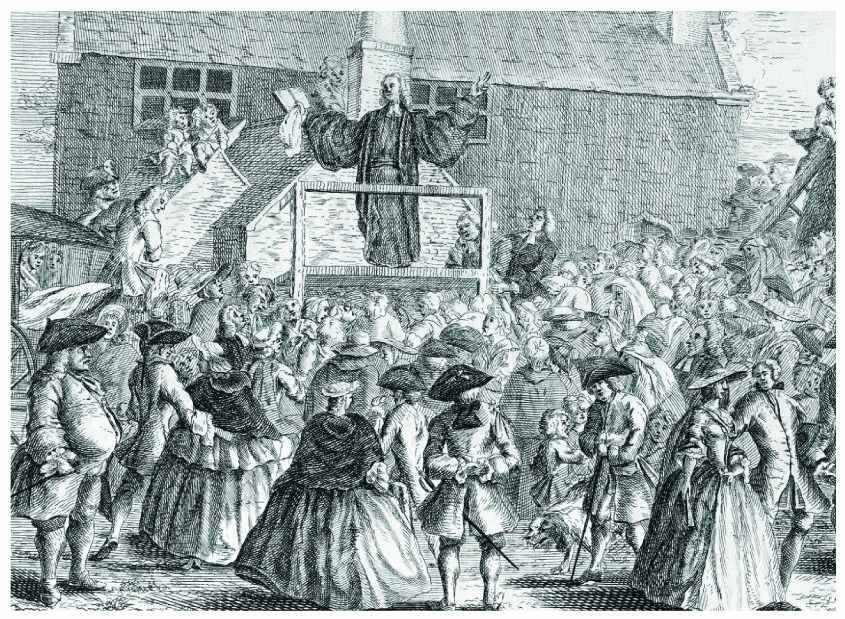
"I was honored today with having a few stones, dirt, rotten eggs, and pieces of dead cats thrown at me." GEORGE WHITEFIELD
32 That I may come to you with joy by the will of God, and may with you be refreshed.
33 Now the God of peace be with you all. Amen.
15:16 "Consider as sin any minute of life spent on something other than saving souls for eternity from this world doomed to destruction." Richard Wurmbrand
CHAPTER 16
I commend to you Phebe our sister, which is a servant of the church which is at Cenchrea:
2 That you receive her in the Lord, as becomes saints, and that you assist her in whatsoever business she has need of you: for she has been a succourer of many, and of myself also.
3 Greet Priscilla and Aquila my helpers in Christ Jesus:
4 Who have for my life laid down their own necks: to whom not only I give thanks, but also all the churches of the Gentiles.
5 Likewise greet the church that is in their house. Salute my wellbeloved Epaenetus, who is the firstfruits of Achaia to Christ.
6 Greet Mary, who bestowed much labor on us.
7 Salute Andronicus and Junia, my kinsmen, and my fellow-prisoners, who are of note among the apostles, who also were in
Christ before me.
8 Greet Amplias my beloved in the Lord. 9 Salute Urbane, our helper in Christ, and Stachys my beloved.
10 Salute Apelles approved in Christ. Salute them which are of Aristobulus' household.
11 Salute Herodion my kinsman. Greet them that be of the household of Narcissus, which are in the Lord.
12 Salute Tryphena and Tryphosa, who labor in the Lord. Salute the beloved Persis, which labored much in the Lord.
"No pursuit of mortal men is to be compared with that of soul-winning."
CHARLES SPURGEON 13 Salute Rufus chosen in the Lord, and his mother and mine.
14 Salute Asyncritus, Phlegon, Hermas, Patrobas, Hermes, and the brethren which are with them.
15 Salute Philologus, and Julia, Nereus,
and his sister, and Olympas, and all the saints which are with them.
16 Salute one another with an holy kiss. The churches of Christ salute you.
17 Now I beseech you, brethren, mark them which cause divisions and offences contrary to the doctrine which you have learned; and avoid them.
18 For they that are such serve not our Lord Jesus Christ, but their own belly; and by good words and fair speeches deceive the hearts of the simple.
19 For your obedience is come abroad to all men. I am glad therefore on your behalf: but yet I would have you wise to that which is good, and simple concerning evil.
20 And the God of peace shall bruise Satan under your feet shortly. The grace of our Lord Jesus Christ be with you. Amen.
21 Timotheus my workfellow, and Lucius, and Jason, and Sosipater, my kinsmen, salute you.
22 I Tertius, who wrote this epistle, salute
you in the Lord.
23 Gaius mine host, and of the whole church, salutes you. Erastus the chamberlain of the city salutes you, and Quartus a brother.
24 The grace of our Lord Jesus Christ be with you all. Amen.
25 Now to him that is of power to stablish you according to my gospel, and the preaching of Jesus Christ, according to the revelation of the mystery, which was kept secret since the world began,
26 But now is made manifest, and by the scriptures of the prophets, according to the commandment of the everlasting God, made known to all nations for the obedience of faith:
27 To God only wise, be glory through Jesus Christ for ever. Amen.
16:5 Believers in many countries today must meet secretly in homes to worship. These "house churches" follow the New Testament model for fellowship, prayer, and study of the Scriptures better than do many
modern churches that have the finest facilities. The true Church is actually the body of believers, and can worship the Lord with or without a building.
1 Corinthians
CHAPTER 1
PAUL, called to be an apostle of Jesus Christ through the will of God, and Sosthenes our brother,
2 To the church of God which is at Corinth, to them that are sanctified in Christ Jesus, called to be saints, with all that in every place call upon the name of Jesus Christ our Lord, both theirs and ours:
3 Grace be to you, and peace, from God our Father, and from the Lord Jesus Christ.
4 I thank my God always on your behalf, for the grace of God which is given you by Jesus Christ;
5 That in every thing you are enriched by him, in all utterance, and in all knowledge;
6 Even as the testimony of Christ was confirmed in you:
7 So that you come behind in no gift;
waiting for the coming of our Lord Jesus Christ:
8 Who shall also confirm you to the end, that you may be blameless in the day of our Lord Jesus Christ.
9 God is faithful, by whom you were called to the fellowship of his Son Jesus Christ our Lord.
10 Now I beseech you, brethren, by the name of our Lord Jesus Christ, that you all speak the same thing, and that there be no divisions among you; but that you be perfectly joined together in the same mind and in the same judgment.
11 For it has been declared to me of you, my brethren, by them which are of the house of Chloe, that there are contentions among you.
12 Now this I say, that every one of you says, I am of Paul; and I of Apollos; and I of Cephas; and I of Christ.
13 Is Christ divided? was Paul crucified for you? or were you baptized in the name of
Paul?
14 I thank God that I baptized none of you, but Crispus and Gaius;
15 Lest any should say that I had baptized in mine own name.
16 And I baptized also the household of Stephanas: besides, I know not whether I baptized any other.
17 For Christ sent me not to baptize, but to preach the gospel: not with wisdom of words, lest the cross of Christ should be made of none effect.
SPRINGBOARDS FOR
PREACHING AND
WITNESSING
1:18 The Sinking Ship Imagine for a moment that you are standing on the seashore gazing at a large ocean liner. The sun is shining. There is no wind and the sea is calm. To your amazement, about thirty
people suddenly dive off the end of the ship and cling to a lifeboat.
You shake your head in disbelief at their foolishness. Then without warning, the great ocean liner strikes an iceberg and suddenly sinks, taking all on board with it.
Those who looked like fools in abandoning the ship were actually wise, and those who seemed wise by staying on board were, in truth, fools.
The world scoffs at those who abandon the ship of this world and cling to the lifeboat of the Savior. But Christians know that this great pleasure-cruiser will eventually come into contact with the immovable iceberg of the Law of God, sink into hell ... and take all those on board with it.
18 For the preaching of the cross is to them that perish foolishness; but to us which are saved it is the power of God.
19 For it is written, I will destroy the wisdom of the wise, and will bring to nothing the understanding of the prudent.
20 Where is the wise? where is the scribe? where is the disputer of this world? has not God made foolish the wisdom of this world?
21 For after that in the wisdom of God the world by wisdom knew not God, it pleased God by the foolishness of preaching to save them that believe.
22 For the Jews require a sign, and the Greeks seek after wisdom:
23 But we preach Christ crucified, to the Jews a stumblingblock, and to the Greeks foolishness;
24 But to them which are called, both Jews and Greeks, Christ the power of God, and the wisdom of God.
25 Because the foolishness of God is wiser than men; and the weakness of God is stronger than men.
POINTS FOR OPEN-AIR
PREACHING
2:4 Watch for "Red Herrings" or "Rabbit Trails"
The Bible warns us to avoid foolish questions because they start arguments (2 Timothy 2:23). Most of us have fallen into the trap of jumping at every objection to the gospel. However, these questions can often be arguments in disguise to sidetrack you from the "weightier matters of the Law." While apologetics (arguments for God's existence, creation vs. evolution, etc.) are legitimate in evangelism, they should merely be "bait," with the Law of God being the "hook" that brings the conviction of sin. Those who witness solely in the realm of apologetical argument may just get an intellectual decision rather than a repentant conversion. The sinner may come to a point of acknowledging that the Bible is the Word of God, and Jesus is Lord—but even the devil knows that.
Always pull the sinner back to his responsibility before God on Judgment Day,
as Jesus did in Luke 13:1–5. Whenever you are in an open-air situation, be wary of socalled Christians who are intent on distracting workers from witnessing. They argue about prophecy, of how much water one should baptize with, or in whose name they should be baptized. It is grievous to see five or six Christians standing around arguing with some sectarian nitpicker, while sinners are sinking into hell. See Acts 21:30 comment.
26 For you see your calling, brethren, how that not many wise men after the flesh, not many mighty, not many noble, are called:
27 But God has chosen the foolish things of the world to confound the wise; and God has chosen the weak things of the world to confound the things which are mighty;
28 And base things of the world, and things which are despised, has God chosen, yes, and things which are not, to bring to nothing things that are:
29 That no flesh should glory in his presence.
30 But of him are you in Christ Jesus, who of God is made to us wisdom, and righteousness, and sanctification, and redemption:
31 That, according as it is written, He that glories, let him glory in the Lord.
1:18 "To convince the world of the truth of Christianity, it must first be convinced of sin. It is only sin that renders Christ intelligible." Andrew Murray, The Spirit of Christ
1:23 There were some in John Wesley's day who refused to preach the Law to bring the knowledge of sin. They justified their method by saying that they preached "Christ and Him crucified." So Wesley points to Paul's method of preaching Christ crucified:
"...when Felix sent for Paul, on purpose that he might 'hear him concerning the faith in Christ;' instead of preaching Christ in your sense (which would probably have caused the Governor, either to mock or to contradict and blaspheme,) 'he reasoned of righteousness, temperance, and judgment to come,' till Felix
(hardened as he was) 'trembled,' (Acts 24:24,25). Go thou and tread in his steps. Preach Christ to the careless sinner, by reasoning 'of righteousness, temperance, and judgment to come!'" John Wesley
1:25 "Everything that can be invented has been invented." Charles H. Duell, Commissioner, U.S. Office of Patents, 1899
1:27,28 Many years ago, I ran a children's club. At the end of the club I told about one hundred kids to line up for some candy. There was an immediate rush, and the line sorted itself into what I saw as being a line of greed. The bigger, selfish kids were at the front, and the small and timid ones were at the back. I then did something that gave me great satisfaction. I told them to turn about face. Everyone did. Then I said to stay where they were, and I took great delight in going to the other end of the line and giving the candy to the smaller, timid kids first.
In a world where the rich get richer and the poor get stomped on, we are informed that
God has gone to the other end of the line with the message of everlasting life. How has He done that? Simply by choosing that which is weak, base, and despised. You can see this by asking a skeptic, "Do you believe that the following biblical accounts actually happened?"
Adam and Eve, Noah's ark, Jonah and the whale, Joshua and the walls of Jericho, Samson and his long hair, Daniel and the lion's den, Moses and the Red Sea
Of course he doesn't. To say that he believed such fantastic stories would mean that he would have to surrender his intellectual dignity. Who in their right mind would ever do that? The answer is simply those who understand that God has chosen foolish, base, weak, and despised things of the world to confound those who think they are wise.
CHAPTER 2
And I, brethren, when I came to you, came not with excellency of speech or of wisdom, declaring to you the testimony of God.
2 For I determined not to know any thing among you, save Jesus Christ, and him crucified.
3 And I was with you in weakness, and in fear, and in much trembling.
4 And my speech and my preaching was not with enticing words of man's wisdom, but in demonstration of the Spirit and of power:
5 That your faith should not stand in the wisdom of men, but in the power of God.
6 Howbeit we speak wisdom among them that are perfect: yet not the wisdom of this world, nor of the princes of this world, that come to nothing:
7 But we speak the wisdom of God in a mystery, even the hidden wisdom, which God ordained before the world to our glory:
8 Which none of the princes of this world
knew: for had they known it, they would not have crucified the Lord of glory.
9 But as it is written, Eye has not seen, nor ear heard, neither have entered into the heart of man, the things which God has prepared for them that love him.
10 But God has revealed them to us by his Spirit: for the Spirit searches all things, yes, the deep things of God.
11 For what man knows the things of a man, save the spirit of man which is in him? even so the things of God knows no man, but the Spirit of God.
QUESTIONS & OBJECTIONS
2:14 "I've tried to read the Bible, but I can't understand it."
The Scriptures tell us that the "natural man" cannot understand the things of the Spirit of God. Most Americans would find it difficult to understand the Chinese language. However,
a child who is born into a Chinese family can understand every word. That's why you must be born again with God's Spirit living within you (John 3:3). The moment you become part of God's family, the Bible will begin to make sense.
12 Now we have received, not the spirit of the world, but the spirit which is of God; that we might know the things that are freely given to us of God.
13 Which things also we speak, not in the words which man's wisdom teaches, but which the Holy Spirit teaches; comparing spiritual things with spiritual.
14 But the natural man receives not the things of the Spirit of God: for they are foolishness to him: neither can he know them, because they are spiritually discerned.
15 But he that is spiritual judges all things, yet he himself is judged of no man.
16 For who has known the mind of the Lord, that he may instruct him? But we have the mind of Christ.